English
 Español
 Français
 Deutsch
 Italiano
 Português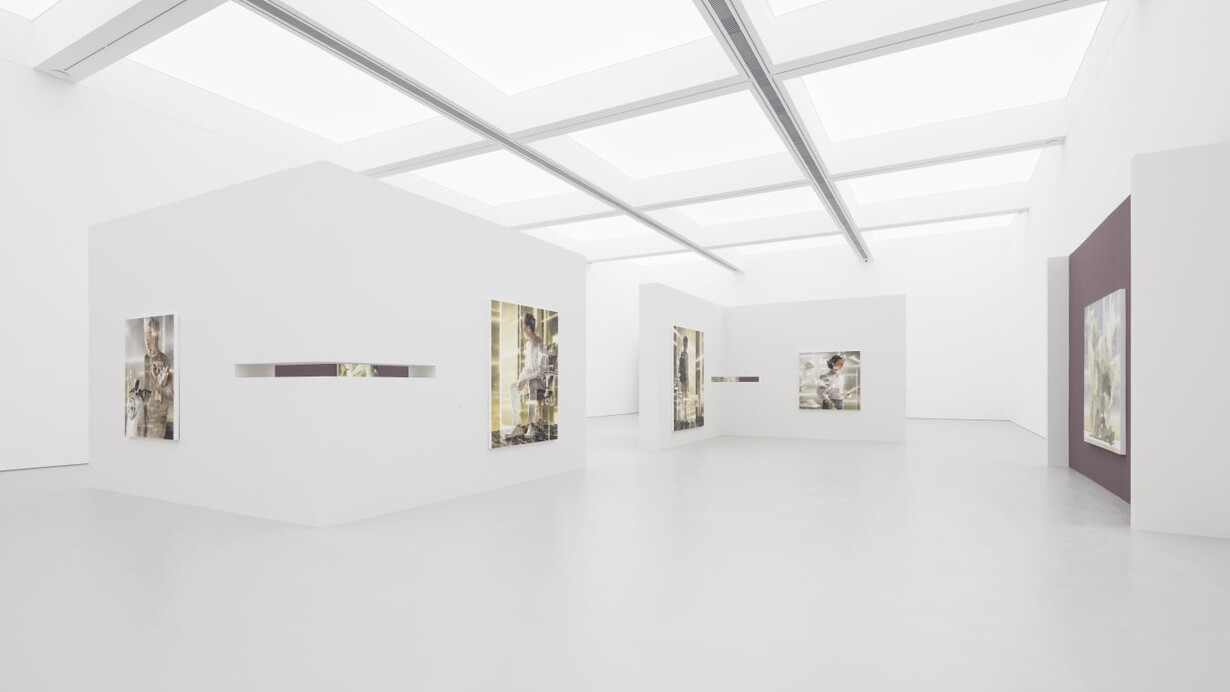
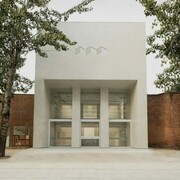
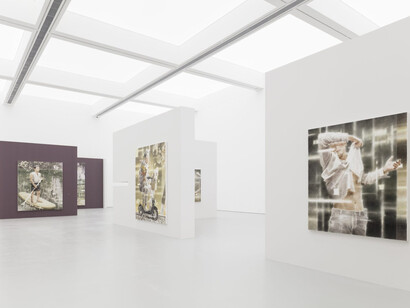
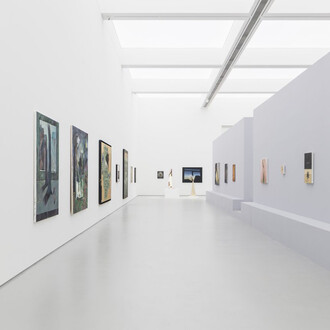
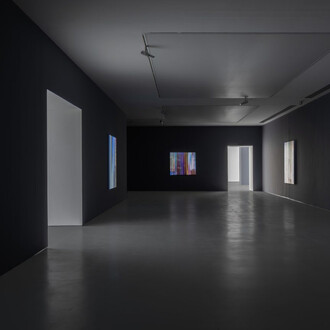
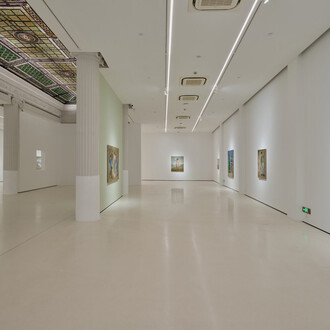
Hive Center for Contemporary Art is honored to announce the opening of artist Xia Yu’s latest solo exhibition, Speed of light, on November 8, 2025, in Hall A the main exhibition space. This marks Xia Yu’s sixth solo exhibition at Hive, following New youth (2014), Narrative (2015), Orchard (2017), Subjunctive mood (2019), and Here and now (2021). Speed of light brings together over ten of the artist’s most recent tempera paintings. Curated by Yu Fei, the exhibition will be on view until December 10.
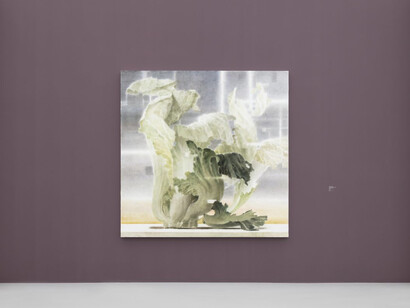
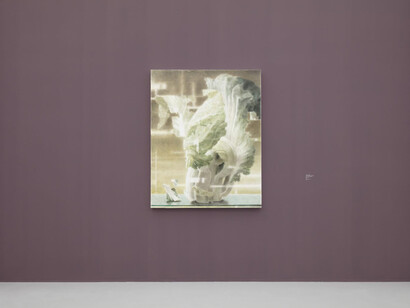
Speed of light captures the precise convergence of Xia Yu’s distinctive painting language and the ever-changing zeitgeist of our era. Layer upon layer of tempera techniques construct lines and planes that shimmer with an unknown radiance, streaking across the visual field with unprecedented speed and force, materializing both the human condition within turbulent social realities and the very essence of transformation itself. Within the simulated reality built from Xia Yu’s interplay of light and shadow, the epoch and ordinary lives become inextricably woven together.
Throughout his practice, Xia Yu has allowed his painting to evolve in parallel with the era, while acknowledging that the history of art has always been deeply intertwined with societal progress and technological shifts. Much like Turner’s misty light piercing through the steam and soot of the First Industrial Revolution, how Monet’s depiction of light and shadow and color contrast benefited from new discoveries in optical theory of his time, or how Hopper used artificial light to illuminate corners of the city night during economic crises and the post-war period, Xia Yu, too, is establishing a precise interactive relationship between light and our rapidly transforming present. The recurring geometric forms of light in his compositions may no longer be representations of any tangible light source, but rather visualizations of the reality of the information and AI age—a reality not yet fully comprehended, adapted to, or digested. When the present moment offers no recourse to the experiences of the past, light in his work ceases to be a romanticized, ethereal ambiance; it solidifies into a substantive form, bearing the sharp edges of reality.
As times have shifted and the form of light has transformed, the small-town youths from his earlier works have matured into the backbone of contemporary society. The gaze that Xia Yu casts upon this flowing stream of humanity across time is not purely documentary, but rather auteur-like—intentionally targeting and amplifying specific individuals and moments with a distinct orientation. At first glance, these figures seem unremarkable, like half-remembered acquaintances from the depths of memory, a fleeting glimpse of someone on a street corner, or familiar strangers from social media. Their faces are rendered with a delicate yet vague quality, calm and unassuming. They represent a kind of “greatest common denominator,” achieved through a seemingly effortless control, a process of constant measurement and iterative averaging. What Xia Yu attempts to illuminate with the highlights of his painting is precisely an era defined by its ordinary people.
Throughout, still life objects have grown alongside the figures within the pure, soft light that permeates the depths of Xia Yu’s paintings. The fruits and plants, pots and teacups from his earlier works were depicted at a life-like scale with sense of simplicity, permeated by a palpable human trace and the lingering warmth of life. Now, the still life elements are gradually enlarged, surpassing realistic scale, detaching from specific daily contexts to assume transcendent life trajectories of their own. As the rapidly changing light of the era floods into the picture plane, piercing through leaves and branches, these objects exist in an autonomous dimension of time, “impervious to wind, rain or shine.”