English
 Español
 Français
 Deutsch
 Italiano
 Português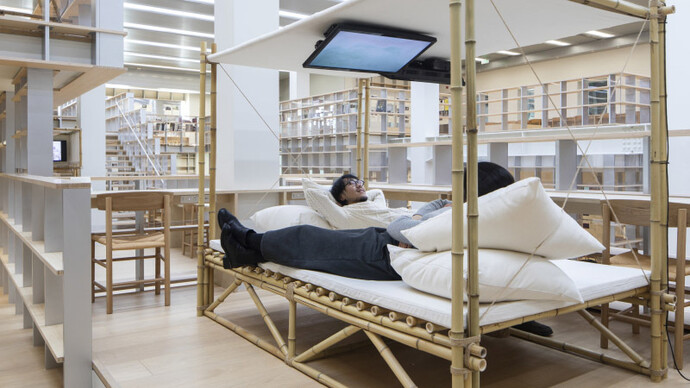
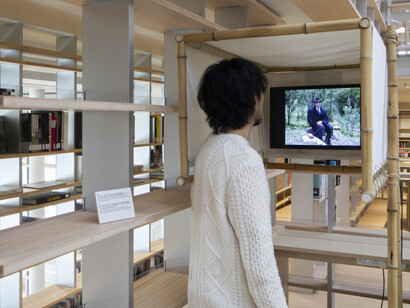
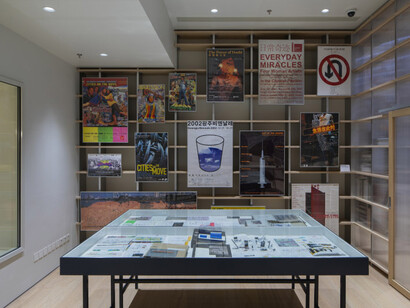
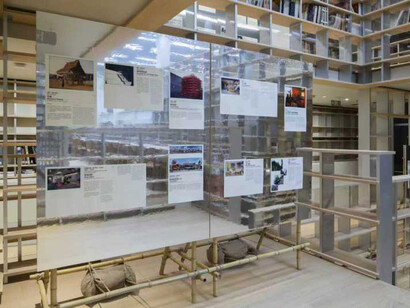
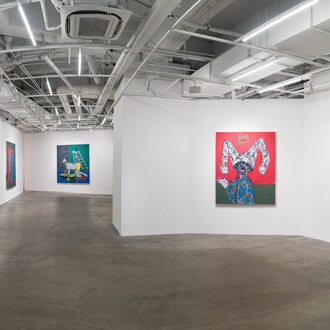
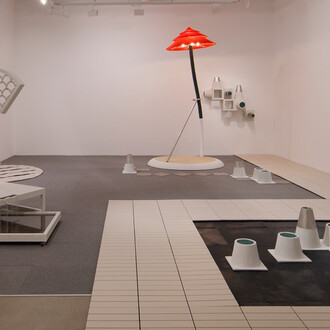
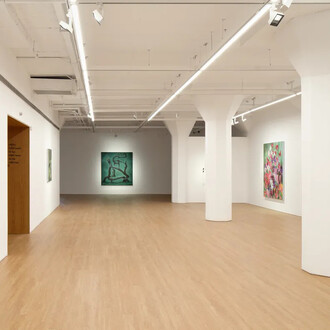
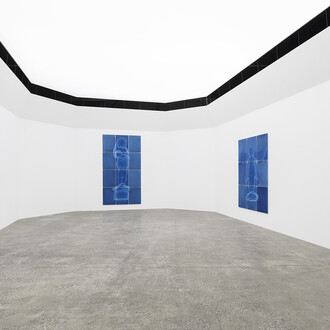
From November 25, 2025 to January 25, 2026, the Power Station of Art (PSA), Shanghai, presents Home and beyond, the inaugural chapter of Hou Hanru’s long-term curatorial series Making places – Hou Hanru’s curatorial journey, as an integral part of the opening of the Museum’s third-floor Espace Gabrielle Chanel. Taking the library space as both a site of contemplation and a laboratory, the exhibition initiates an extended research project on artistic creation, cultural circulation, and imagination of the globalised world.
Making places revisits the fundamental question of what curating entails: curating is not only the fabrication of exhibitions, but, more importantly, the creation of conditions that allow art to emerge, provoking encounters and generating energies among art, society, and history. Throughout this process, the conception, production, and presentation of art become interwoven, forming an open and continuously unfolding structure—a sensitive space where the public may access the artist’s imagination and critique (le partage du sensible). This methodology echoes the metaphor of ikebana: flowers, removed from nature and interrupted in their natural life cycle, are granted renewed forms and meanings through rearrangement, continually reborn through the intervention of a public gaze.
Thus, the exhibition becomes a “Temporary Autonomous Zone” (T.A.Z.): a brief yet liberated experimental field carved out within reality—resisting established orders and proposing alternative visions. While global communication networks reinforce dominant values, they also open pathways for artists and curators to articulate resistance. The task of curating, in this sense, is to allow suppressed desires and memories to re-enter and reshape the real.
Home and beyond builds on this perspective to examine the migrations, confrontations, and regenerations of contemporary art under globalization. For Hou Hanru, “home” is not merely a physical dwelling, but a provisional space in which art can fully unfold—a point of convergence between thought and creation. By interpreting and reconfiguring curatorial practices, the exhibition explores how art may construct bridges across cultures, and how, through the spirit of “being at home everywhere,” it may locate possibilities of belonging and resistance within a world on the move.
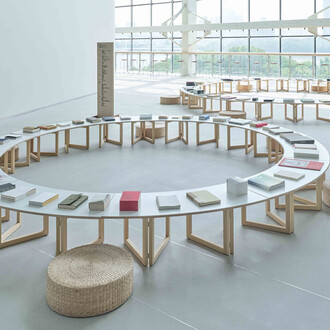
Taking this exhibition as a point of departure, the library will continue to present document-centered exhibitions and research programs that expand the horizons of public knowledge. Following the first chapter of Making places, the library will develop an annual sequence of thematic exhibitions focusing on artist archives, architectural and design studies, histories of cross-cultural circulation, and the production of knowledge around cities and the public realm. In parallel, the library will collaborate with international academic institutions and artists to advance residency and publishing initiatives, establishing itself as an open platform that connects public learning, artistic research, and interdisciplinary inquiry.