English
 Español
 Français
 Deutsch
 Italiano
 Português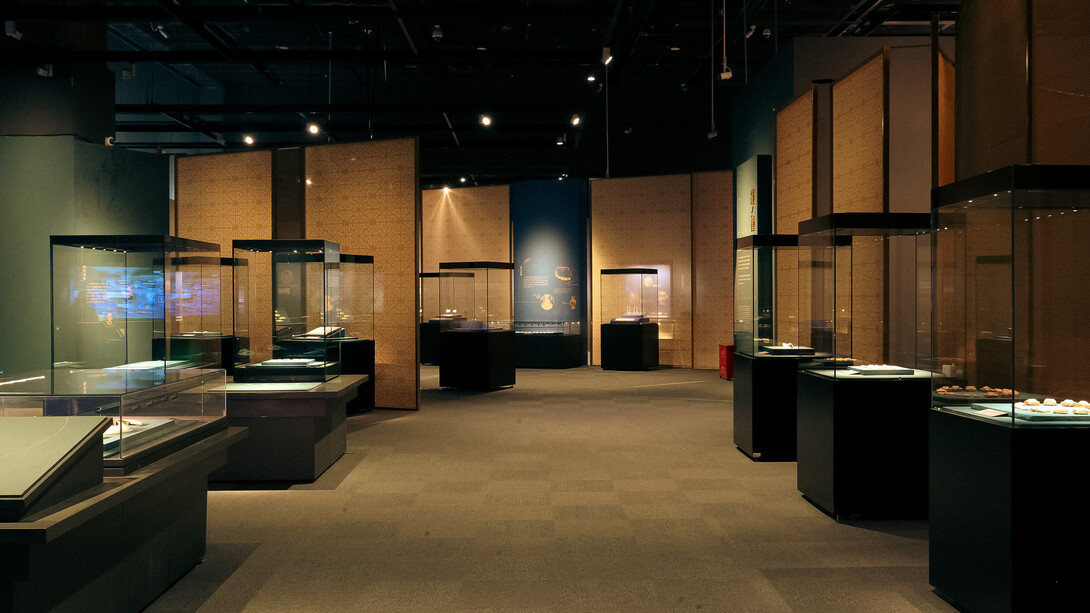
Since ancient times, gold has been treasured. By virtue of its rarity and permanence, it came to symbolize power, status, wealth, and sacredness in religion. Over thousands of years, the production, craftsmanship, use, and circulation of gold gave rise to objects of dazzling brilliance and manifold forms. These gold artifacts not only embody rich layers of historical and cultural meaning, but also serve as vessels of civilization and vital links between cultures—golden threads that connect and bear witness to the encounters and integration of diverse peoples and traditions.
The gold objects presented in this exhibition trace back as early as the 15th century BCE. China’s earliest known gold artifacts originated in the northwestern frontier regions, areas deeply engaged with the Eurasian steppe. With the increasing movement of peoples, the growth of trade, and the spread of technologies, gold began to circulate more widely across the Central Plains, becoming an integral part of China’s material culture.
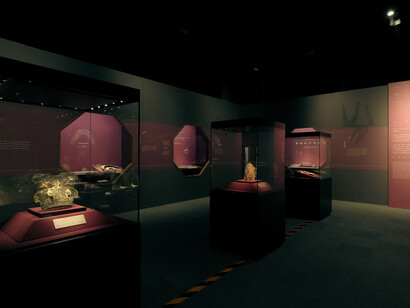
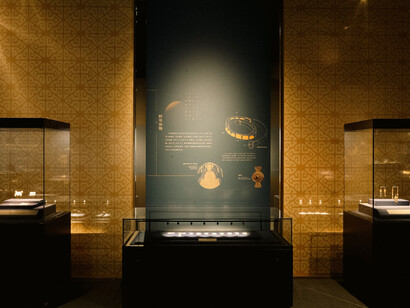
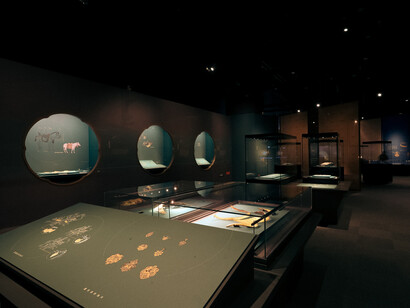
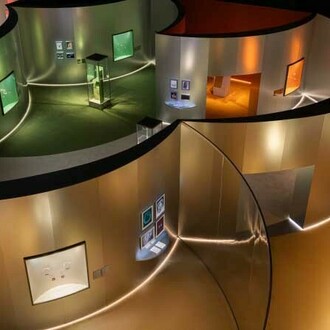
The theme “Threads of Gold” speaks not only to the splendor of the material itself, but also to the ceaseless threads of cultural exchange it represents. Through more than 170 gold objects from the western and northern steppe, the Central Plains, and the Qinghai–Tibet Plateau, this exhibition surveys over three millennia of Chinese gold craftsmanship. It explores how these works became enduring witnesses to cultural interaction and mutual learning between the Central Plains and surrounding regions—particularly through the Steppe Route and the Silk Road.
Origins: the steppe and early China
In the early stages of civilizational development, the aristocracies of the Eurasian Steppe and the Central Plains represent their identity in distinct ways: steppe aristocrats favored gold ornaments decorated with animal pattern, while the nobility of the Central Plains primarily used bronze ritual vessels and jade artifacts. However, during the Zhou (c. 1100–771 BCE), Qin (c. 221–207 BCE), and Han (206 BCE–220 CE) Dynasties, influenced by various forms of cultural exchanges such as migratios, warfare, and trade, Central Plains aristocracies started to incorporate gold into both daily life and ritual practices. The gold ornaments of steppe peoples and tribes carry the cultural exhchange and interactions between steppe and Central Plains aristocracies.
Exchange: tubo and Tang
In the early 7th century, a powerful regime emerged on the Tibet Plateau—the Tubo Kingdom, which appeared almost simultaneously with the Tang Dynasty (618-907) in the Central Plains. Benefiting from the convenient transportation network afforded by routes such as the Silk Roads, Tubo adopted multicultural factors from the Central Plains, South Asia, and Central and Western Asia.
Meanwhile, the Silk Road also created conditions for the Tang Dynasty to absorb foreign cultures. The gold and silver artifacts of the Tang Dynasty likewise reflected the collision and integration of different cultures in their decorative patterns and shapes. There are records from the early Tang Dynasty indicating that the Tubo Kingdom presented local gold artifacts as gifts to Chang'an. Through interactions such as intermarriage, Tang Dynasty gold artifacts also spread to the Tibet Plateau.
Convergence: Liao, Song to Ming
During the Liao (907–1125) and Song (960–1279) Dynasties, gold ornaments remained a symbol of status in both the northern regions and the Central Plains. Liao Dynasty gold designs bore the distinctive traits of northern steppe tribal peoples, yet were permeated with Han Chinese influences throughout; meanwhile, those of the Song Dynasty were exquisite and rich in everyday charm. Though sharing certain similarities in design, the two possessed distinct characteristics, reflecting how the northern regions and the Central Plains maintained different aesthetic preferences during cultural exchange and integration. During the Yuan Dynasty (1206-1368), gold ornaments had developed further on the basis of those from the Song Dynasty, with the decorative styles of the north and south remaining distinct. The Ming Dynasty (1368-1644) has significant changes in gold ornaments,The term “jewellery” began to specifically refer to ornaments used by women, which were vastly different from the early designs of steppe ornaments and gold artifacts. They were crafted in a neat manner with dignified shapes, while their decorative patterns evolved toward auspicious themes. Gold and silver jewelry inlaid with precious stones became a new aristocratic fashion. These changes reflect the trend of gold ornament styles gradually moving toward uniformity against the backdrop of cultural integration between the north and the south.