English
 Español
 Français
 Deutsch
 Italiano
 Português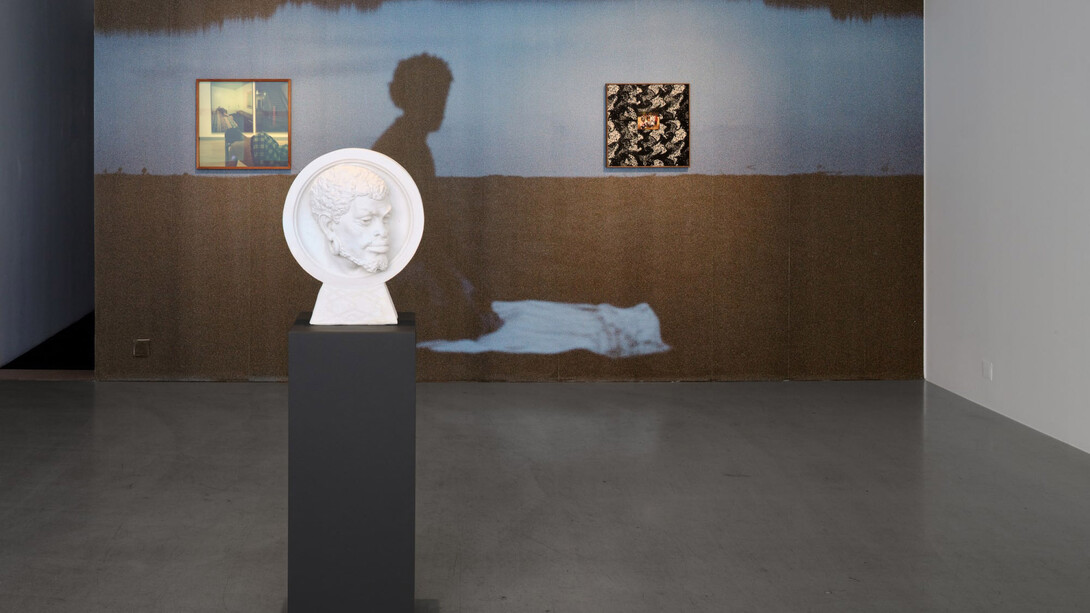
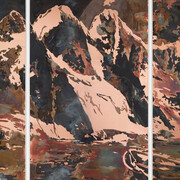
We are pleased to present Salad Hilowle’s second solo show at the gallery, När morgonstjärnan brinner. The exhibition features a three-channel video work, photography, sculpture and drawing. The show borrows its title from a song which Cyndee Peters, an American-Swedish gospel singer, performed at the Swedish Eurovision Song Contest in 1987.
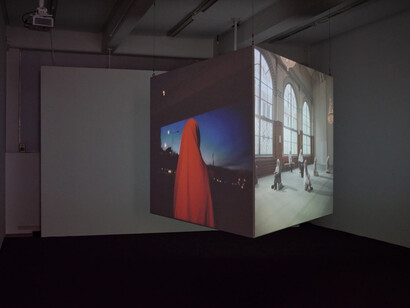
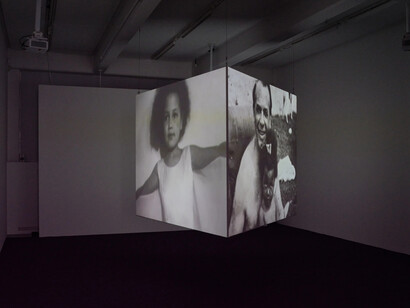
The video installation Waiting for something part II addresses national romanticism through moving images; it is as if the artist has created a series of folklore paintings with the help of his camera. The film contains intimate scenes reminiscent of paintings by Christian Krohg, a painter active in the Skagen group. In other scenes from everyday life, women are engaged in rituals inside a mosque; we see Somali men in an industrial building. The work also features Afro-Swedes like Dr Alban and Fatima Svendsen, a black artist and choreographer, who was adopted by the showman Karl Gerhard in 1949.
With sensitivity and precision, Hilowle continues his research-based approach, highlighting forgotten or overlooked stories throughout art history and popular culture. His attitude to his work is guided by curiosity and care rather than confrontation, allowing for an open interpretation of complex social issues. Being himself of African origin, Hilowle’s artistic approach is–however–much broader than a representation of Afro-Swedes in cultural history. In his poetic works, which encompass acting, drama, documentary footage, and opera, overarching human themes of acceptance and rejection–and the ways in which historical narratives are constructed and by whom–are brought into focus.
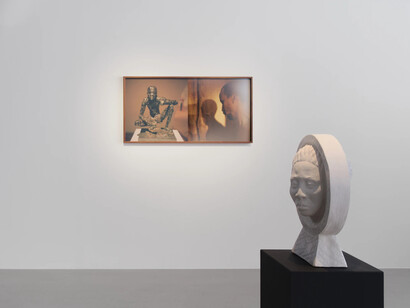
True to his characteristic engagement with Swedish art history, a photograph in the exhibition features a sculpture by Liss Eriksson (1919–2000), who often used black models for his sculptures. In the work Jag som en utaf de svarta Hilowle revisits Gustav Badin, a former slave boy who later served at the royal court, and a birthday poem/letter he wrote for Princess Sofia Albertina in 1764.
Hilowle’s elegant visual language, combined with a strong sense of pathos, lends his work a distinctive quality. Through his lens, an alternative history is materializing–an act of claiming and longing for a place that can become “home”. His careful attention to every aesthetic aspect of his work gives depth and expression to the experience of those born in one country and raised in another.