English
 Español
 Français
 Deutsch
 Italiano
 Português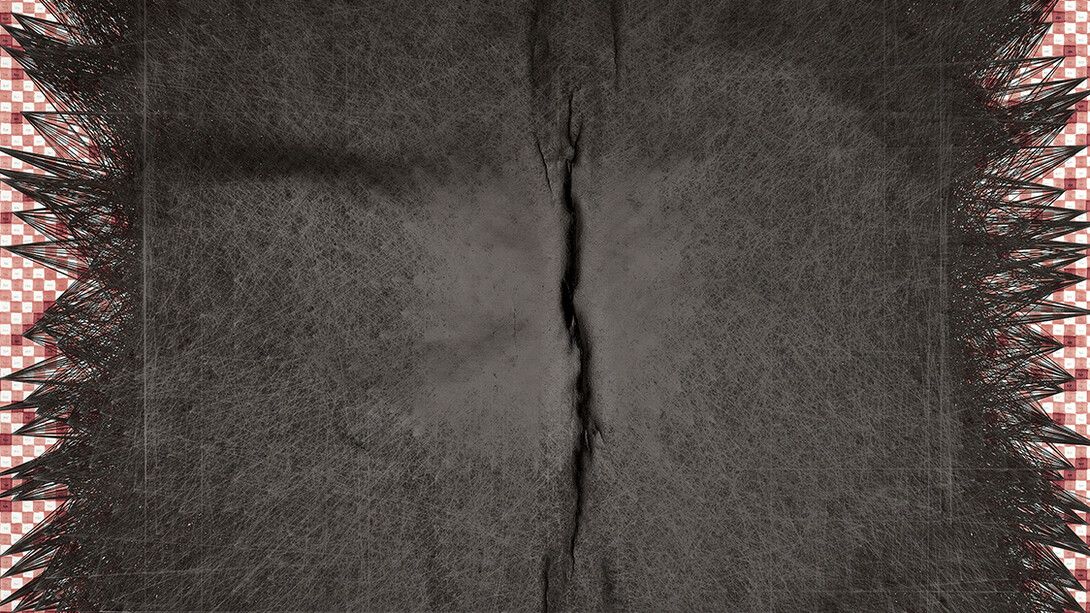
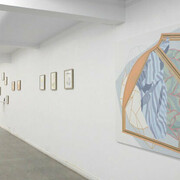
Abstraction, extraction and distraction are just some of the effects that technology can generate. In her first exhibition at the gallery, Lucía Simón Medina shows us that these concepts are also applicable to mathematics, the language that underpins and enables technology. Its scaffolding. This ancient way of representing phenomena and things—through numbers and equations—is complicated for those who do not study it specifically. Despite being implicit in everything around us (in our biology, in nature, universe, machines), they seem so abstract and complex that it can be frustrating to try to approach them in depth.
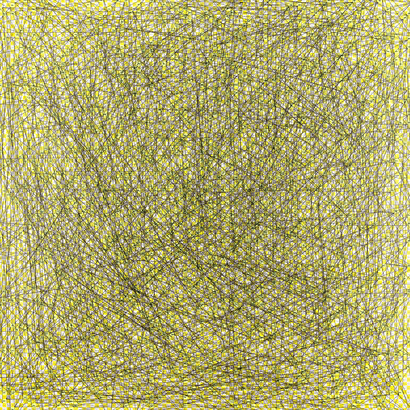
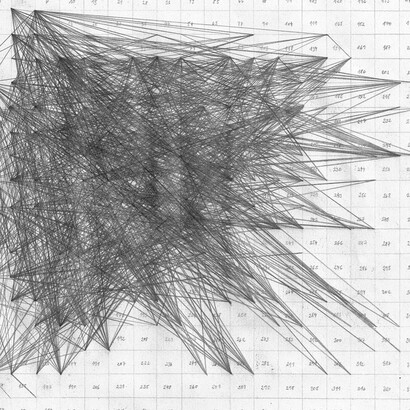
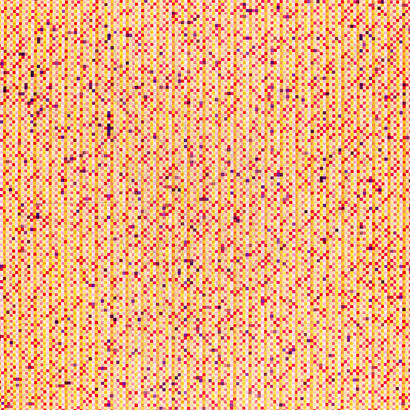
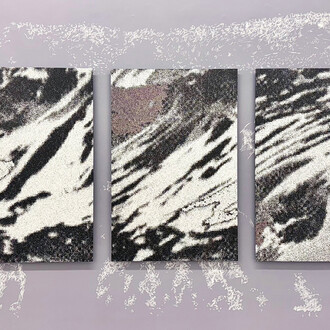
In this small retrospective, the artist reaches out to us to access the complexity of prime numbers and randomness from another language, the visual arts. We can see it in Tendencies’ Lack, Looking for all the possibilities, Looking for possibilities for 2, 3, 5, 7, 11, 13 and 17, Looking for random possibilities, From 2 to 324 and Descriptive Insufficiencies. These diagrams—aesthetic representations—play with more accessible codes (drawing, colour, form, rhythm…), providing clues that help us visualise the mathematical world in a different way, generating beauty.
It is paradoxical to think that mathematical language encodes the “magic” of the universe. Both mathematics and magic are highly mysterious to us because their workings are beyond our understanding. Our knowledge in an infinite universe is limited, and yet we believe we can explain almost everything through science, the most widely accepted mythology in our culture today. However, there are many aspects of our lives that are difficult to encode mathematically. These are formless, highly abstract things that belong to the mental and emotional sphere. How can we measure and represent feelings and emotions such as fear, love, sadness, passion, despair, etc. mathematically? What about intuition or consciousness?
Computers and those who program them try to do so using parameters and algorithms. However, it seems that human beings are being influenced to fit into patterns that simplify reality, establishing reductionisms that make us less genuine and more gregarious, more uniform and, consequently, more vulnerable and manipulable. ‘When a language is powerful, it tends to impose its meanings beyond its limits’ (Juan Arnau).
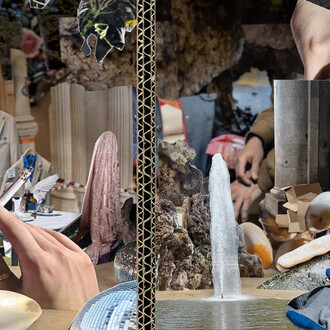
In her latest works, Lucía talks about the material aspect of technology and the unconscious, which, like dreams—which occupy a third of our lives—also works on the basis of data. When we dream, the data we receive while awake is combined with that which already exists in our memory, and all of it is selected and organised into creative “images” according to parameters that remain a mystery to us. Much like what happens with data management on the Internet or in Artificial Intelligence, the traces end up getting lost. In the sound installation Over-the-Top, a voice asks us about our dreams and relates this torrent of information to that which travels through underground cables, the material component of the Internet architecture that connects networks globally. The installation is completed with dreamlike images in which the faces of figures who have been crucial in the development of digital technology are superimposed: Hans the horse, Ada Lovelace, Leonardo Torres Quevedo, Alan Turing and John von Neumann.
In another series of works, she relates all these concepts to written language, another system of signs. Thousands of words organised according to conventions and codes established historically in each culture to develop meanings and concepts that can be understood and transmitted. These are three pieces in which she reproduces three texts in a truly anachronistic way: they are handwritten. Handwriting a book today takes on epic dimensions, it is close to ritual, and one could say that the scribe thus immerses herself in the theories they contain. In addition, she plays with the most relevant words, relating them to lines that lend a beautiful plasticity to the work, suggesting computations of concepts that we can associate with the Web, AI or programming.
One is The third unconscious, by Franco ‘Bifo’ Berardi, which analyses the unconscious from different historical perspectives up to the present day. Another is the seminal text on Artificial Intelligence, Computational machinery and intelligence by Alan Turing, in which he analyses the controversial question: Can machines think? And finally, the essay Are some things unrepresentable? by Alexander Galloway, in which he reflects on information and its basic unit—data—developing the premise that it represents nothing if it is not organised to form part of a narrative.
In conclusion, Lucía Simón Medina uses art to reflect on techno-scientific language and express it through a different, graphic and creative language. She raises the limits of mathematics in describing and explaining everything, suggesting that no single language is capable of doing so. She also talks about the limits of programming and machines, partial replicas of humans, offering, in short, surprising images that bring us closer to the internal structure of nature, the cosmos and the microcosm that we are.