English
 Español
 Français
 Deutsch
 Italiano
 Português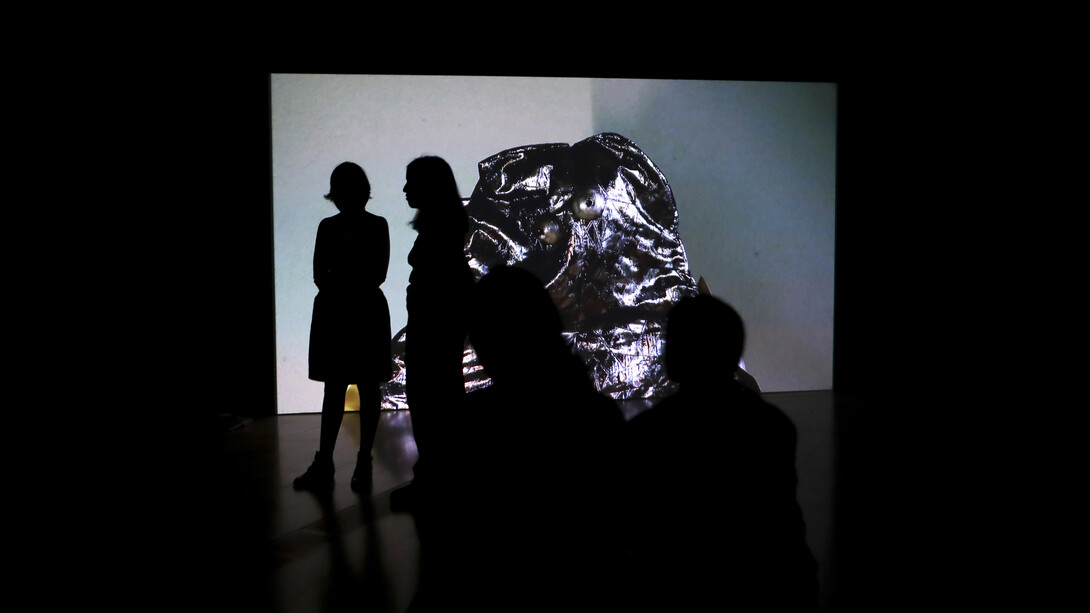
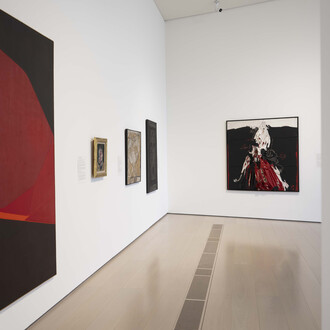
Itinerarios XXX shows the projects of the artists selected in the open call for the Fundación Botín 2023 Art Grants. The jury responsible for the selection was comprised of curators Irene Aristizábal and Filipa Ramos, together with artists Juan López and Jorge Satorre, former Fundación Botín Art Fellows.
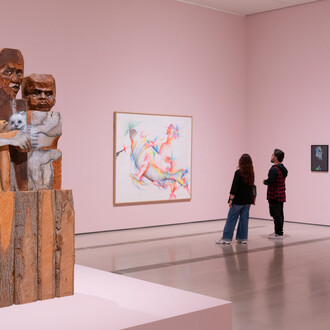
The six projects presented in this exhibition explore the relationship between nature, memory and non-rational forms of knowledge. From different perspectives, the works engage in an affective and symbolic bond with landscapes, be they marine, desert or floral, proposing modes of attention and contemplation that often question the hierarchies between the human and the non-human.
The artists reclaim art as a tool for the transmission of ancestral knowledge, gestures and beliefs, rescuing invisible histories as well as practices and mythologies that inhabit the margins of science and art.
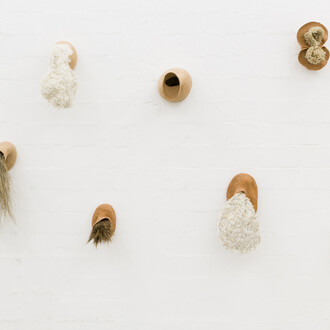
Gelen Jeleton (Murcia, Spain, 1975) is inspired by the experience of Hanami, a social gathering in Japan to contemplate the cherry blossom. Her installation, composed of drawings on tissue paper and a series of animations, depicts the sakura (Japanese cherry blossom), the yozakura (the cherry blossom at night) and the hanafubuki (the shower of petals) and their memory.
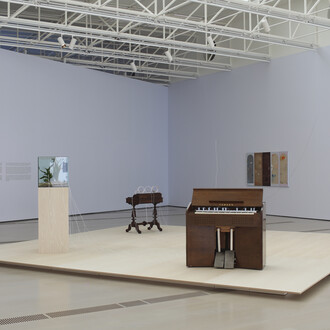
Javier Bravo de Rueda (Callao, Peru, 1989) takes us to a small museum in Ica, Peru, to discover some enigmatic stones which are believed to be millions of years old and tell stories of beings from other galaxies. The montage combines records, artefacts, animation, murals, sculptures and sound. It does not offer answers: it invites us to speculate, to lose ourselves between travel chronicles, science fiction and ancestral tales that speak of uncertain origins and sky-borne presences.
Noa and Lara Castro Lema (A Coruña, Spain, 1998) have produced a musical tale that takes as its starting point the Gran Sol, a fishing ground in the North Atlantic, where their grandfather, Nelson, spent most of his life working. This kind of fishing ground was originally called Grande Sole in French, meaning “great sole”. The phonetic translation into Galician from French connects two things, through language, that are in principle very far apart: fish (sole) and celestial bodies (sol, sun in Galician), generating a performative game where the past and the future come together in the present.
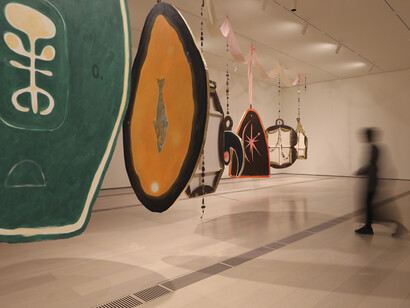
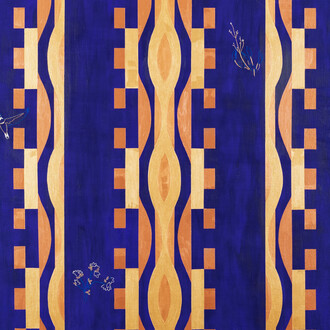
Diego Delas (Aranda de Duero, Spain, 1983) explores the intersections and similarities between artistic practice and so-called popular art. In the room we find a collection of large shapes arranged like collaradas – the clusters of amulets and talismans that were once used to protect children and infants – that define the space. The work alludes to the pre-modern world, where an ornament is understood as an idea of dignity, beauty and joy.
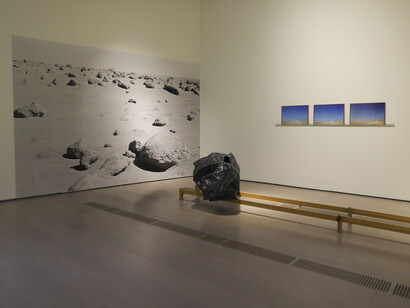
*Nader Koochaki (San Sebastián, Spain, 1983) questions the possible intention of Salvador Robles Aibar, a bulldozer operator who installed unusual rock assemblages across restored areas of the Corta Pastora (León). Are the stones, as some explain, shelters for animals? Can they be read from the perspective of art when the person who placed them had no link to this discipline? Can concepts such as marginal art or land art reinforce their importance, or on the contrary, would it give them a disproportionate significance for an action that was perhaps made without expectations?
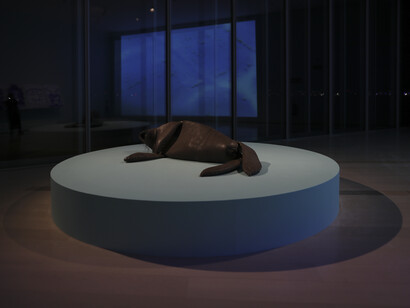
Eduardo Navarro (Buenos Aires, Argentina, 1979) explores ways of understanding the non-human world. F.O.C.A. (Foundation for the Oceanic Contemplation of Affection) is the project that the artist has developed over the last two years in Uruguay. Acting as a parental-mother, the artist dedicated himself to bottle-feeding orphaned sea lion pups, rescued by the SOS Marine Fauna Rescue shelter. The costume in the exhibition is a vehicle that helps him physically and emotionally to perceive the world from the place of a mother feeding her young. They know it’s a game, so they play it with complicity.
This exhibition is accompanied by a publication (available at La Tienda del Centro Botín) that includes the research, texts and images of each artist, alongside an essay by Filipa Ramos.