English
 Español
 Français
 Deutsch
 Italiano
 Português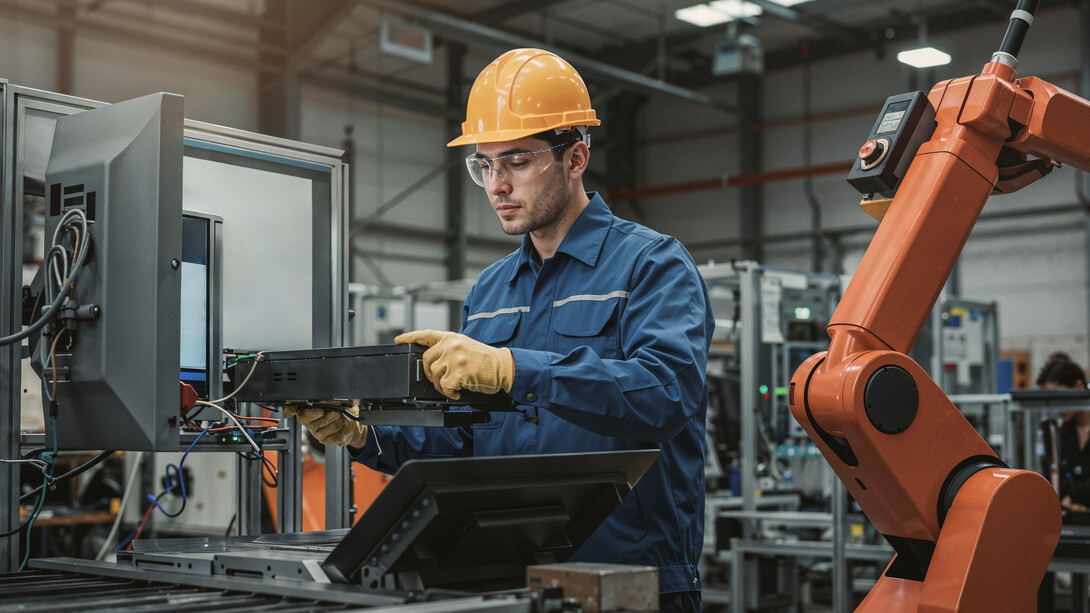
The factory floor of tomorrow looks remarkably different from today's industrial landscape. Where once stood rows of rigid, pre-programmed machines executing the same motions for decades, we now witness something far more extraordinary: robots that learn new tasks within hours, adapt to unexpected situations in real-time, and transfer knowledge between completely different domains with an ease that human workers cannot do. This transformation represents one of the most significant breakthroughs in modern technology, fundamentally reshaping our understanding of what machines can accomplish.
For decades, robotics has operated under a constraining paradigm. Traditional industrial robots, despite their precision and reliability, remained prisoners to their programming. Teaching them a new task required months of painstaking work by specialized engineers, writing thousands of lines of code, and conducting extensive testing phases. The result was impressive but inflexible automation that could perform specific tasks with superhuman accuracy but crumbled when faced with even minor variations in their environment.
This limitation has created what researchers call the "robotics bottleneck" – a phenomenon where the cost and time investment required to deploy robots for new applications far exceeded their potential benefits in many scenarios. Small manufacturers found themselves locked out of automation benefits, while even large corporations hesitated to invest in robotic solutions for tasks that might evolve or change over time. The promise of versatile, adaptable machines seemed perpetually just beyond reach.
However, the landscape has shifted dramatically with the emergence of generative artificial intelligence. The same revolutionary technology that has transformed natural language processing and image generation is now breathing new life into robotics, creating machines that learn with unprecedented speed and flexibility. These fast-learning robots represent a convergence of multiple technological breakthroughs, from advanced machine learning algorithms to sophisticated sensor systems, all working together to create truly adaptive automation.
The science behind rapid robot learning
Understanding how modern robots achieve such rapid learning requires examining the sophisticated interplay of several cutting-edge technologies. At the heart of this revolution lies foundation models – large-scale AI systems trained on vast datasets that capture patterns and relationships across diverse domains. Unlike traditional robot programming, which requires explicit instructions for every possible scenario, foundation models enable robots to understand tasks at a conceptual level, drawing connections between different activities and applying learned principles to varies situations.
The breakthrough comes from treating robot learning as a language problem. Just as large language models learn to predict the next word in a sentence, robotics foundation models learn to predict the next action in a sequence of movements. This approach allows robots to understand not just what to do, but why they're doing it, enabling them to adapt their behavior when circumstances change. When a robot trained on foundation models encounters a new object or environment, it doesn't panic or freeze – it applies its understanding of similar situations to generate appropriate responses.
Computer vision systems have also undergone revolutionary improvements, moving far beyond simple object recognition to sophisticated scene understanding. Modern robots don't just see objects; they understand spatial relationships, predict how objects might behave when manipulated, and recognize when something has gone wrong with their planned actions. This enhanced perception capability allows robots to work in unstructured environments, adapting to variations in lighting, object placement, and even the presence of humans in their workspace.
Perhaps most importantly, these systems learn through demonstration and interaction rather than traditional programming. A human operator can teach a robot a new skill by simply performing the task while the robot observes, or by physically guiding the robot's movements through the desired motions. The robot's AI system analyzes these demonstrations, extracting the underlying principles and goals, and then practices variations of the task until it achieves mastery. This process, which once took months of development time, now occurs in hours or even minutes.
Real-world applications transforming industries
The practical applications of fast-learning robots are already reshaping multiple industries in ways that seemed impossible just a few years ago. In manufacturing, companies are deploying robots that can switch between different product lines with minimal reconfiguration time. A robot working on smartphone assembly in the morning can be retasked to handle tablet production in the afternoon, learning the new process through brief demonstrations rather than extensive reprogramming.
Warehouse automation has experienced particularly dramatic improvements. Traditional warehouse robots followed fixed paths and could only handle predetermined objects in specific orientations. Today's fast-learning robots navigate dynamic environments, adapt to new product types without manual configuration, and even collaborate with human workers in shared spaces. These systems can learn to handle fragile items differently from robust ones, adjust their grip strength based on packaging materials, and optimize their movements for efficiency while maintaining safety protocols.
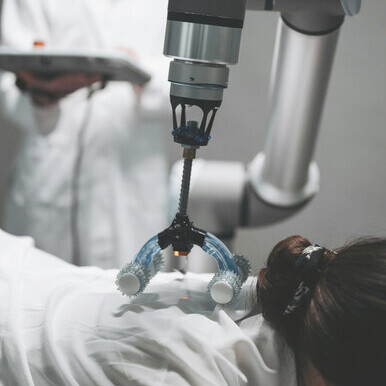
The healthcare sector represents another frontier where fast-learning robots are making significant impact. Surgical robots now assist with procedures by learning from experienced surgeons, adapting to individual patient anatomy, and providing steadier hands for delicate operations. Rehabilitation robots work alongside physical therapists, learning each patient's specific needs and capabilities, then providing personalized assistance and exercise routines that evolve as the patient recovers.
Service industries are embracing these adaptable machines as well. Hotels are deploying robots that learn guest preferences, remember special requests, and adapt their communication style to different cultural contexts. Restaurants are using robots that can learn new recipes by observing chefs, adjust cooking techniques based on ingredient variations, and even accommodate special dietary requirements without extensive reprogramming.
Agricultural applications showcase the versatility of fast-learning robots particularly well. These machines learn to identify ripe fruit, adapt their harvesting techniques to different crop varieties, and even adjust their approach based on weather conditions and soil quality. A robot that learned to harvest apples can quickly adapt to picking peaches or oranges, understanding the general principles of fruit harvesting while adapting to the specific characteristics of each crop.
The technology stack: from sensors to software
The remarkable capabilities of fast-learning robots emerge from sophisticated technology stacks that integrate multiple advanced systems. At the foundation level, these robots incorporate arrays of sensors that provide rich, multi-modal information about their environment. Traditional robots relied primarily on visual cameras and basic proximity sensors, but modern systems integrate lidar for precise distance measurements, force sensors that provide haptic feedback, audio sensors that can detect subtle changes in machinery operation, and even chemical sensors that can identify different materials or detect problems before they become visible.
This sensor fusion creates what researchers call "embodied intelligence" – an understanding of the physical world that goes far beyond what any single sensor could provide. When a robot reaches for an object, it doesn't just use visual guidance; it combines visual information with force feedback, distance measurements, and even audio cues to create a comprehensive understanding of the interaction. This multi-modal approach enables robots to work effectively even when some sensors are obscured or compromised.
The software architecture that processes this sensor information has evolved dramatically from traditional robotic control systems. Modern fast-learning robots employ neural network architectures specifically designed for sequential decision-making, often based on transformer models similar to those used in large language models. These networks can process long sequences of sensor data, identifying patterns and relationships that span extended periods of operation.
Edge computing capabilities allow these robots to process information locally rather than relying on cloud-based systems for critical decisions. This local processing reduces latency, ensures consistent performance even without network connectivity, and addresses privacy concerns in sensitive applications. The combination of powerful onboard processors and optimized AI algorithms enables real-time learning and adaptation without sacrificing response time.
Cloud connectivity still plays a crucial role, however, particularly in the learning phase. Robots can share experiences and learned behaviors through cloud-based systems, creating a collective intelligence where improvements discovered by one robot can benefit entire fleets. This distributed learning approach accelerates the acquisition of new capabilities across robot populations, creating network effects where the value of the entire system increases as more robots are deployed.
Overcoming traditional limitations
The emergence of fast-learning robots addresses several fundamental limitations that have constrained robotics applications for decades. The programming bottleneck, where deploying robots for new tasks required extensive manual coding and testing, has been largely eliminated through learning-based approaches. Instead of writing specific instructions for every possible scenario, engineers now focus on providing robots with general learning capabilities and appropriate training data.
Safety concerns, which have traditionally limited human-robot interaction, are being addressed through advanced learning algorithms that understand and respect safety boundaries. These robots learn not just how to perform tasks, but how to perform them safely in the presence of humans. They can recognize when a human is nearby, adjust their movements to avoid collisions, and even learn individual workers' preferences for interaction styles.
The adaptability challenge – robots' traditional inability to handle variations in their environment – has been transformed into a strength. Fast-learning robots excel at handling variations because their learning algorithms are specifically designed to identify underlying patterns while adapting to surface-level changes. A robot that learns to assemble products can handle variations in component sizes, colors, or orientations without losing effectiveness.
Cost considerations, which previously made robotics economically viable only for large-scale, repetitive tasks, are shifting as well. The reduced deployment time and increased versatility of fast-learning robots expand their economic viability to smaller production runs and more specialized applications. The total cost of ownership decreases significantly when robots can be rapidly redeployed for different tasks rather than sitting idle when their original function is no longer needed.
The human-robot collaboration revolution
Perhaps the most transformative aspect of fast-learning robots lies in their potential to work alongside humans as collaborative partners rather than replacements. Traditional industrial robots required safety cages and isolation from human workers due to their rigid, predictable movements and lack of situational awareness. Fast-learning robots, by contrast, can learn to work safely and effectively in shared spaces, adapting their behavior based on human presence and intentions.
This collaboration takes many forms, from simple coexistence to sophisticated teamwork. In manufacturing settings, humans and robots increasingly share workstations, with robots handling repetitive or physically demanding tasks while humans focus on quality control, problem-solving, and tasks requiring creativity or complex decision-making. The robots learn to anticipate human needs, providing tools or components at the right moments and adjusting their pace to match human workers.
The learning process itself becomes collaborative as well. Humans can teach robots new skills through natural demonstration rather than complex programming interfaces. A skilled craftsperson can show a robot how to perform a delicate assembly task, and the robot will learn not just the mechanical motions but also the subtle techniques that distinguish expert performance. This knowledge transfer allows organizations to capture and preserve institutional knowledge that might otherwise be lost when experienced workers retire.
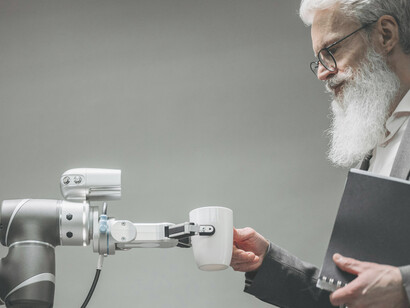
Communication between humans and robots is evolving beyond simple command-and-control interfaces to more natural, bidirectional exchanges. Robots can now ask clarifying questions when faced with ambiguous situations, report on their learning progress, and even suggest improvements to processes based on their observations. This communication capability transforms robots from tools into partners, contributing their unique capabilities while remaining responsive to human guidance and oversight.
Challenges and ethical considerations
The rapid advancement of fast-learning robots also raises important challenges and ethical considerations that society must address thoughtfully. The speed with which these systems can acquire new capabilities raises questions about control and predictability. When a robot can learn and adapt faster than humans can monitor and understand, ensuring that its behavior remains within desired boundaries becomes increasingly complex.
Data privacy concerns emerge as robots become more sophisticated at observing and learning from their environments. These machines necessarily collect vast amounts of information about human behavior, work processes, and environmental conditions. Establishing appropriate frameworks for data collection, storage, and use becomes crucial, particularly in sensitive environments like healthcare facilities or private homes.
The economic implications of rapidly deployable automation technology require careful consideration. While fast-learning robots can enhance productivity and create new opportunities, they also have the potential to displace workers more quickly than traditional automation technologies. The transition period during which workers adapt to new roles alongside robotic colleagues needs to be managed thoughtfully to ensure that technological progress benefits society broadly rather than concentrating advantages among a few.
Safety and reliability concerns take on new dimensions when robots can modify their own behavior through learning. Traditional safety analysis relies on predictable, thoroughly tested behaviors, but learning systems can develop unexpected capabilities or failure modes. Developing new approaches to safety verification and risk assessment becomes essential as these technologies mature.
Questions of accountability and responsibility become more complex when robots make autonomous decisions based on learned behaviors rather than explicit programming. When a fast-learning robot causes harm or makes a mistake, determining responsibility between the robot manufacturer, the organization that deployed it, and the individuals who trained it becomes increasingly challenging.
Looking toward the future
The trajectory of fast-learning robot development points toward even more remarkable capabilities in the coming years. Researchers are working on systems that can learn not just specific tasks but entire domains of knowledge, creating robots that understand broader contexts and can apply their learning across increasingly diverse situations. The goal is robots that can learn new skills as easily as humans do, through observation, experimentation, and reasoning.
Multi-robot learning systems represent another frontier, where groups of robots share knowledge and coordinate their learning efforts. These systems could tackle complex projects that require multiple specialized capabilities, with individual robots contributing their unique skills while learning from their teammates. Construction sites, disaster response scenarios, and large-scale manufacturing operations could all benefit from such coordinated robotic teams.
The integration of fast-learning robots with other emerging technologies promises to create even more powerful capabilities. Augmented reality systems could help robots understand human instructions more clearly, while advanced materials could give them more dexterous manipulation capabilities. Quantum computing might eventually accelerate their learning processes, while brain-computer interfaces could enable more direct knowledge transfer from human experts.
As these technologies mature, we can expect to see robots moving beyond structured environments into increasingly complex real-world scenarios. Personal robots that can adapt to individual households, learning family routines and preferences while maintaining privacy and security. Emergency response robots that can quickly learn to navigate disaster zones and assist with rescue operations. Educational robots that adapt their teaching methods to individual student learning styles and needs.
The convergence of fast-learning capabilities with advances in robot hardware will likely produce machines that are not only more intelligent but also more physically capable. Improved actuators, sensors, and materials will give these robots greater dexterity, strength, and environmental resilience while their enhanced learning capabilities help them make the most of these physical improvements.
Conclusion: a new chapter in human-machine partnership
The emergence of fast-learning robots marks a pivotal moment in the evolution of automation technology. These systems represent far more than incremental improvements to existing robotics; they embody a fundamental shift toward adaptive, intelligent machines that can work alongside humans as collaborative partners rather than isolated tools. The ability to learn new skills in hours rather than months, adapt to changing environments in real-time, and transfer knowledge between different domains transforms robots from rigid automation systems into versatile, responsive assistants.
The implications extend far beyond the immediate applications in manufacturing, healthcare, and service industries. Fast-learning robots are reshaping our understanding of what machines can accomplish and how they can integrate into human society. They promise to democratize access to advanced automation, making robotic assistance available to small businesses and specialized applications that were previously economically unfeasible.
However, realizing this promise requires thoughtful attention to the challenges these technologies present. Ensuring safety and reliability in learning systems, protecting privacy and data security, managing economic transitions, and establishing appropriate frameworks for accountability all demand careful consideration and proactive solutions. The goal should be to harness the remarkable capabilities of fast-learning robots while ensuring that their benefits are shared broadly and their risks are managed responsibly.
As we stand at this technological inflection point, the choices we make about how to develop, deploy, and regulate these systems will shape the future of human-robot interaction for generations to come. The potential benefits are enormous – enhanced productivity, improved quality of life, solutions to complex global challenges, and new forms of creative collaboration between human and artificial intelligence. By approaching this transformation thoughtfully and inclusively, we can ensure that fast-learning robots become powerful allies in building a more capable, equitable, and prosperous future for all.
The age of fast-learning robots has begun, and with it comes the opportunity to reimagine the relationship between human capabilities and machine intelligence. As these remarkable systems continue to evolve and mature, they will undoubtedly surprise us with capabilities we haven't yet imagined, opening new possibilities for collaboration, creativity, and human flourishing in ways we are only beginning to understand.