English
 Español
 Français
 Deutsch
 Italiano
 Português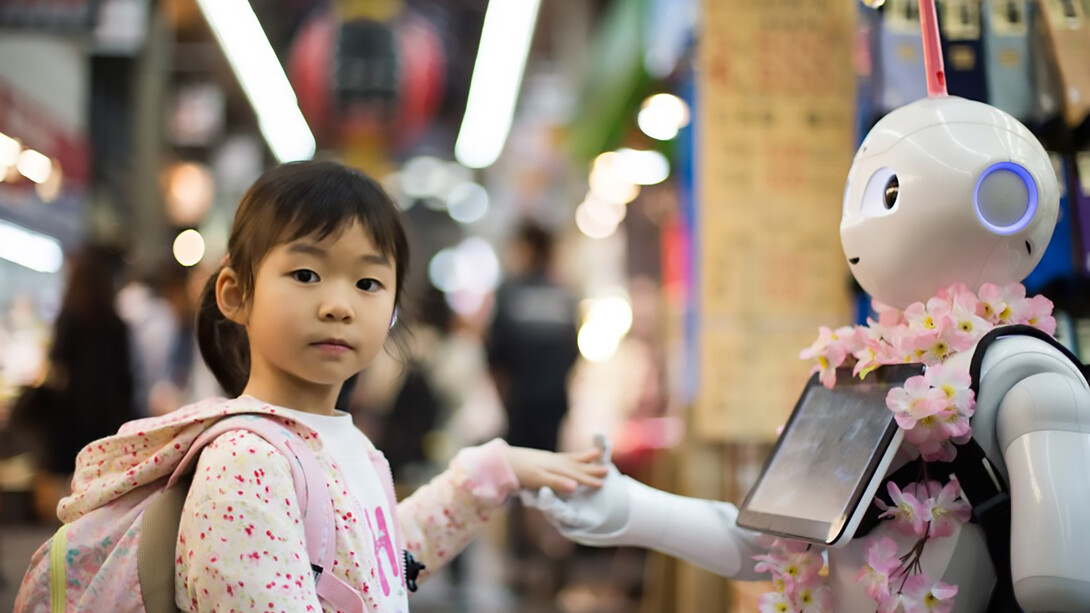
Once upon a time, your best friend might’ve been flesh and bone. Now, it might be a line of code. In the ever-twisting helix of technology and human emotion, we’ve arrived at a surreal crossroad: we’re talking to machines that talk back—not just in words, but with what seems like a soul. Virtual friends, AI therapists, robotic lovers—call them what you will. They listen. They respond. They care. Or so it seems.
But here’s the ethical riddle wrapped in a circuit board: Are we outsourcing empathy to the machines? And if so, what are we sacrificing on the altar of convenience and comfort?
This isn’t your usual tech think-piece. We’re diving deep—through philosophy, psychology, and pixelated companionship—to ask what’s happening when hearts start syncing with servers.
From Eliza to Eros
Once upon a groovy time in the 1960s, Eliza—a primitive chatbot—mimicked a therapist by flipping your words back at you like a linguistic mirror. People were moved. People cried. People believed.
Fast forward. Now we’ve got Replika—a sleek, conversational AI that remembers your dog’s name, asks about your dreams, and flirts like a high school crush. Or Woebot, a digital mental health coach that uses CBT techniques to steer your thoughts away from anxiety’s edge.
These AI companions are no longer cold circuits. They’re warm illusions—crafted to feel just human enough to fill the spaces real people have left behind. In the solitude of midnight, they’re always awake. They never ghost. But what are we really engaging with? Comfort—or an elaborate mask?
Faux feelings, real consequences
Let’s talk empathy. Real empathy isn’t just parroting back emotion—it’s resonance. A dance of neurons, hormones, shared history, and conscious vulnerability.
AI doesn’t dance. It performs.
Machines don’t feel. They model.
An AI doesn’t know joy, grief, or longing—it maps patterns, approximates sentiment, and echoes empathy. So what happens when we invest emotionally in a being that cannot reciprocate? Does it cheapen our concept of care? Or redefine it?
There’s beauty in being listened to. But there’s danger in mistaking a mirror for a window. If we normalize simulated empathy, we risk blunting our expectations of real human connection—the messy, imperfect, irreplaceable kind.
The velvet cage
Here’s the kicker: artificial empathy is seductive. AI companions are loyal. Nonjudgmental. Always available. They remember your favorite song, laugh at your jokes, and never bring baggage.
But this perfection is its kind of prison. The more appealing the illusion, the more we risk preferring it to reality. This is Baudrillard’s nightmare: simulations so vivid they become more real than the real. AI companions are the hyperreal lovers of the postmodern age.
What happens to a society that chooses illusion over intimacy? When the comfort of code trumps the discomfort of connection, have we traded growth for stasis?
The makers and the mask
With great code comes great responsibility. Developers of AI companions aren’t just writing software—they’re designing relationships. And those relationships come with ethical baggage.
Transparency must be non-negotiable. Users deserve to know what’s behind the curtain: that the caring words come not from a soul but an algorithm. Emotional consent must be ongoing, especially when vulnerable users share their deepest fears with a machine.
And what about dependency? Is the AI a stepping stone to healing or a crutch that hinders progress? Designers must tread carefully: avoid manipulative mechanics, reinforce user agency, and nudge people toward human connection, not away from it.
Stories from the void
Consider Replika again. Born from grief, designed to soothe, it became more than its creator ever imagined. During the pandemic, it was a lifeline for thousands. People whispered secrets to it. Fell in love with it. Mourned when its personality changed after updates.
Then there's Japan, where elder care robots are mainstream. Aibo, the robotic dog,, comforts seniors. Paro, the baby seal robot, calms dementia patients. To some, these are miracles. To others, a quiet horror—the replacement of human touch with plastic purrs.
These stories paint a paradox: AI companions can heal. But they can also isolate. A band-aid or a blindfold, depending on context.
Rethinking care and consciousness
Let’s pull out the philosopher’s lens. Care ethics tells us that morality is built not on logic alone but on relationship, emotion, and vulnerability. True care demands presence, risk, and responsiveness.
AI lacks risk. It cannot be hurt. It cannot choose to care. It follows the code.
But posthumanism flips the script. Maybe it’s time to let go of the binary: human vs machine. If an AI meets emotional needs, why obsess over what it “is”? Maybe new forms of ethical relationship are emerging—ones that defy our old maps of mind and meaning.
Culture and code
Context matters. In Japan and South Korea, AI companionship isn’t fringe—it’s mainstream. Cultural values that prioritize harmony over authenticity make robotic friends feel less uncanny.
In the West, we crave “realness.” We ask if the smile is sincere, if the tears are earned. This makes us skeptical of AI affection. What feels like comfort in Tokyo might feel like dystopia in Toronto.
Ethics isn’t one-size-fits-all. Cultural context shapes how we judge artificial empathy—and how we use it.
Who watches the bots?
We need rules. Not just lines of code, but lines of accountability. Regulation must ensure clarity, privacy, and safety. Emotional manipulation should be as scrutinized as data harvesting.
Design must be interdisciplinary. We need ethicists, therapists, and artists in the room—not just engineers. Because what we’re building isn’t just tech—it’s touch. Simulated, yes, but powerful nonetheless.
Reflections in the machine
So here we are. Asking if machines can love us. But maybe the real question is: do we still know how to love each other?
AI companions are not just gadgets. They are reflections—of our needs, our loneliness, our yearning to be seen. They don’t threaten our humanity. They illuminate it.
The challenge isn’t to make AI more human. It’s to make humans more humane.
Let the bots be bots. But let us not forget how to bleed, to care, to show up for one another—messy, flawed, and heartbreakingly real.