English
 Español
 Français
 Deutsch
 Italiano
 Português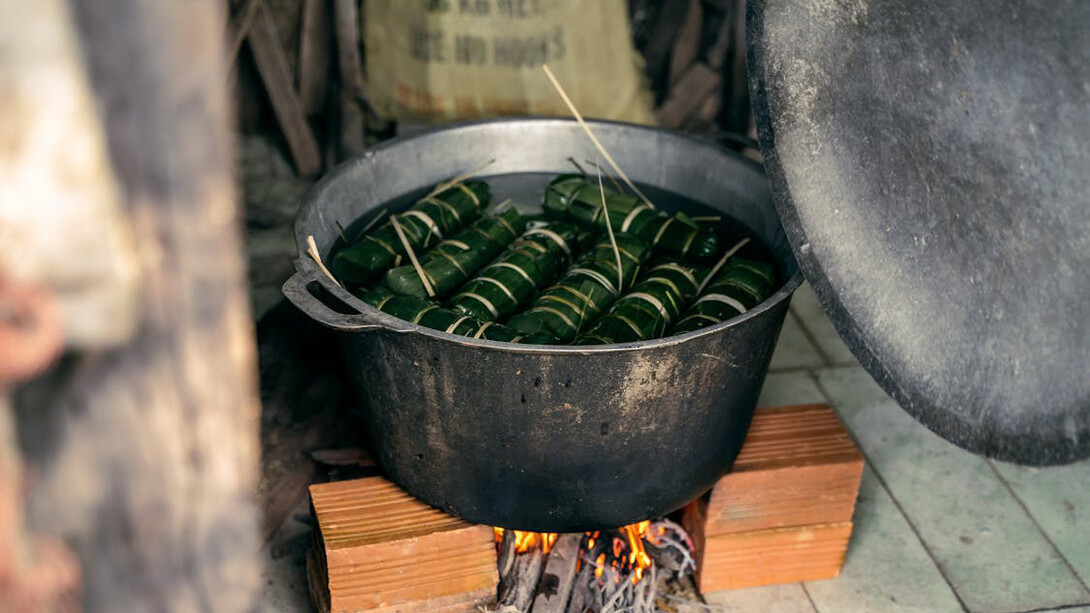
Bariva holds a special place in the hearts of those from the Rigo district of Papua New Guinea's Central province. This traditional dish, deeply rooted in the community, serves as more than just sustenance; it is a profound expression of identity and heritage. Bariva, with its simple yet rich ingredients, epitomises the blending of natural resources and culinary practices passed down through generations. Its significance extends beyond the dining table, marking its presence in major communal events and celebrations, symbolising unity and a deep respect for ancestral wisdom.
The tradition of Bariva is as old as the community itself, intertwined with the daily lives and ceremonies of the people in the Central province. Originally, Bariva was not just food but a ceremonial element, integral to significant events such as weddings, initiation rites, and important gatherings. The dish's ingredients, primarily sourced locally, reflect the people's connection to their land and environment. Sago, extracted from tropical palm stems and bananas, abundantly available in the region, are staples that have nourished generations. This dish embodies the history and lifestyle of the Rigo people, preserving their connection to the past while continuing to be a staple in present-day celebrations.
Bariva is primarily made from two key ingredients: over-ripe bananas and sago. The bananas, chosen for their sweetness and texture, are mashed into a creamy consistency. Sago, known locally as 'saksak', is a starch extracted from the pith of sago palms, a common plant in the humid tropics of Papua New Guinea. The sago adds a unique texture to the dish, binding the banana mixture with its glutinous quality. Together, these ingredients create a dish rich in carbohydrates and energy and carry nutritional benefits that have sustained the local population through everyday life and ceremonial festivities' rigours.
Preparation process
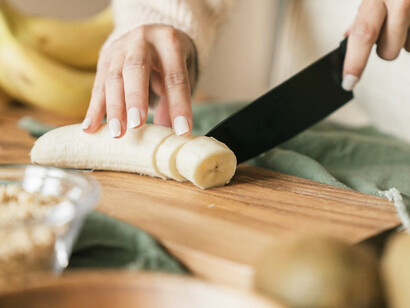
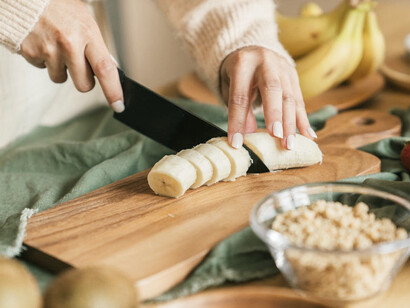
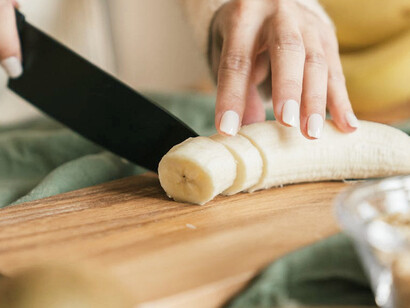
The preparation of Bariva is a detailed process that pays homage to the culinary heritage of the Rigo district. The process begins with selecting overripe bananas known for their enhanced sweetness and softer texture. These bananas are peeled and placed into a traditional clay pot or a large wooden bowl. The bananas are thoroughly mashed using a wooden or clay masher until they achieve a smooth, creamy consistency. This step is crucial as it forms the base of the dish, and the texture of the mashed bananas affects the outcome.
Sago, a starch extracted from the spongy centre of various tropical palm stems, is prepared next. The raw sago is first rinsed under cold water to remove impurities and residual fibres. It is then soaked in clean water for a few hours to soften. After soaking, the sago is strained through a fine mesh to ensure that only the finest sago grains are used. This results in a smooth, fine-textured sago blending seamlessly with the banana mash.
Once the sago is ready, it's combined with the mashed bananas in a large mixing bowl. The mixture is stirred thoroughly to ensure the sago is evenly distributed throughout the banana mash. This blending is critical as it ensures that every bite of Bariva has a consistent flavour and texture. While the banana and sago mixture rests, banana leaves are prepared to wrap the mixture. The leaves are gently passed over an open flame or heated in a large pan. This heating makes the leaves pliable and easier to fold without tearing, which is essential for securely wrapping the Bariva.
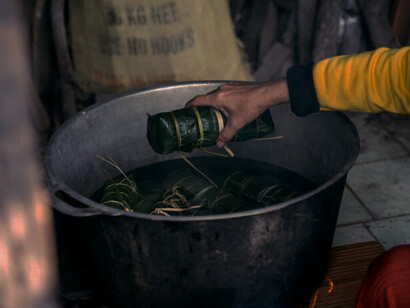
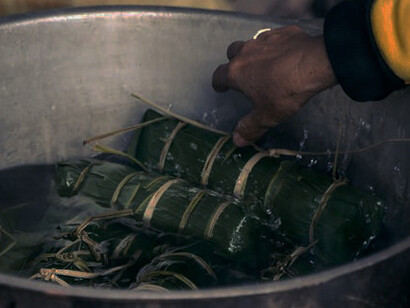
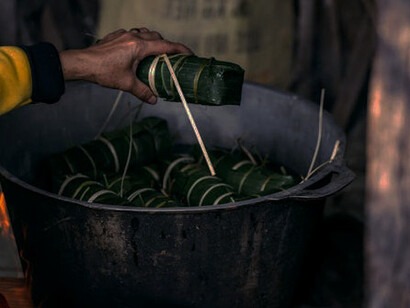
Once the leaves are pliable, the banana and sago mixture is scooped onto the centre of each leaf. Care is taken to place an appropriate amount on each leaf to ensure it can be fully enclosed without spilling. The leaves are then folded over the mixture, and the edges are folded in to create a tight parcel. These parcels are secured with fibres stripped from the banana plant, which are tied around the wrapped leaves to keep them closed during cooking.
The wrapped Bariva parcels are carefully placed in a large pot of boiling water. They are boiled for about 10-15 minutes, allowing the flavours to meld and the sago to cook thoroughly. The boiling not only cooks the mixture but also allows the subtle, smoky aroma of the banana leaves to infuse the Bariva, adding depth to its flavour profile. After boiling, the Bariva parcels are removed from the water and set aside to cool slightly. Once manageable, they can be unwrapped and served. Typically, Bariva is enjoyed hot and can be drizzled with coconut cream or oil to enhance its flavour.
This careful and traditional preparation of Bariva not only preserves the culinary practices of Papua New Guinea but also ensures that this cultural dish continues to be a meaningful part of gatherings and celebrations. Each step, from mashing the bananas to boiling the wrapped parcels, is imbued with history and community significance, making Bariva much more than just food — it's a celebration of heritage.
A crucial ingredient of Bariva is the coconut cream or oil drizzled over the cooked dish before serving. Preparing this ingredient involves grating the coconut meat and extracting the milk by squeezing the grated pulp into a cloth. Depending on preference, the milk can either be used directly as cream or further cooked down to oil. This addition not only enriches Bariva's flavour profile but also increases its caloric and nutritional value. It adds a silky texture that complements the starchy banana and sago base. The coconut element highlights the dish's tropical essence, tying together the flavours into a cohesive, comforting meal.
Serving and consumption
Traditionally, Bariva is served during significant events as a dish that sustains and symbolises communal sharing and unity. The presentation of Bariva is as important as its preparation; it is typically laid out on communal banana leaves and served as part of a larger feast. Each wrap, neatly tied and steamed, is unwrapped by guests, revealing the soft, fragrant mixture inside. The communal eating of Bariva not only satiates hunger but also reinforces social bonds, as sharing food is deeply embedded in the culture of Papua New Guinea. Eating together from a shared plate encapsulates the spirit of community and mutual respect among the participants.
Legacy
Bariva is more than just a meal — it is a cultural heritage of Papua New Guinea's Rigo district. As each generation learns the intricate steps of preparing and serving Bariva, they preserve ancestral knowledge and traditions that define their community. Dishes like Bariva remind us of the enduring nature of cultural practices, offering a taste of history and a connection to the past that continues to enrich the present. Through Bariva, the people of Papua New Guinea celebrate their culinary traditions, communal values, and deep-rooted respect for their land and ancestors.