English
 Español
 Français
 Deutsch
 Italiano
 Português
Three Italian residents in The Netherlands have been asked to present their artistic research at the next Venice Biennale from 1 June until 24 November 2013.
The artist Rossella Biscotti (in The Netherlands since 2004) has been invited to the international exhibition, Francesca Grilli (since 2007) will present a new work at the Padiglione Italia, while Lorenzo Benedetti (since 2008), Director of the museum De Vleeshal in Middelburg, has presented the winning project for the Dutch Rietveld pavillion - the latest work by Mark Manders.
The participation of Holland-based artists at the coming Biennale has been actively promoted by the Cultural Section of the Embassy of the Kingdom of the Netherlands through the support of several artistic projects and precise communication campaigns.
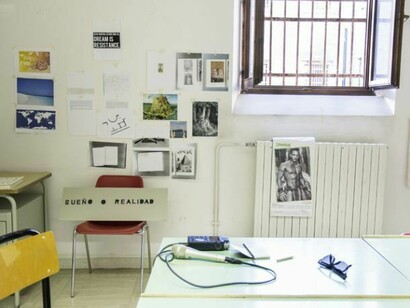
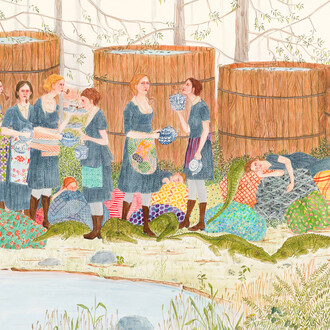
Rossella Biscotti has been invited by the curator of the Biennale, Massimiliano Gioni, to create a site-specific installation for the 55th International Art Exhibition. For this particular occasion, she has started an evolving project, which actively includes the female detainees of the prison of Venezia-Giudecca. Since January 2013 every two weeks, inside the prison, she holds an “Oneiric Laboratory”, where a group of detainees meets to collectivise their dreams and initiates a reflection on the situation they live in, based on their oneiric experience.
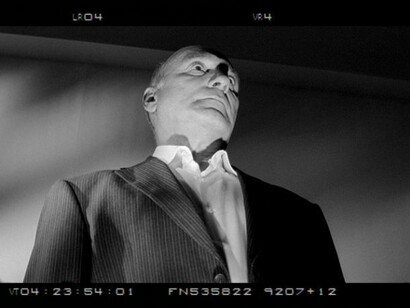
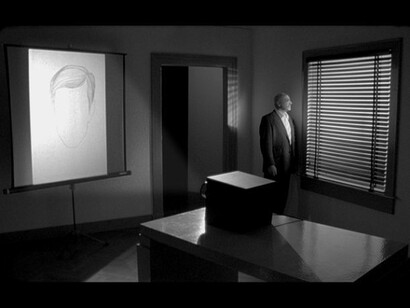
Francesca Grilli is among the 14 artists who have been selected for the Padiglione Italia, which is curated by the Director of the Roman Macro museum, Bartolomeo Pietromarchi. In continuation with the research she has pursued over the last years, she says: “My work will again be centered on my ongoing research on sounds and voices. There will be a continuation with the recent residence at Rome’s Macro museum in ‘Variazioni per voce’”.
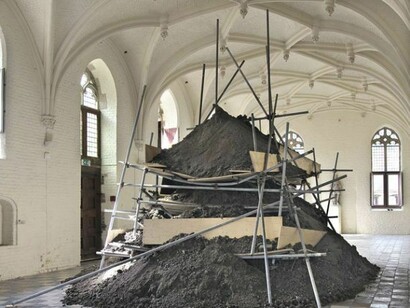
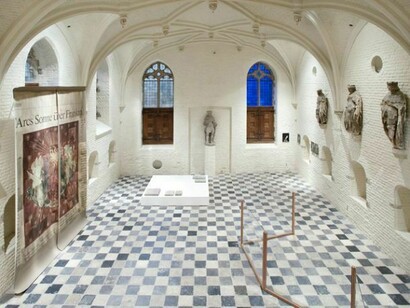
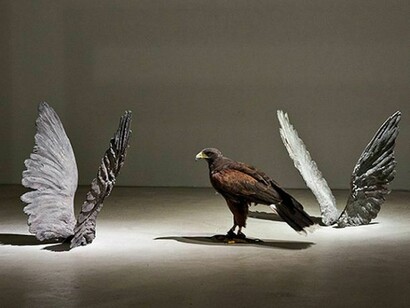
Lorenzo Benedetti, ultimately, will introduce a new project by artist Mark Manders, whose work has been selected for the historic Dutch pavilion at the Biennale, the Padiglione Rietveld, which will celebrate its 50th anniversary.
Manders “is renowned for his poetic, sober-coloured sculptures that emanate mystery but also a strong visual attractiveness”, states Benedetti. Manders’ work is anti-spectacular, hence clearly in continuity with the Dutch artistic patrimony. “Mark uses Rembrandt’s palette and is an advocate of Rietveld’s idea of simplifying his art”.
While once Dutch artists came to Italy in search of inspiration, today the Italians take up residence in Holland to pursue their professional and artistic career. The Italian scene in the Netherlands is lively and artists entertain narrow bonds, especially in Amsterdam. Their central venue is the restaurant l’Ozio, owned by Marco Nember, an art collector from Brescia. He opened his restaurant three years ago, and beside his gastronomic specialties he organizes 2-3 exhibitions per year. Also the museum de Vleeshal in Middelburg, directed by Benedetti, has become a crucial meeting point for those keen on learning more about Italy's contemporary scene’s best artists.
The choice of The Netherlands is no coincidence. In their adoptive country, the Italian artists have found the space and the time to experiment. Study courses and work space are available at reasonable costs, and artists have access to institutions and funds. Ever since, the Netherlands have put great attention on contemporary art, and have created important institutions such as the Rijksakademie, De Appel, Witte de With and many more. With the recent reopening of the Stedelijk Museum in Amsterdam the artistic sector, in spite of budget cuts, is in great fermentation.
Among Dutch Italians, there are many curators, like Lorenzo Benedetti, Lorenzo Bruni, Francesco Stocchi, Luca Cerizza, Angela Serino, Alessandra Saviotti and Francesco Bernardelli, along with artists such as Rossella Biscotti, Francesca Grilli, Giorgio Andreotta Calò, Domenico Mangano and Nico Feragnoli.
“Italy and Holland have always had strong bonds” says Benedetti. “Historically, the Flemish and Dutch painters were very interested in Italy. But also more recently, artists such as Ger van Elk, Marinus Boezem or Jan Dibbets have been drawn to Arte Povera. I think also of Rudi Fuchs, who has been director at Turin’s Rivoli museum. Now the connection is reversed, with the Italians going to Holland, mainly because of the situation in Italy”. The Italian artists have chosen The Netherlands, says Grilli, “because it offers the possibility to do research. All Italian artists in Holland work with hybrid disciplines, like installations and video. These projects require lots of space and means”.
For each of them, the stay in Holland has been fundamental. As Lorenzo Benedetti, director of De Vleeshal, a historic Dutch centre of excellence for research in the field of visual arts, puts it: “It’s a special space in a special country. Even in this turbulent period, Holland keeps investing in research. It has always been the country with the most museums of contemporary art, like the Van Abbe in Eindhoven, Boymans Van Beuningen in Rotterdam and the Stedelijk in Amsterdam”. Rossella Biscotti confirms: “In Holland you find a very international climate, with a lot of exchange. It’s an open and culturally stimulating country.”
This year in The Netherlands a new plan for cultural politics has come into force. The visual artists support program is being administered with public funds but totally independently by the Mondriaan Foundation. The cultural sector, which traditionally has enjoyed generous support by the Dutch state, is facing harsh times and funds have suffered substantial cuts. Yet this need not be a mere problem, but could also stimulate a new vision and new qualities in the production of art. The Dutch art system is adapting itself to a new reality. Maybe Italians are more used to work within a system that does not guarantee a continuous certainty of public funding, as Francesca Grilli states: “Italians are more elastic, which is necessary, we are somehow open to anything.”
La Biennale
Venice 30122 Italy