English
 Español
 Français
 Deutsch
 Italiano
 Português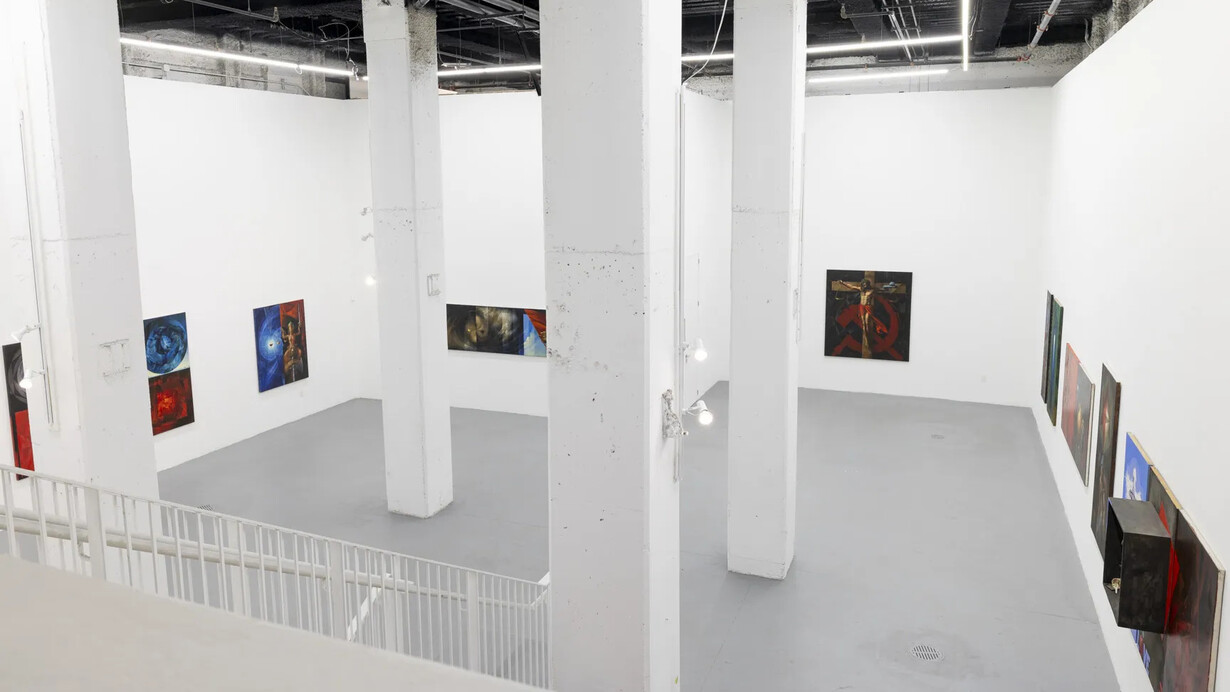
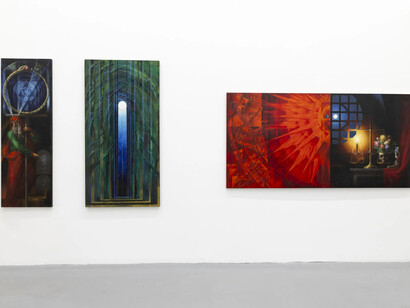
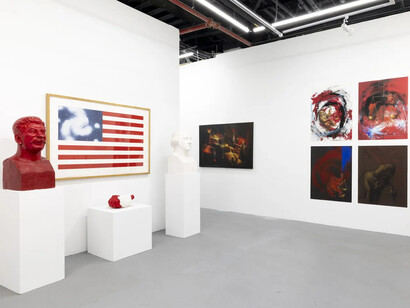
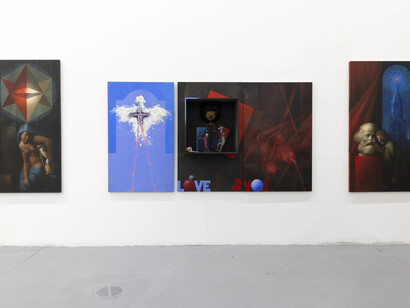
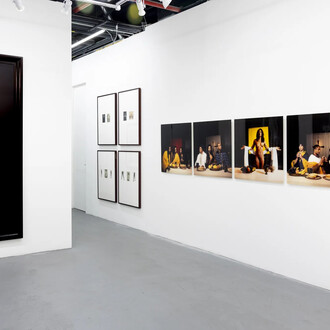
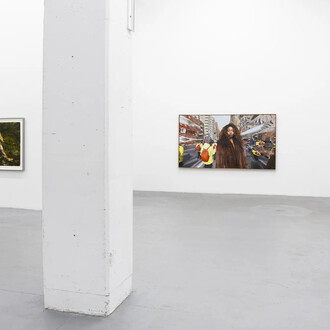
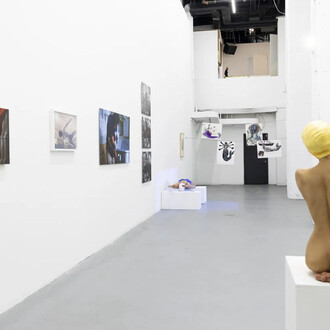
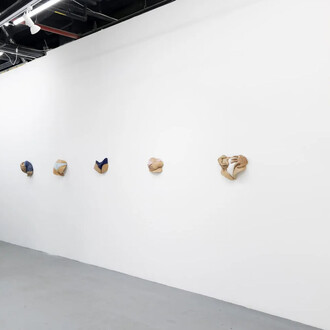
Ethan Cohen Gallery proudly presents Three day weekend: tomorrow is not guaranteed, Vitaly Komar's first solo exhibition with the gallery, and his first solo exhibition in New York in over ten years. The Komar and Melamid works on exhibit are from the V. Komar Collection.
Vitaly Komar, formerly the partner of the famous artist duo Komar and Melamid enters his third decade of solo independence. Here we view the chronicle of a renowned artist’s philosophical and esthetic arc towards reconciliation with a life spent wrestling public issues. The show’s title adumbrates a rapprochement of the three Abrahamic religions, so often at odds, each with its own day of worship.
The legendary partnership of Komar and Melamid effectively ceased collaborating some 20 years ago. They had made history in the Soviet Union as part of a public art demo that got bulldozed, after launching the caustically dissident Sots-Art movement, then migrated to New York via Israel in 1977. Here they promptly found ways to provoke the public eye with a debut show at the famed Ronald Feldman gallery, by evanescing ironically at the Factory with Warhol and regularly flouting the review pages of the New York Times over the years. “We are not a team; we are a movement” was a resounding quote that echoed convincingly through their era of prominence.
Their dance with history, art history, their flirting against authority, including the traditional Russian worship of religious icons latterly transmuted into Socialist poster art, became a subversive iconoclasm toward all received assumption. In America, they recognized echoes of propaganda art and the presence of false gods in popular consumerist imagery. What Warhol celebrated with only a droplet of irony they deconstructed fully into symbols of multilayered irreverence. And so, in the 1990s, they launched ‘The People’s Choice’ project dedicated to envisioning art based on data from popular polls in countries across the world.
In the end, the duo diverged according to their true instincts. Melamid’s Duchampian rejectionism led to honorable stasis and withdrawal. Komar’s exploration of corrupted worship symbols led him to seek for sacred authenticity. Komar’s works are never private or merely personal. His oeuvre did, after all, begin with the satirizing of Soviet propaganda posters. Hence the depiction of Putin, Trump, and Xi as the scary substitutes for Churchill, Roosevelt and Stalin in ‘The New Yalta’, a de-sublimated vision of the famous original photograph.
Yet Komar’s paintings, for all their public stance, often possess a powerful intimacy and insularity. We see it in works like ‘The Trinity’ where the private experience of religious devotion and suffering is evoked intensely, the more so to suggest the dangers of its public misuse - prostration before the icon as it miscegenates into the iconic. The feeling of sacred interiority conveys the compressed moment where art, tradition, faith and wonder converge. Its ideation, or indeed objectification, is encapsulated by Komar in his famous ‘Circle, Square, Triangle’, originally conceived in 1975.
At that time, the painting was intended as an abstraction representing the naive veneration of symbols, a blind worship of idols. Now luminous and arresting, its meaning has permutated down the years to keep pace with Komar’s own search for an exit from self-defeating irony. Viewed through the transmutation of time within the artist and out among us, it has arrived at a radical new innocence and significance, as does all great art.