English
 Español
 Français
 Deutsch
 Italiano
 Português
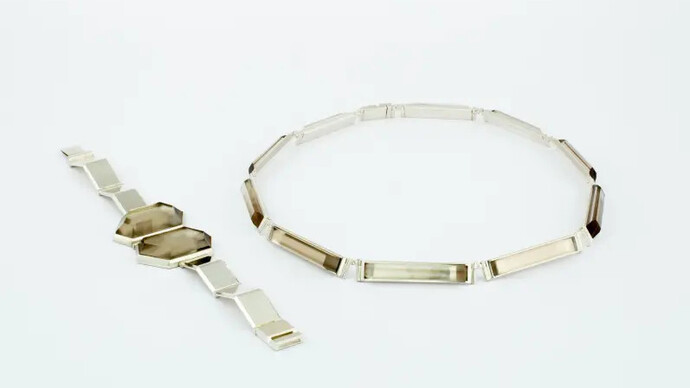
The Museum of Decorative Arts and Design in Riga (Skārņu iela 10), in co-operation with the Latvian Jewellery Art Association, continues the pop-up exhibition series Spectrum, introducing current developments in Latvian jewellery art. Visitors are invited to see the third exhibition titled Architecture of lines from 1 October to 13 December 2026.
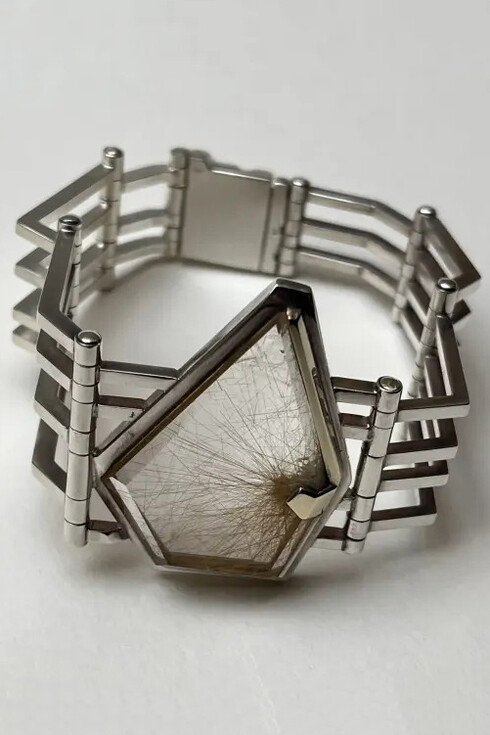
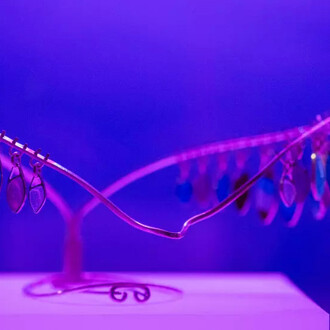
Following the exhibition Beautiful nature, where jewellery and objects were presented as findings, samples or hybrids between the organic and synthetic world, the next exhibition in the series, Architecture of lines, focuses on geometric line as one of the fundamental elements in the structure of jewellery – as contour, construction, rhythm, and drawing in space.
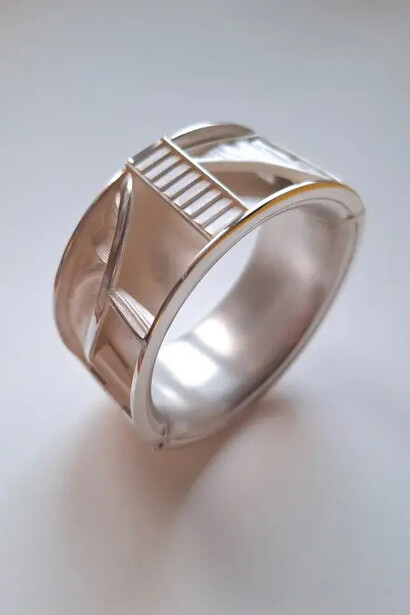
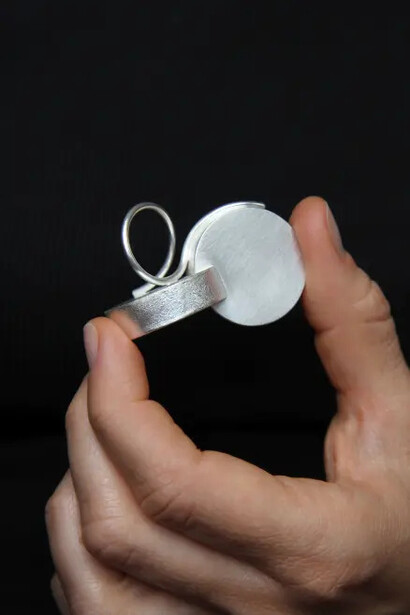
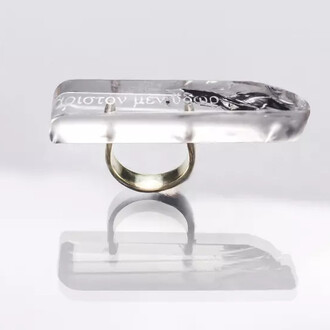
The exhibition features jewellery artists Māris Auniņš, Jānis Brants, Vladislav Chistyakov, Andris Lauders, Una Mikuda, Anita Savicka, Paula Treimane, and Jānis Vilks. Their works reveal different approaches to shaping relationships between line, material, space, and the body within the scale of jewellery.
“The apparent simplicity of a line conceals a surprisingly broad range of expressive possibilities. It can lead both to geometry and absolute precision, and to organic forms and structures found in nature. Yet simplicity is demanding: the purer the form, the less it forgives mistakes. This is precisely why the artists’ mastery is so clearly visible in these works. In their approach, I see the clarity of architectural thinking – the ability to precisely imagine proportion, construction and the relationships between details. Architecture and jewellery share the same method of thinking here: building form from precise relationships between its elements,” shares the series curator Ginta Grūbe.
In the works of jewellery artists Jānis Brants and Una Mikuda, geometry and construction become essential means of expression. “Ideas for jewellery often come to me simply while walking down the street. I first build the piece in my mind: I imagine the form, proportions, distances, millimetres, every detail. When I arrive at the workshop, all that remains is to realise this thought in material,” says jewellery artist Jānis Brants.
“In my work, construction and spatiality are important – how separate elements connect to form a whole. I am interested in how these elements can alter the familiar shape of a ring, giving it volume and a sculptural character while maintaining its connection to the body. In this way, jewellery becomes not only a decorative object but also a spatial structure that interacts with the body and movement,” explains jewellery artist Una Mikuda.
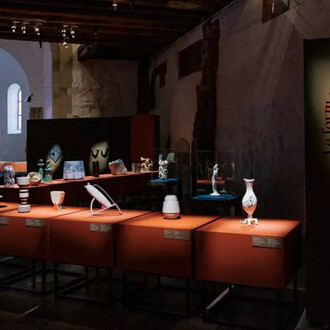
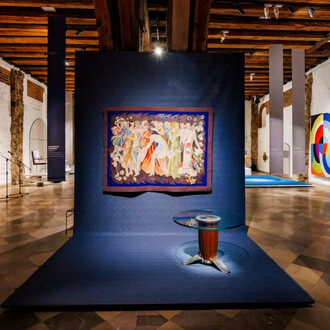
The theme of the exhibition is reflected also in its design. The artists’ works are presented in individual showcases on light wooden frame structures, whose rhythm in space resonates with the central motif – the line as a creator of structure and form. The millimetre paper lining the showcases refers to drawing, scale and construction, while the graphic design created by Eltons Kūns associates the exhibition with the visual identity of the entire Spectrum series.