English
 Español
 Français
 Deutsch
 Italiano
 Português
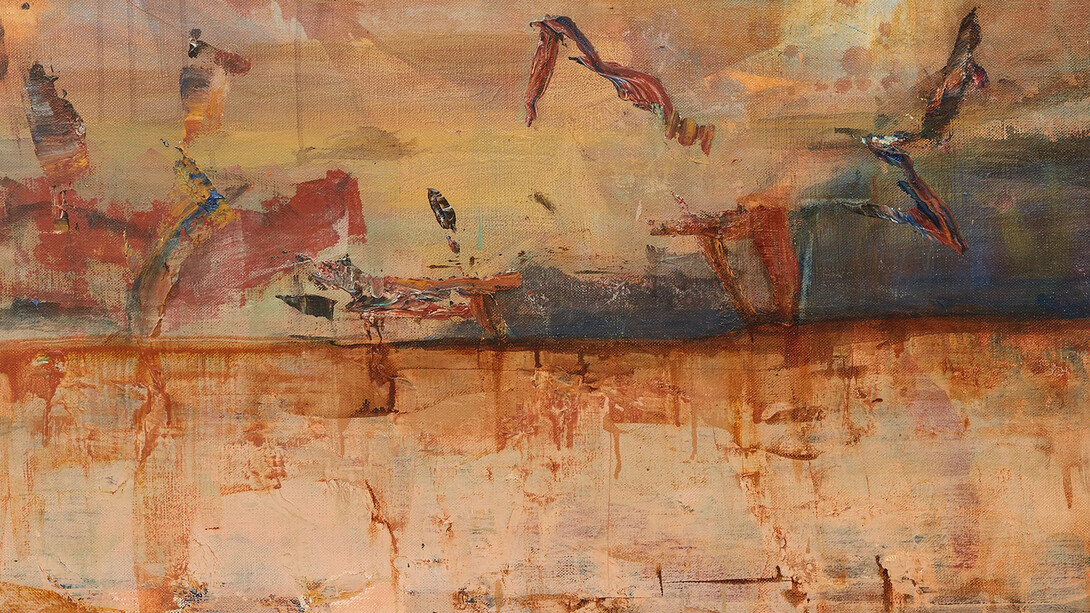
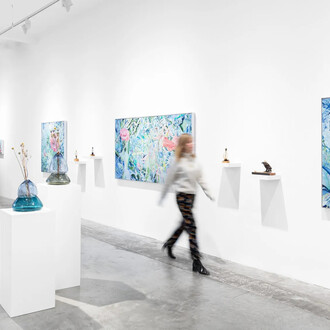
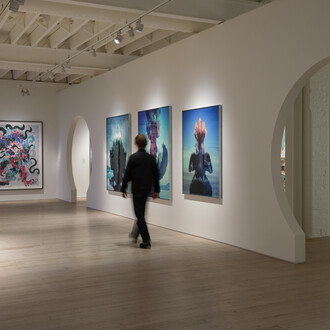
At the heart of this exhibition is an ecological consciousness. Kate Dorrough’s work responds to a growing awareness of the importance and rights of rivers, recognising water as both a finite resource and a vital force that shapes collective experience. Dorrough suggests that contemporary society has become disconnected from the innate language of rivers, a language once understood through careful observation and a sustained relationship with the natural world. Through painting, ceramics and textiles, Dorrough seeks to recover fragments of this language, creating works that speak of interconnection, renewal and care.
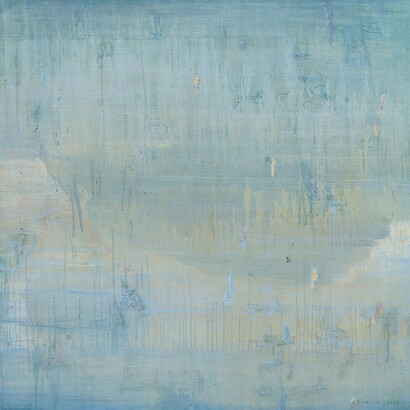
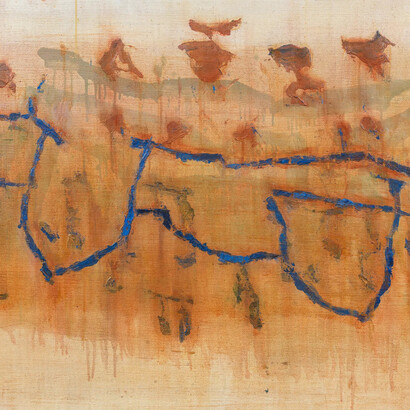
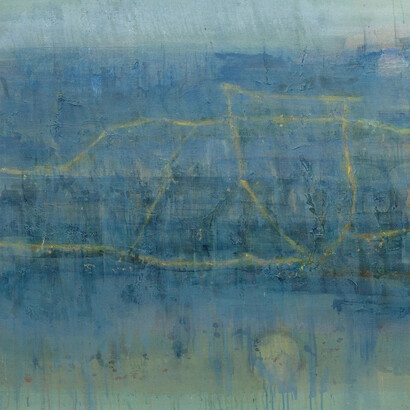
Ecological listening offers a framework for understanding Dorrough’s practice. Rather than treating the landscape as a passive subject to be observed, ecological listening proposes a relationship of attentiveness and reciprocity between humans and the natural world. Contemporary thinkers such as David Abram argue that rivers, forests and ecosystems communicate through patterns, rhythms and material processes that modern societies have largely forgotten how to perceive. Through gesture, texture and repetition, Dorrough’s paintings, ceramics and textiles register the movements of water, the accumulation of time, and the subtle traces of environmental change.
In this exhibition Awakening Time, Dorrough draws us into a contemplative space where landscape becomes language and where the voices of rivers emerge. The artwork titles explicitly reference symphonies, language and echoes, revealing an artist attentive not only to the physical presence of rivers and country, but also to their histories, rhythms and memories. In doing so, the exhibition encourages viewers to move beyond seeing the river as scenery or resource and instead encounter it as a living presence whose stories, memories and rhythms continue to shape both place and experience.
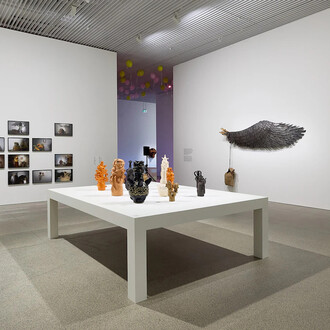
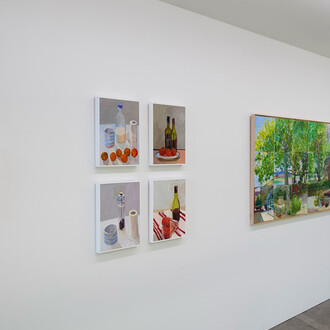
A defining aspect of the exhibition is its multidisciplinary nature. Dorrough’s paintings sit alongside hand-built ceramic vessels and stitched textile works, each medium contributing to an evolving visual dialogue. The movement across these forms mirrors the interconnected networks of the natural world, where boundaries between systems remain porous and continually in flux. Dorrough’s ideas migrate between materials, with marks, symbols and gestures recurring across her surfaces.
The artist’s process begins outdoors, often working plein air on riverbanks, where sticks, leaves and stones become both tools and sources of inspiration. These found materials leave traces within the work, grounding abstraction in direct experience and physical engagement with place. The resulting surfaces possess a layered quality, functioning as visual palimpsests in which memories, histories and sensations accumulate over time.
Dorrough’s ceramic vessels, built through the ancient technique of coiling clay, carry embedded marks and richly layered glazes that evoke sediment and geological time. Similarly, her textile works are traversed by hand stitching that recalls river courses, pathways and ancient tracks across the land: the stitched line operates as both drawing and metaphor, suggesting acts of repair and renewal. In this sense, the textiles embody a philosophy of care, reflecting the attentive stewardship required to sustain river systems and ecosystems.
The exhibition is also shaped by a deeply personal dimension. Dorrough describes working in the quiet hours before dawn, finding restoration and alignment while resolving paintings in her urban studio. Against the backdrop of environmental crisis, social distraction and uncertainty, her work offers a slower and more reflective mode of engagement.
In Awakening Time, Kate Dorrough creates works that are both intimate and expansive. Through her unique poetic visual language, she delivers a direct ecological message, encouraging us to observe closely and reconnect with the memories and languages of the natural world. Her art is less about representing a river than about teaching us how to listen to one.
(Text by Katherine Roberts. Senior Curator, Exhibitions & Collections, Manly Art Gallery & Museum)