English
 Español
 Français
 Deutsch
 Italiano
 Português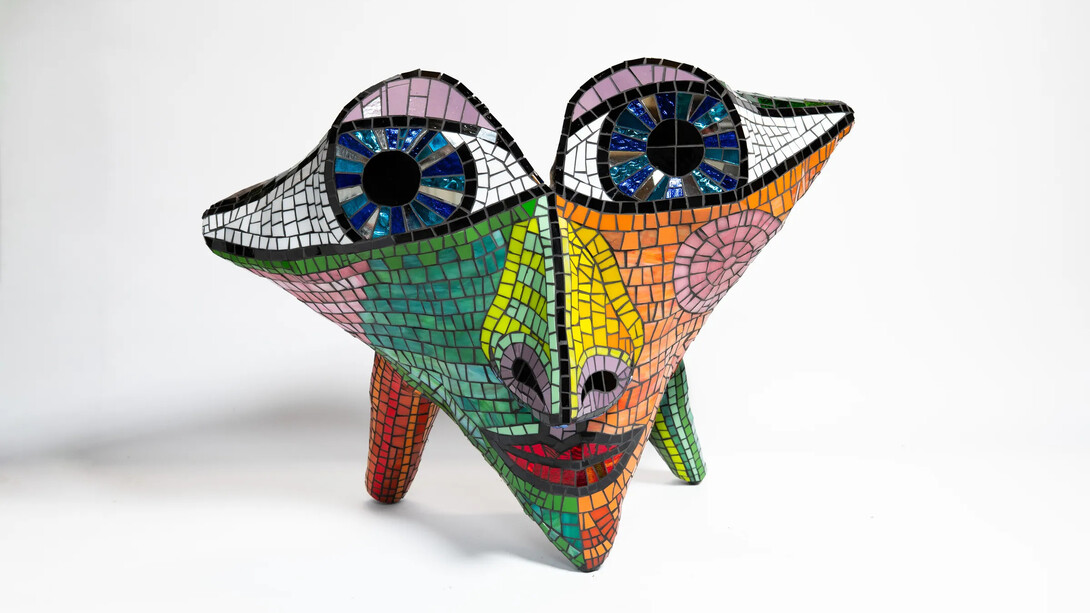
In a world of cultural schism, universal social angst, and worse, some contemporary artists address this plethora of unhappiness with explicit and sensational imagery. Imagery, whether digital or analog, of a controversial and confronting nature that can easily embroil the artist—along with their host institution—in a further world of critical turmoil, not to mention public and political outrage.
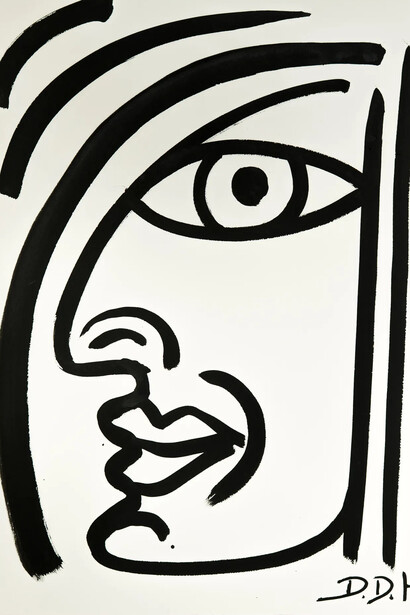
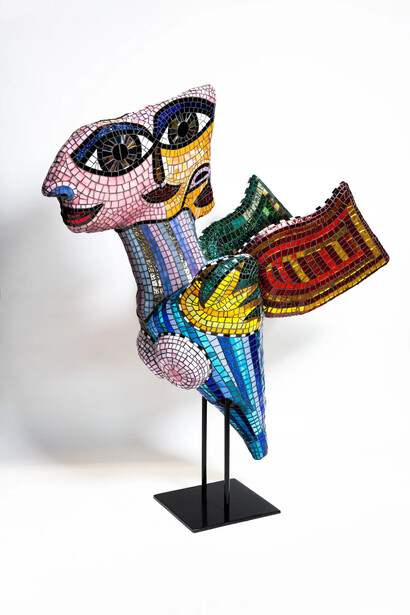
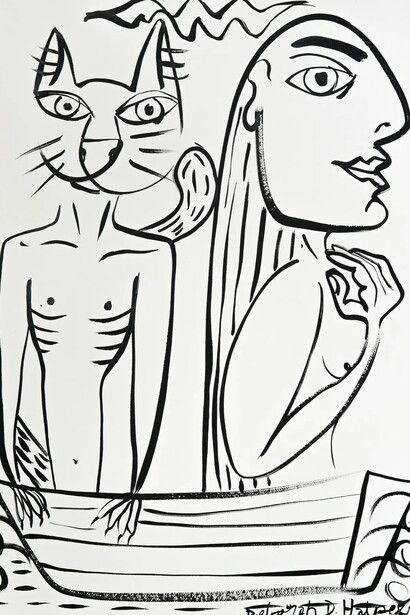
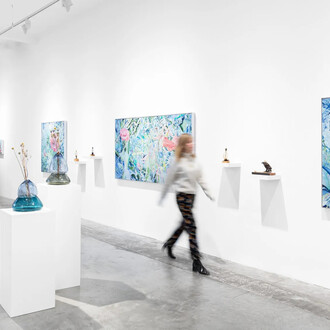
This may seem like a strange way to begin a short commentary on the current exhibition of works on paper and mostly small-scale sculpture by Deborah Halpern—works in both mediums that are notable for exuberant gesture, whimsical motifs and, in the case of the sculpture at least, vibrant colours and glossy surfaces: attributes that coalesce into the artist’s signature style of, shall we say, lyrical surrealism. On the whole, formal attributes that denote and evoke joyfulness. So where is the connection, if there is one, to that grim vein of activist practice cited above?
After all, Halpern is best known for her monumental works in the public domain—specifically her famous Angel and Ophelia landmarks in Melbourne—works that are frequently described as ‘much-loved’ icons of the city in which they are found. And of course they are just that. But there is much more to Halpern’s practice than a spirited rehearsal on different scales and in different media, of her repertoire of quirky, cubistic physiognomies, jaunty birds, inquisitive fish, and the familiar wide-eyed heads of female subjects whose features are emphasised, as in all her work, by solid black outlines that reflect the artist’s formal debt to the monumental Nana statues of one of her acknowledged artistic heroes: the French sculptor Niki de Saint Phalle.
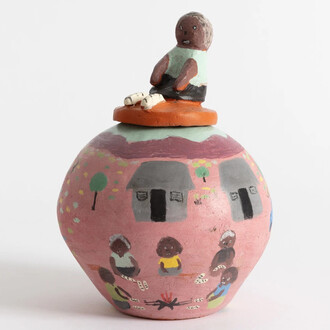
Consider works in the current exhibition such as Bodrig the powerful owl, Ruby, Flying fish, Budgie, or the larger-scale centrepiece of the group, Family—with its floating fish spirit creature blowing a silver trumpet over the heads of the celestial couple posed with their blue-eyed dog—and it’s fair to say these are categorically upbeat works of art. The artist affirms as much when she says that ‘the work I’m doing (now) is ferociously optimistic’, albeit that her motivation for this work is a specific and deliberate response ‘to the state of the world at the moment’; a response conceived ‘to bring joy, peace, irreverence, connection . . . (and thus) counterbalance the madness of the planet’. Halpern asserts that she is ‘not an artist who makes political work’, but it could be said that her sculpture and drawings, as we see in this exhibition, do indeed represent a serious, significant and effective engagement with (or antidote to) the very same plethora of unhappiness mentioned above. Politically-inflected art after all, perhaps, in which political or social engagement assumes an oblique and highly subjective dimension. Whimsical and delightful as Halpern’s imagery may be, her art is neither ‘lightweight’ nor is it oblivious to the existential threats of our time. Rather, it is an enrichment to our lives, and a sort of zany ode to peace.
(Text by Geoffrey Edwards)