English
 Español
 Français
 Deutsch
 Italiano
 Português
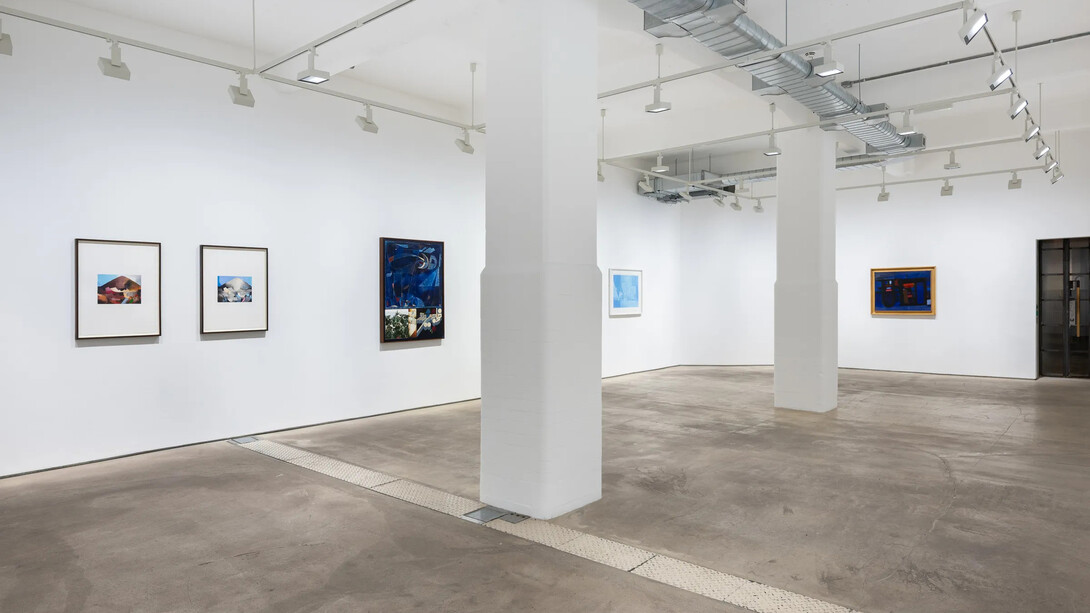
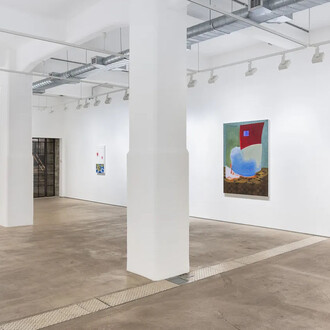
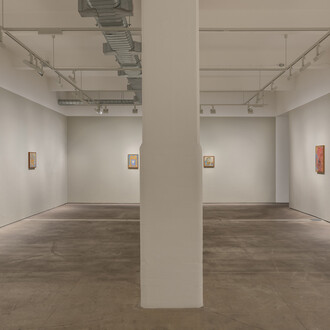
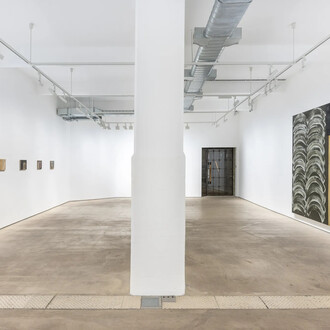
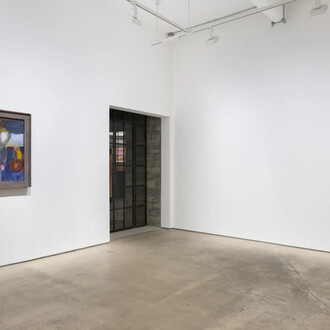
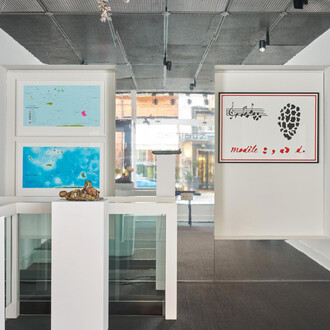
Hales is delighted to present Dialogues: Wilhelmina Barns-Graham x Haroun Hayward, the second exhibition in the gallery's Dialogues series which brings together artists in visual conversation across generations. The presentation positions new works by Haroun Hayward with historic material by Wilhelmina Barns-Graham and spans the 1950s until today, coinciding with Barns-Graham's highly anticipated retrospective, opening at Tate St Ives in October 2026, and following Hayward's recent solo exhibition Path through trees, on view at Pallant House Gallery between May – November 2026.
Wilhelmina Barns-Graham (b. 1912 St Andrews, UK - d. 2004 St Andrews, UK) and Haroun Hayward (b. 1983, London) are both artists for whom abstraction is neither a fixed style nor a retreat from the world, but an expansive means of processing experience. Across painting and works on paper, Barns-Graham and Hayward share an instinctive understanding of colour, rhythm and movement, alongside a resistance to being contained by a singular visual language.
For both artists, stylistic freedom is fundamental. Throughout a career spanning more than sixty years, Barns-Graham moved fluently between observation and abstraction, landscape and geometry, gestural mark-making and precise linear construction. Her work could shift radically in appearance from one period to another without abandoning its underlying concerns. Hayward has similarly resisted the expectation that an artist should be constrained by one visual style. His paintings move between gestural abstraction, carefully delineated geometry, landscape, pattern and image while drawing on sources that range from British Modernism and South Asian visual traditions to rave culture and electronic music. For each artist, style becomes a tool rather than an identity: coherence lies less in consistency of appearance than in the persistence of an enquiry.
Landscape provides one of the exhibition's clearest points of connection. Barns-Graham repeatedly found the impetus for abstraction through close observation of the physical world. From the angular geological structure of Long white rock, 1953, to the volcanic forms of her Lanzarote works of 1989-94, landscape is compressed into shape, contour, rhythm and colour. Her practice continually moves between what is seen and what is felt: natural phenomena become systems of lines, planes and movements that retain the sensation of their source even as they depart from direct representation. Hayward approaches the process from almost the opposite direction. His paintings accumulate fragments of art history, music, design, memory and found imagery until they begin to generate spaces of their own.
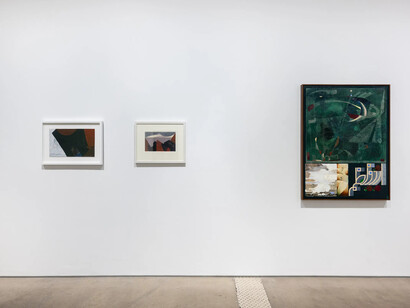
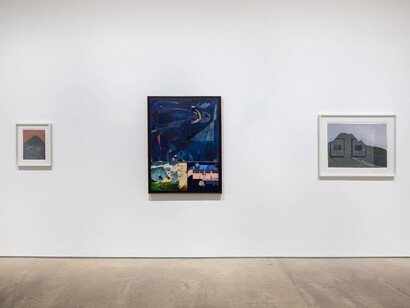
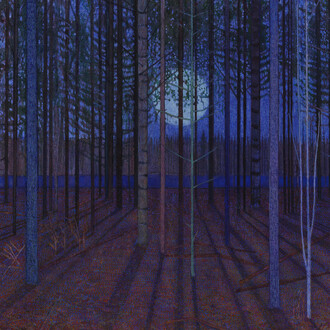
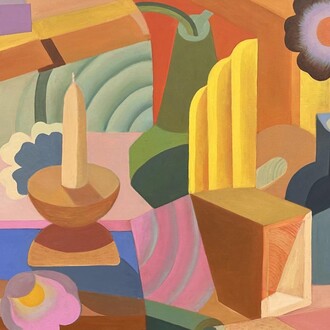
Across Hayward's new paintings featured in the exhibition, the relationship to Barns-Graham's work becomes particularly tangible. Rather than quoting a single period of her work, Hayward appears to echo qualities that emerge at very different moments across her career. The looseness and depth of the painted passages in Night town, 1958, with its dark architecture punctuated by intense blues and reds, finds a place in Hayward's layered and atmospheric fields of colour found in his oil on panel works (A painting for Wilhelmina Barns-Graham and Drexciya, no 2, 2026, or A painting for Paul Nash and 2 Bad mice, 2026, etc.). Elsewhere, the controlled, rhythmic linearity of Sea sound, 1979, - in which densely worked lines suggest currents, waves and shifting forces - resonates with the precisely articulated lines, grids and repeated motifs that structure Hayward's compositions. At the same time, the reductive landscape forms in the likes of Red, brown + white, 1954, and Snow formation 4 (Red), 1979, reappear in Hayward's paintings as fragments suggestive of mountains, horizons and geological formations. In his large 2026 panels, these different registers coexist: gestural paint meets sharply constructed geometry, landscape meets pattern, and painterly intuition sits alongside systems of deliberate organization.
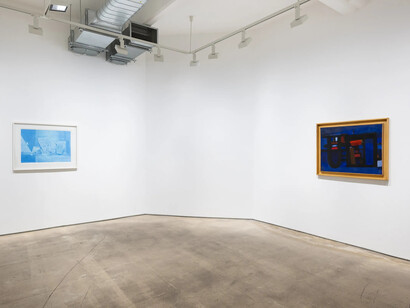
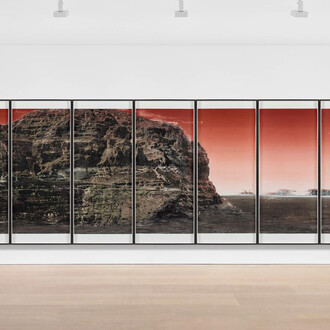
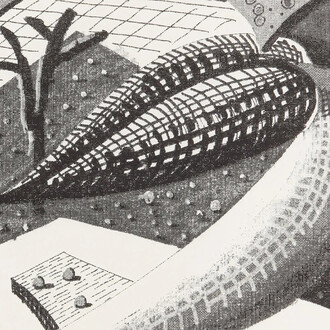
The dialogue between the artists also has a personal dimension. Barns-Graham's Lanzarote, 1989, a work from Hayward's personal collection which is featured in the show, has served as a particularly direct source for his Lanzarote (Red version) and Lanzarote (Blue version), both made by Hayward specially for this exhibition. Barns-Graham's original work reduces the volcanic terrain to a dark, dominant landmass, its foreground activated by a web of linear marks. Hayward's watercolours take that composition as a point of departure, quoting and transforming its mountain form through shifts in colour, scale and pictorial construction and visually 'remixing' the repeated images across both works. The gesture makes explicit a theme that runs throughout the exhibition: Hayward's relationship to Barns-Graham is neither nostalgic nor deferential, but the product of one artist encountering another as an active, living source of ideas. Looking at and living with Barns-Graham's work become part of the process of making.
What ultimately connects Barns-Graham and Hayward is less a shared style than a shared attitude towards painting. Neither artist accepts abstraction as a closed formal system. Instead, it is porous: continually absorbing the world around it, whether the structure of a mountain, the contours of a volcanic landscape, a textile pattern or the rhythm of electronic music. Across the exhibition, forms migrate between works and across generations; lines become landscapes, landscapes become geometry, and geometry acquires rhythm. The conversation between Barns-Graham and Hayward therefore rests not simply on visual resemblance, but on a common belief in painting as a language capable of continual reinvention.