English
 Español
 Français
 Deutsch
 Italiano
 Português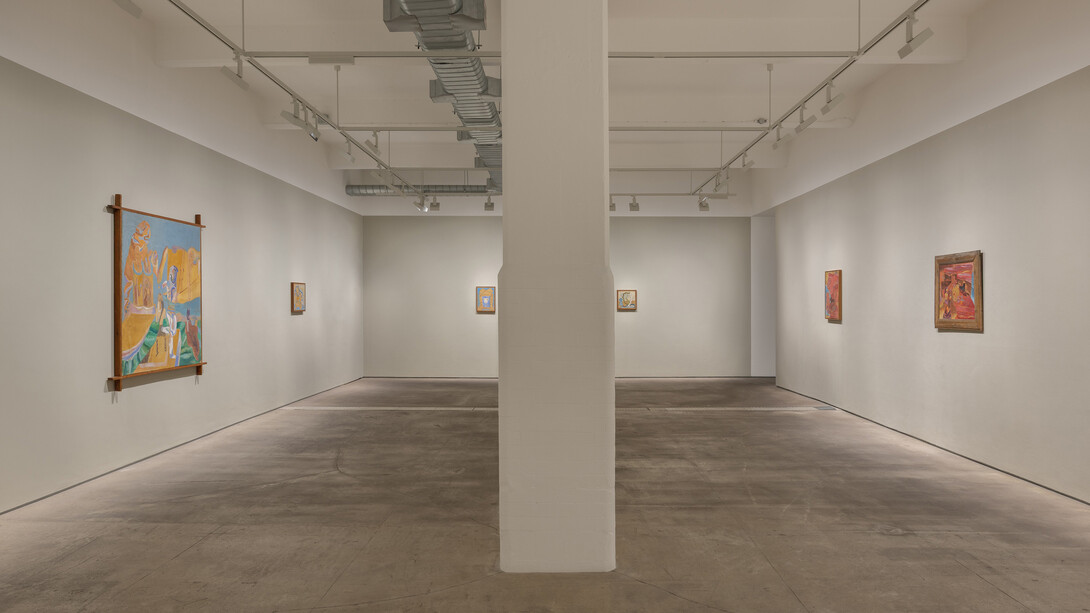
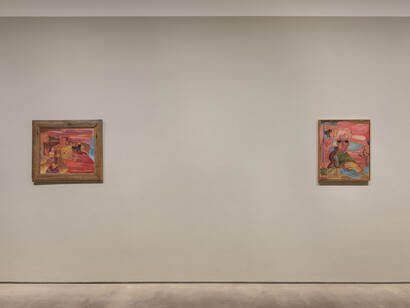
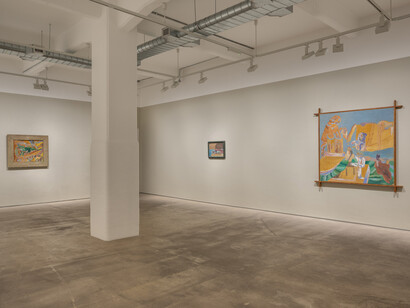
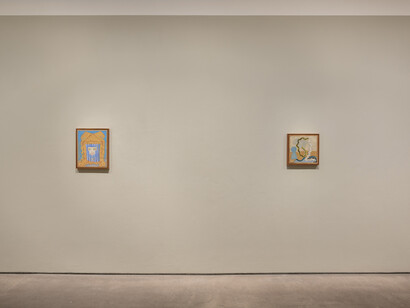
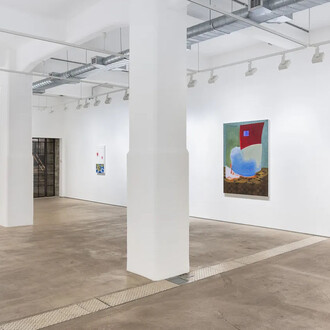
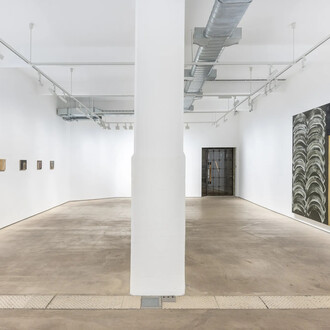
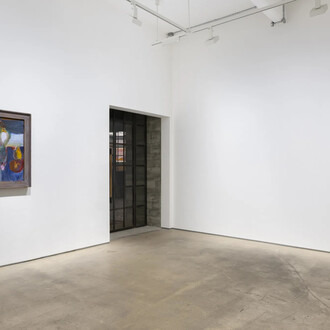
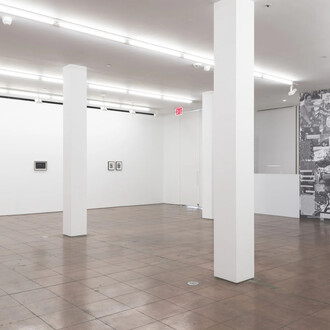
Hales is delighted to announce The mythological landscape, a solo exhibition by Carole Gibbons (b. 1935 Glasgow, Scotland). Gibbons’ second solo presentation at Hales brings together significant historic paintings from the 1960s to the early 1970s, and follows the recent acquisition of the nonagenarian painter’s seminal work Persephone (1969) by the Tate Galleries (UK - London, Liverpool, St Ives).
Gibbons' seven-decade oeuvre can be understood in distinct yet interconnected periods: the early mythological landscapes, followed by domestic still lifes. Both bodies of work emerge from what might be described as an interior, psychic terrain—where lived experience, literary influence and archetype coalesce. Born from necessity and an unwavering creative drive, her practice is consistently marked by resourcefulness and a determination to make paintings by any means possible. For example, many framing devices in the exhibition are made by the artist herself and are integral to the works, using found materials to fix the canvas directly to the unique structures. She also resorted to repurposing canvases, including her old works and those of her partner and friends to make new ones, with many of her paintings revealing concealed artworks on the reverse.
From an early age Gibbons has been fascinated by mythology and has drawn upon various mythological themes throughout her practice. Evacuated to the Scottish Highlands in 1941, her mother sent her books on Greek myths which were formative to her being. Gibbons connected to the concept of stream of consciousness and the writings of James Joyce as well as The white goddess by Robert Graves, which argues that poetry stems from the ancient worship of a matriarchal Moon-goddess of Birth, Love and Death. The mythological feeds heavily both into Gibbons’ early landscape works and later into her domestic scenes and interiors, which still weave in the Epic through the staging of meaningful objects, sculptures, and referential books. Alongside mythology, Gibbons also combines art historical references and classic painterly themes with her own lived experience into deeply personal paintings.
Gibbons’ first solo exhibition took place in her Glasgow studio in 1965, where the poet J. F. Hendry purchased several of her works. Encouraged by Hendry, who suggested that living and sustaining a studio in Spain would be more affordable than in the UK, Gibbons moved and remained there between 1965 and 1967. This period proved critical to her development as an artist. While in Spain, and working in the Barcelona studio of artist Jorge Castillo, she developed and completed many of the important paintings included in The mythological landscape.
In 1967, Gibbons was forced to leave Spain suddenly, following the death of her father. The trauma of this loss was compounded when she returned to Glasgow to find her studio completely ransacked, leaving her with very little. Despite her grief and distress, she continued to paint. Although the works from this time emerged from her imagination, they clearly reflect the influence of the striated, arid landscapes of southern Spain. It was during this time that she began to develop what would become her signature colours: rose pinks, terracotta oranges, and bright yellows. By the early 1970s, she would begin to move away from purely mythological subjects and towards still life.
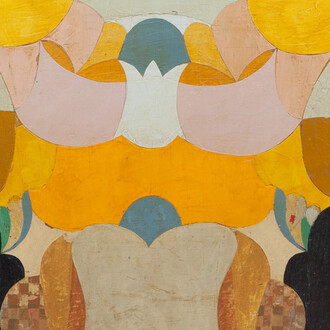
The exhibition at Hales is anchored by the large-scale Mary Queen of Scots (1966). This epic mythopoetic work invokes the historical figure not as mere portrait but as archetype and martyr against symbols of church and state. The work is exemplary of Gibbons’ paintings having their own ‘logic’ and ‘atmosphere’ within formal explorations of colour, surface and uncanny pictorial organization. In Birth of Venus (c.1969) she draws on classical iconography but here the Goddess of Love, born of sea, is depicted as a reclining figure emerging from the landscape.
Motifs and vignettes reoccur in the paintings, such as in Shades (1971), here a figure of the god Hades,
carrying Persephone to the underworld, is replicated from Persephone (1969). Cut out shapes, seen as key
holes or pawns in a game, feature in Mary Queen of Scots (1966) and the Barcelona series (1965) almost
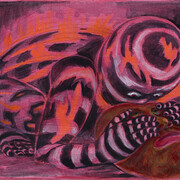
acting as a portal or threshold. Cats feature consistently throughout Gibbons’ practice, seen clearly in the
vividly surreal Green cat (1965) and more subtly in the peeking face in Barcelona series 3 (1965).
These early works are full of colour and light in touch, shaped by the legacies of Fauvism, Henri Matisse
and Paul Klee. While mythology dominates the early canvases, it never disappears. Throughout her oeuvre,
Gibbons continuously fuses autobiography, landscape and interior, memory and myth—constructing a
body of work in which the mythological remains a vital, contemporary language of self-invention.