English
 Español
 Français
 Deutsch
 Italiano
 Português
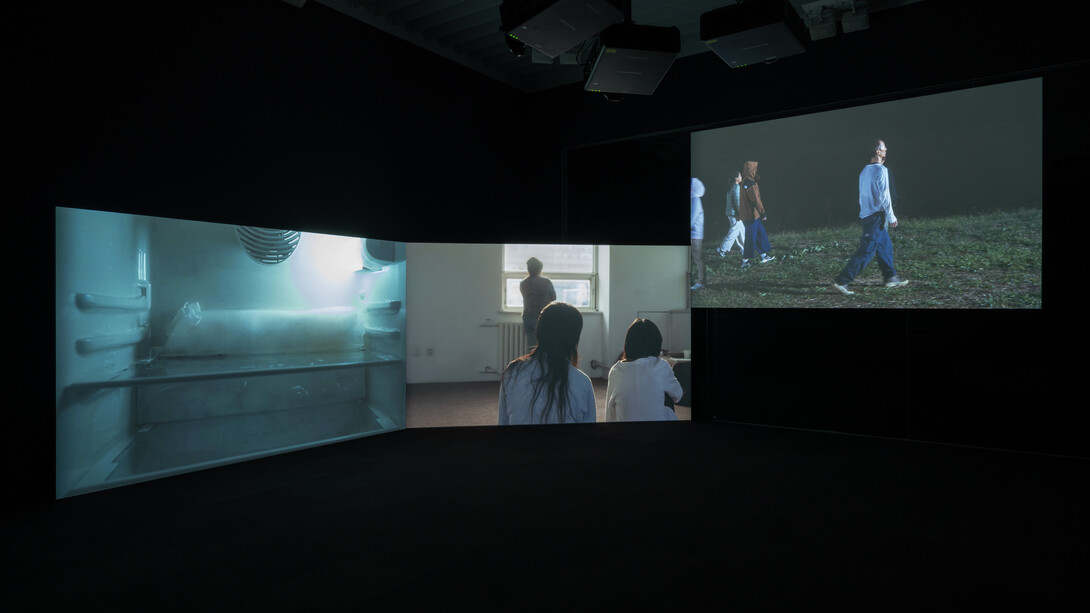
The MIT List Visual Arts Center announces Hao Jingban: I witness (October 23, 2026–February 28, 2027), on view in the Reference Gallery. Organized by Natalie Bell, Chief Curator, the exhibition presents I Witness (2025), a three-channel video installation that turns to feeling and intuition to consider bodily responses to loss and grief in the years following the pandemic.
Blending documentary sensibility with poetic construction, Hao Jingban creates evocative, formally experimental moving image installations. Film offers Hao a way to understand others. Her earlier projects are rooted in archival research and fieldwork, tracing how histories that have been obscured, forgotten, or suppressed endure in the present. Voiceover, slow motion, and outtakes become tools for giving visual form to what lies at the edges of direct representation. Working slowly, Hao builds trust with her subjects over months or years, holding space for refusal, anonymity, and fragmentation. That trust shapes what appears on screen, while her cinematic strategies give form to what remains felt rather than shown.
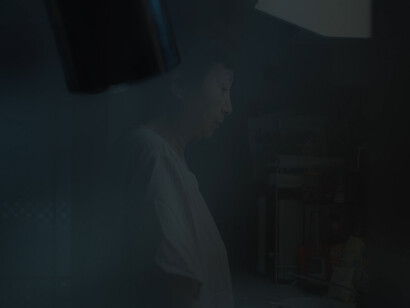
An evocative three-screen montage filmed in Beijing, I witness follows people living in the wake of different kinds of loss. One channel observes an older woman in the rhythms of her daily routine: sleeping, eating, cleaning.
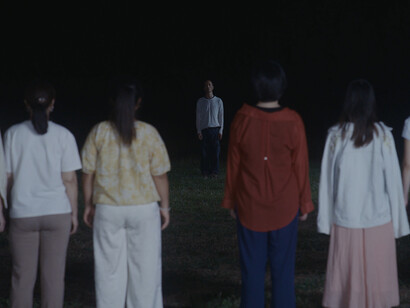
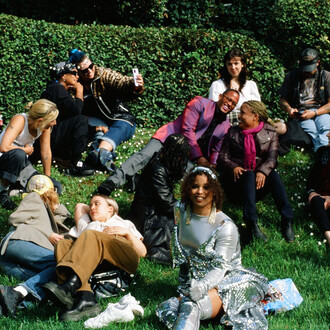
Another channel follows a loose collective pacing a grassy riverside park in Beijing. Participants pause, crouch, lie on the ground, or continue to amble as a group moving through an open field, while poetic text surfaces across the screen as voiceover. For Hao, who had previously focused her work away from public space, the scene offers a study in collective movement, with participants connected through the simple, shared act of walking together.
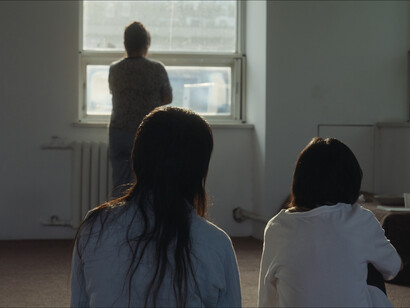
The third channel features eight participants engaged in a somatic practice inspired by Authentic Movement, a therapeutic method in which one person moves with closed eyes while a partner observes as witness. Working in pairs, they give form to loss through movement, and their voices, as they share what surfaced, are the only ones heard in the work.
The work’s soundtrack gathers breath, murmurs, weeping, coughs, and the low hum of electronics, with the silence surrounding these sounds resonating most. Dwelling in the register of affect, largely outside of language, I Witness asks whether witnessing can also take place in silence, opening a space where the grief of others might be felt through the body.
I witness marks a turning point in Hao’s practice. In the years following the pandemic, as she became a parent, she turned from the rational frameworks that had shaped her research toward feeling and intuition, approaching history as something present, unfolding, and ongoing. I Witness considers how deeply history, and grief, can inform physical embodiment and movement.
I witness (2025) is a three-channel video installation, 54 minutes and 41 seconds in duration, commissioned jointly by the Han Nefkens Foundation, Mori Art Museum, M+, and Singapore Art Museum, in an edition of six with two artist’s proofs.