English
 Español
 Français
 Deutsch
 Italiano
 Português
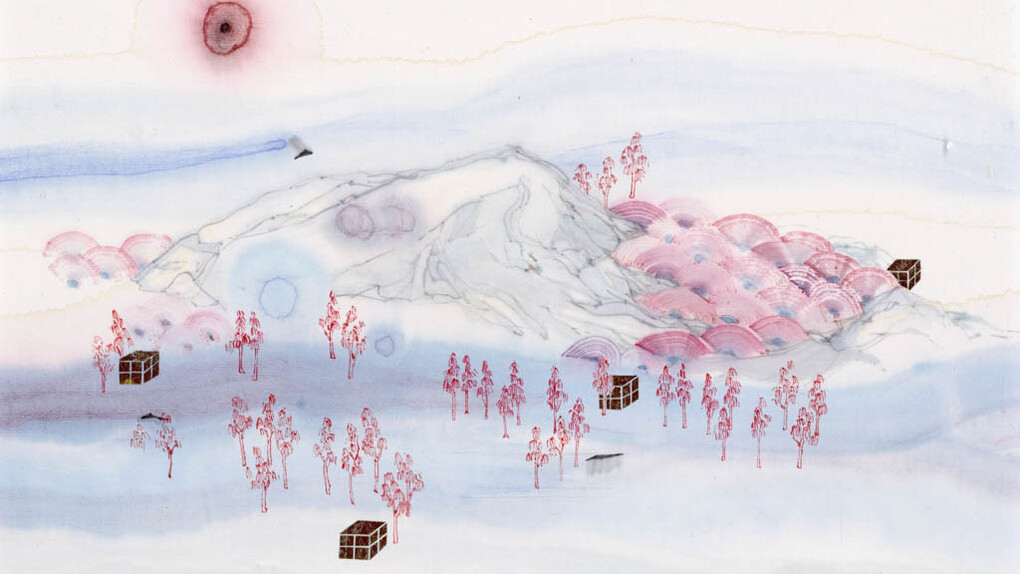
Cris Worley Fine Arts is pleased to present Distance of seeing, an exhibition of recent drawings by Dan Jian, exploring the shifting relationship between observation, memory, and the materiality of an image. The exhibition opens with a reception on November 7th and runs through December 19th. The artist will be in attendance.
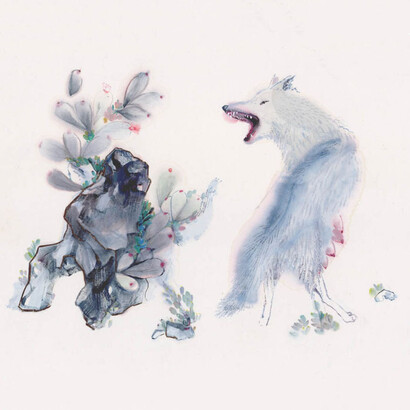
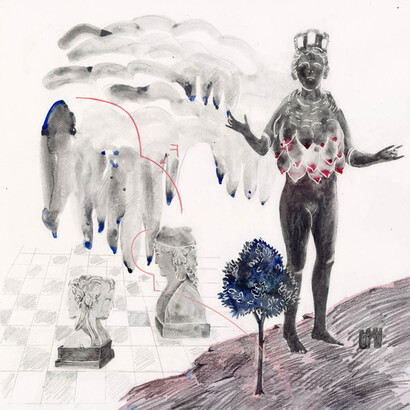
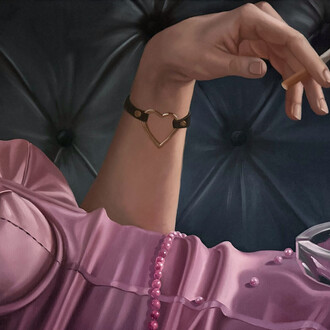
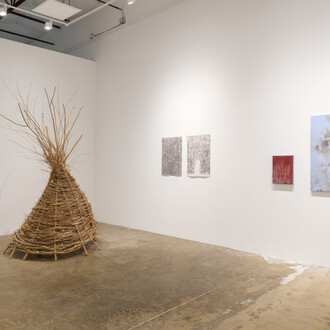
Working from fragments of landscapes, figures, and everyday encounters, Jian brings disparate forms into unexpected relationships. Her drawings emerge through collecting, assembling, and revising, allowing images to develop without necessarily resolving into a coherent whole.
Jian describes her drawings as collections of fragments, each carrying traces of a previous life into a new surreal composition. A leg, a staircase, or a distant hill may become the starting point for an image whose eventual form remains uncertain. She likens the process to a Frankenstein-like creature coming to life, with the challenge of giving its assembled parts a measure of grace. The resulting drawings balance construction and accident, allowing disparate elements to coexist in tension, uncertainty, and harmony.
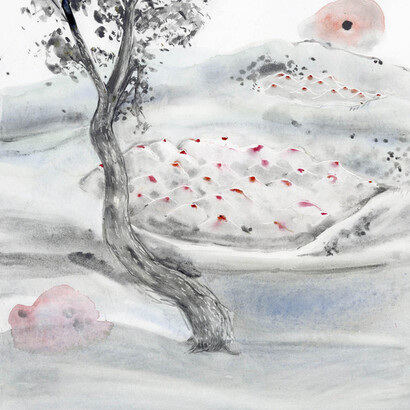
In these recent works, made while observing the Tuscan landscape, Jian’s attention moves between mountains, trees, hills, and passing encounters. Yet looking does not necessarily produce a faithful record of what is seen. Working on aged Xuan paper, whose absorbent surface allows watercolor and liquid graphite to disperse unpredictably, she grants material processes a degree of autonomy. Pigment and graphite move beyond deliberate control, producing granular forms and unexpected associations that shape each drawing’s evolving structure.
The exhibition’s title invokes a central concern in Jian’s practice: the distance that persists between observer and observed. Drawing on Walter Benjamin’s writing on aura, Jian considers the possibility of a reciprocal gaze, in which the landscape seems to look back at the person observing it. What appears near remains, in some essential sense, beyond possession. Her drawings register this exchange without resolving it, bringing fragments together while preserving the distance between them. In Distance of seeing, looking becomes less an act of capture than an encounter with what remains elusive.