English
 Español
 Français
 Deutsch
 Italiano
 Português
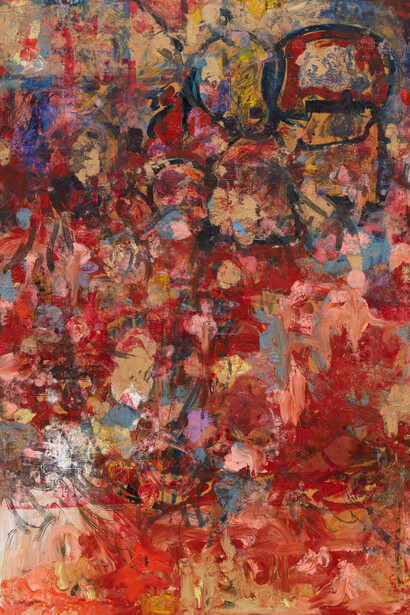
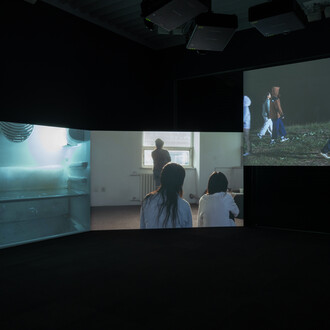
The MIT List Visual Arts Center announces Uri Aran: look how hard they work (October 23, 2026–February 28, 2027), on view in the Hayden Gallery. Organized by Natalie Bell, Chief Curator, the exhibition is Aran’s first major institutional solo exhibition in the United States and gathers a new body of work: a central video work in which musicians rehearse a song, drawings that hover between figuration and abstraction, welded sculptures that pose like equations, animal stickers enlarged to the scale of tapestries, music stands, twelve vintage televisions, and heaps of tiny googly eyes.
Aran arranges objects and images the way one might spatially illustrate a scene with whatever is on a dinner table, letting a salt shaker stand for a person and a napkin for a museum. His sculptural materials often evoke the home and the schoolroom, including pompom fringe and floral upholstery, cookies and fish food, sticker sheets, and children’s characters. His formal gestures of repetition, quotation, and misalignment allow ordinary things to take on the air of characters, acquiring an artifice that is tender and elusive.
The exhibition’s title emerges from a central video work in which a group of musicians rehearses a song with this singular refrain. Within the lyrics, they stretch and practice the first word, “Look, look, look,” until the directive loosens into a beat. Repetition has long been central to Aran’s method. In past videos, he has instructed performers to “say this sentence ten times,” and he has asked his friend Harry Acland, whose British accent lends any line an air of authority, to recite phrases until their content thins and their delivery, in accent, register, and class, comes to the fore. At once specific and nearly empty, “Look how hard they work” can sound admiring or condescending, poetic or pathetic.
Learning, and the effort and reward that sustain it, run throughout the exhibition. “The concept of rewards is one I use a lot,” Aran has said. “It has to do with a child’s world and an affinity with games and the game board.” A sculpture bearing “Look mum” in its title recalls a child’s eagerness to be seen and praised. Sheets of animal stickers, a micro-currency of approval, are enlarged to the scale of tapestries, and music stands titled Stay, Stage, and Pleasure (all 2026) offer wire, fabric, and ceramic in place of a score. Presiding from monitors hung high on the walls, the cartoon people and animals of Duolingo, the app on which Aran has been learning Italian, brighten at correct answers and slump at wrong ones. Shot through layers of screens, the clips loop and bounce back and forth like a lesson repeated until it sticks.
Aran has referred to animals and children as “outsiders to language,” those we train and project onto, and as such they become screens for the feelings and lessons we bring to them. He populates the exhibition with other stand-ins. On twelve vintage televisions placed on pedestals, Simon Soundman, a Sesame Street character who speaks in sound effects rather than words, appears in a looped black-and-white clip that plays slightly out of sync from set to set. Encased in a Plexiglas hood, each Simon mutters alone, his effort at mimicry drained of meaning.
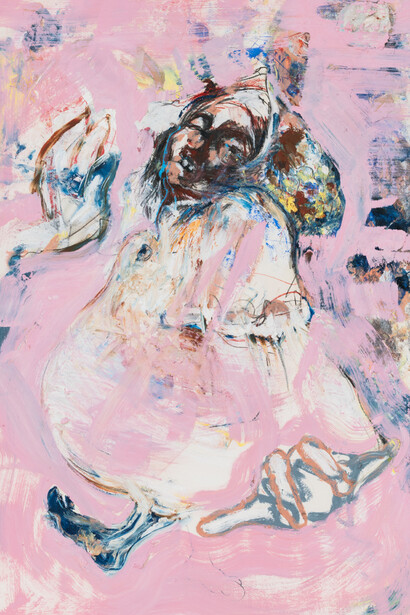
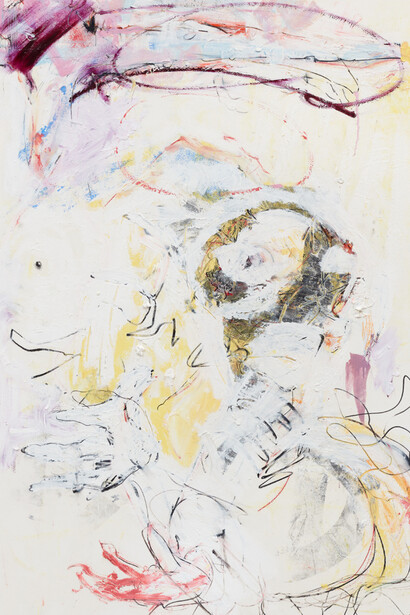
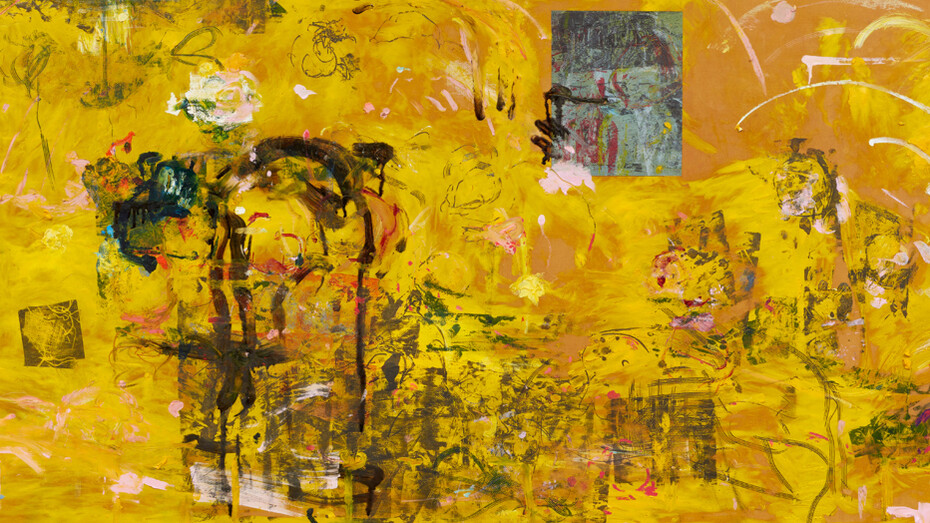
Masks recur in many of Aran’s recent drawings, in which quick lines are built up through layers of oil and pastel. A beaked nose reappears across many sheets, operating as a device that turns a figure into a character. Gender signifiers are often unclear or absent, a vagueness that leaves each figure open to the desires of a viewer. Some faces are loosely inspired by historical paintings, and others are drawings of drawings, so that each becomes, in Aran’s words, “a mask on a mask on a mask.”
Beneath some drawings, passport-style photographs of people and animals appear like faces looking out the windows of a school bus. Their repetition is what makes them matter, and also what empties them: each face becomes a type rather than a person, and yet the faces keep looking and invite us to look, too.
Aran has defined sentimentality as “an exaggeration of emotional conventions or tropes,” and much of the exhibition, from the emotional pull of a musical phrase to heaps of tiny googly eyes, courts it openly. The results can be tender or, as Aran puts it, “humorous and potentially abject,” and are often both at once. He places himself among these devices, and what interests him is “the moment in which I find myself sentimental despite myself,” a moment he then undoes: “I pull the rug from under my own feet.” Look how hard they work extends this double movement to visitors, who may find themselves responding to a cue they can plainly see, amused, perhaps, at how easily they have been trained.