English
 Español
 Français
 Deutsch
 Italiano
 Português
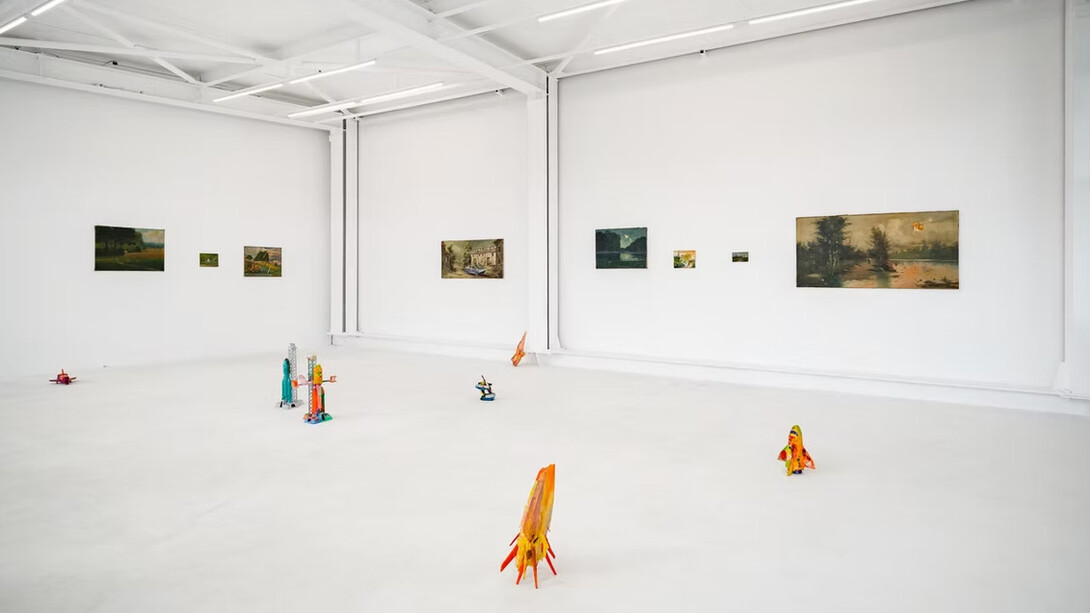
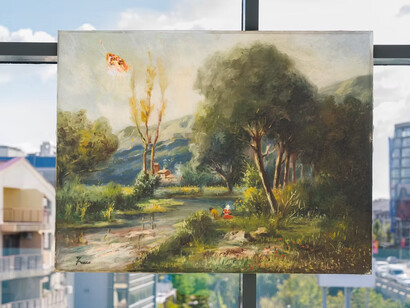
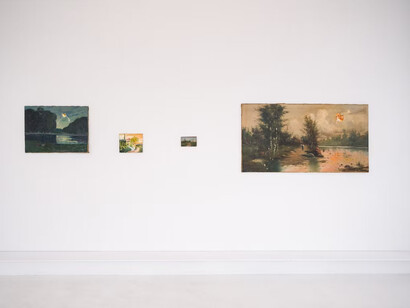
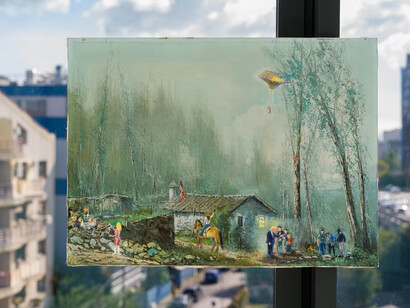
Romantic landscapes, found in rubbish bins, at markets, or in fading auction houses, become the stage for spectacular downfalls. The calm sky breaks open, and the ambition to colonise and take possession of space finds its most exuberant image: the explosion. Pim pam pum!, Bernat Daviu’s solo exhibition at Sandwich Neurohope, brings together paintings and painted toys through which the artist comments, with irony and immediacy, on the hunger for power and profit behind the space race and the tech oligarchs who drive it.
The starting point is a series of “exhausted” paintings, landscapes from the late nineteenth and early twentieth centuries that nobody wants anymore and that would most likely have ended up being destroyed. Daviu makes subtle interventions on these existing surfaces. The already-painted surface provides context and history, while also offering a Romantic starting point that the artist distorts and subverts. Spacecraft explode before they can complete their mission, debris falls onto remote villages, and figures of power appear in absurd situations. Daviu sees these works as satirical cartoons commenting on current events, much like those found in newspapers. They are rapidly executed and often arise from an immediate idea, connecting with his beginnings in drawing and comics, where sarcastic commentary played a central role.
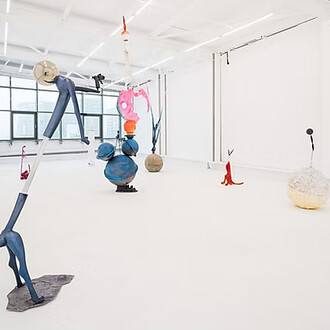
The toys, mostly spacecraft, follow the same logic of the pre-existing object. Once painted, they lose their original identity and function and shift into another realm. Their title, Prototypes, refers to the idea, at once absurd, beautiful, and transgressive, that these proposals might actually come to exist as imagined. They originated with a collection of small toy soldiers, painted by children and adults in workshops organised by the artist, who were invited to add colour to these monochrome plastic figures of war as a way of rethinking their purpose.
Pim pam pum! stems from a need to comment on what is happening in the world through the medium most readily available to the artist. Painting, play, and history are brought together to propose works rooted in the historical genre of landscape painting, generating narratives about the darker side of human ambition.