English
 Español
 Français
 Deutsch
 Italiano
 Português

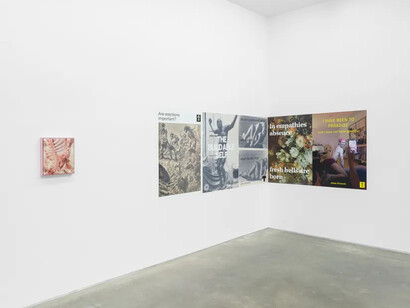
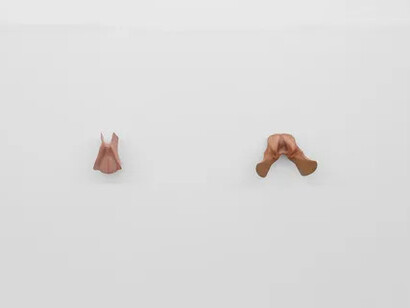
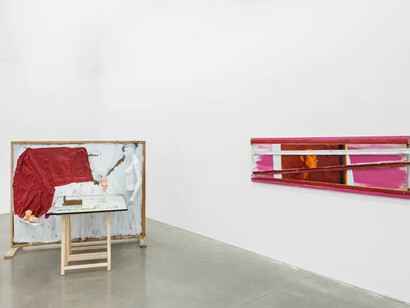
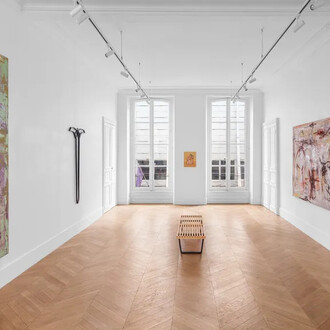
With the participation of: Désirée Nakouzi De Monte & Andrea Parenti of Collezione Nancy Delroi, Keunmin Lee, Shahryar Nashat, Steve Reinke, James Richards, Sibylle Ruppert, Diane Severin Nguyen.
A heavy thud. A sharp sting. A flash of bright light. The momentary blindness that surely follows. Delivered hard enough, a simple punch can bring about an end, the full shutdown of a body, collapsing until soon enough, we’ve arrived at a permanent, final destination. If a deep, rippling shockwave is enough to disrupt the normal functioning of an organism, could the same be said of these works? The anxiety-riddled materiality of an image, with all its synthetic fleshiness interrupted by the occasional glitch, contaminates its surroundings. Provoking a radiating pain in bodies without borders, a haptic seeing that weighs down on the nervous system’s pressure points, it frees form and images from the constrictions and stranglehold of meaning. Things in their right place. We should be so lucky.
In a feat of philosophical engineering, a social lab-rat experiment gone wrong (or perhaps, horrendously right), the Schizo-Culture conference held at Columbia University over a three-day period in 1975 proved just how explosive an IRL response towards a society of control could be. A combustive meeting in the flesh of hi and low, experimental, would-be sleazy lit with ivory-tower academia, punky intelligentsia, die-hard activism, the sick and the not-so-healthy, conversational madness and terrorist politics, shouting over each other and throwing punches. The bloody rupturing of international politesse, its spleen split open and oozing, was the best outcome anyone could have dreamed of. But if dreaming is believing, are we royally fucked? Should we be troubled by the fact that no one, least of all those who were present, actually remembers what happened? A crime scene reconstruction is what comes out of it. Forensic tinkering, however, has its limitations.
Just a few years before fisticuffs, both physical and metaphorical, would be thrown around inside Fortress Columbia, already in La mort de C. (1972), Gabrielle Wittkop narrated ad nauseam and with a clinical precision the infinite possibilities of the suspected murder of the eponymous C., a man so self-important and already putrid-enough in life, that he does not even warrant a name. Time folds in on itself, trying on different versions of the same attire. No matter the sequence of events, the myriad causes, from a drunken row to a hustling pick-up gone wrong, nothing can change the course of the action: an agonizing death from a stab wound to the liver, which, page after page, reduces it to ‘a black and brown mush’. The OG Russian Doll, hellbent on living, but dying before she’s had her fill, and then doing it all over again. Adrenaline kicks in. Repetition breeds (dis)comfort. So many angles from which to bear witness to the same thing, a rough-cut diamond cuts before it ever succumbs to polish.
If we’re talking about throwing punches, the works gathered here evade coercion, they skirt around the issue, waiting for that perfect, unobtrusive moment to deliver a blow. Not exactly lying in stealth but not playing nice, either. Transmission is deliberately interrupted, only to reappear full throttle, throttling. Descartes was wrong. I feel therefore I am, images and forms traversing the gut before they ever reach a retina; strong emotions require an anesthetic for the psyche, a slow but steady transformation into a dribbling pool of nothingness. Until lights out. Blackout. Crawling on all fours, gulping for meaning. Afterwards, standing around the detritus of a dissected body (i.e., right here, right now), a punching bag with its innards spilling out, looking deep into the abyss, trying to make sense of it all. Think back some more and, according to Aristotle, this is why we keep looking. Ungrounded, the ground shifts. A cathedral of shit, wounded but still standing, pinching oneself to make sure it’s real.
(Text by Anya Harrison)