English
 Español
 Français
 Deutsch
 Italiano
 Português
Philip Martin Gallery is proud to present, You and I, an exhibition of newly-released and never-before-seen works 1961-1975 by photographer and media theorist Kwame Brathwaite (1938–2023). The exhibition, “You and I,” explores the work of Kwame Brathwaite - one of the most important American artists of the second half of the 20th century - through the lenses of its co-curators: actor/director/activist Jesse Williams and Kwame S. Brathwaite, the Director of The Kwame Brathwaite Archive. There will be a reception Friday, October 2 from 6:30-9pm at Philip Martin Gallery, with a conversation at 7pm featuring Jesse Williams and Kwame S. Brathwaite, moderated by spoken word artist and cultural strategist Marc Bamuthi Joseph, presenter of For Freedoms’ concurrent touring roadshow, America(!) The beautiful(?), which explores Kwame Brathwaite’s work in an immersive evening of performance and civic imagination.
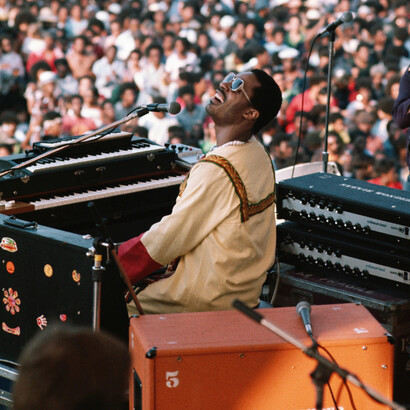
Black artists and thinkers as diverse as W.E.B. Du Bois, Malcolm X, James Baldwin and Stevie Wonder all use the phrase “You and I” to connect with their audience, highlight shared experience, unity and self-determination. Kwame Brathwaite’s image of Wonder, Stevie, depicts the performer on stage in front of a crowd of thousands. Wonder sings for the audience; he also sings for himself. Always attuned to the power and purpose of images, Brathwaite finds in Wonder’s visage an opportunity to not only plumb the depth of feeling, but also connect the viewer with Wonder - his close friend - and, at the same time, advance Black is beautiful, the idea Brathwaite worked so hard to promote. Kwame Brathwaite’s lifelong commitment to Black is beautiful is one of his greatest contributions to global culture; one that fundamentally changed the visual and cultural landscape of America and the world at large.
A child of politically active Caribbean immigrants in New York in the years before World War II, Kwame Brathwaite grew up listening to the speakers of the Marcus Garvey-influenced African Nationalist Pioneer Movement (ANPM). The Black nationalist and Pan-African campaign led by Marcus Garvey sought global unity and economic independence for people of African descent and to project positive narratives of Black people. Growing up in the late 50s Kwame Brathwaite felt that African-Americans needed to feel comfortable in their own skin and proud to display their natural beauty. Kwame Brathwaite worked to spread “Black Is Beautiful” through his writings, photographs and the activities of the two organizations he helped co-found: African Jazz-Arts Society and Studio (AJASS) and Grandassa Models. Brathwaite’s photographs of ANPM leaders like Carlos Cooks - who is credited for his own rhetorical phrase - “Buy Black” - as well as artists, performers and regular people foreground how artistic and political vision can affect change in popular culture and how popular culture can affect change on culture at large. Remembering the Garveyite speakers of Harlem Brathwaite noted in the New York times in 1971, “Our father was a tailor at 134th Street and we used to leave there at night and head for the crowds at 125th Street and 7th Avenue. We couldn’t leave. We’d stay there all night listening to these men speak. You could actually learn world history on that corner.”
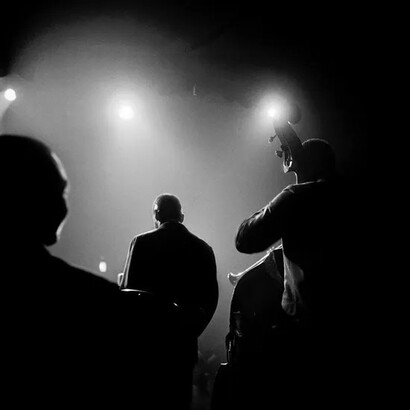
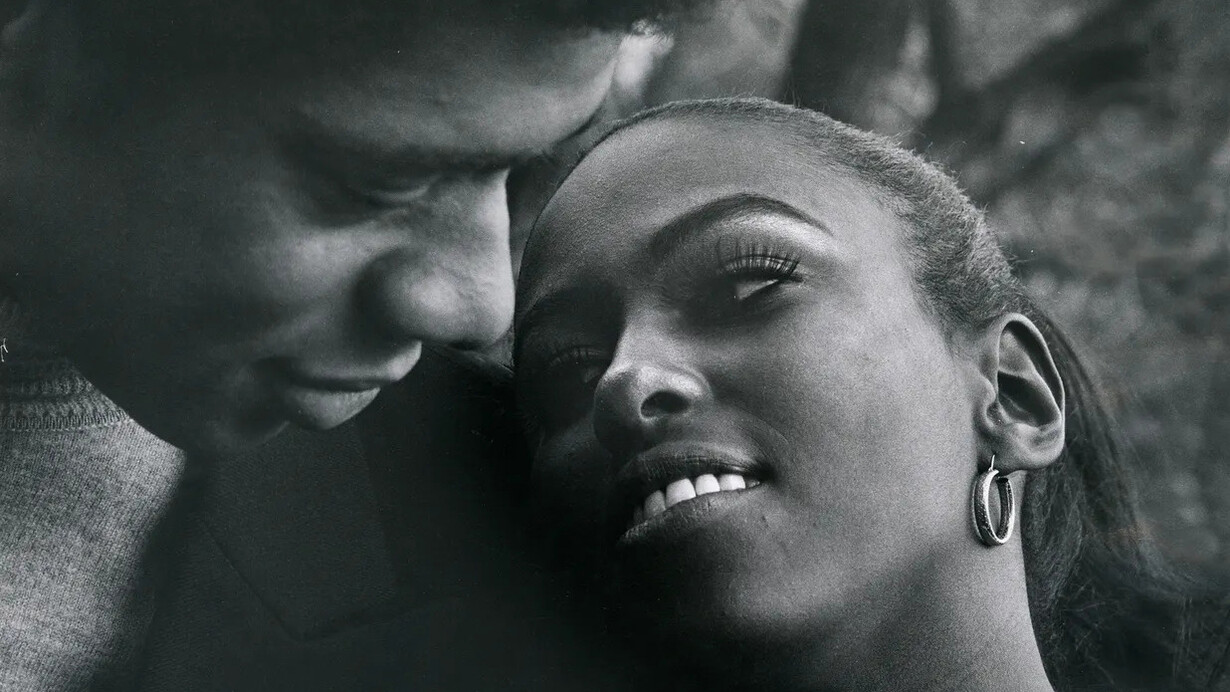
As Univeristy of Texas at Austin scholar Peniel Joseph points out, Kwame Brathwaite’s work is seen as a key link between Black Arts Movement and later developments. As AJASS friends and peers ascended the heights of their own celebrity, they messaged “Black is Beautiful” to the broad American public that was widely consuming the artist-production of a new generation of African-American musicians, actors and sports figures. Kwame Brathwaite’s image of Miles Davis - Untitled (Miles Davis at Harry Wiley’s training gym) - depicts an intimate moment with the well-known musician and sometimes AJASS financial supporter; his image of Bob Marley - Untitled (Bob Marley) - depicts another close personal friend. Untitled (Young love), is an image that depicts a timeless moment of Black warmth and connection. The picture is a doorway for both artist and viewer alike to step into a world of love, possibility and freedom. Kwame Brathwaite was also an important voice in activist journalism via regular feature reporting in Blues and Soul and other publications, with many major musical artists approaching him for advice - particularly with regard to African liberation politics.
In today’s media climate, one in which Black celebrities are specifically activating the power of their image and actions to affect social change, Brathwaite’s work is increasingly relevant. His photographs are a rich source of ideas; an inspiration for the battles of our current time; a means to engage with the beauty, power and integrity of everyday people. Exhibition co-curator, celebrated screen artist, director and activist Jesse Williams has long considered the transformative possibilities of art and expression in a mass media context. As Harry Belafonte commented in his introduction to the 2016 BET Humanitarian Award ceremony honoring the activism of Jesse Williams, “I think that for anybody that achieves celebrity, it means that you have captured the imagination of the vast public. For those of us that have had that experience, the great challenge then becomes what do you do with that platform.”
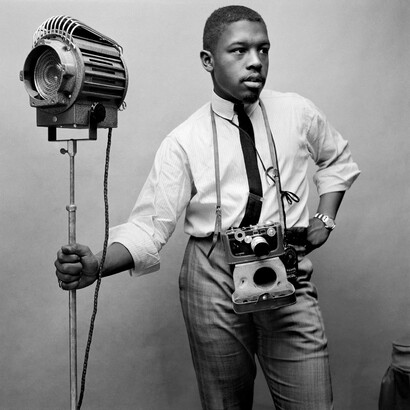
For over a decade, Kwame S. Brathwaite - Director of Los Angeles-based Kwame Brathwaite Archive - has worked tirelessly towards a better understanding of his father’s work. Kwame S. Brathwaite considers the depth and complexity not only of Brathwaite as an artist, but also as a theoretician of our image-driven world; a master and careful builder of positive images of Black people for themselves and society at large. When asked by For Freedoms’ America(!) The beautiful(?) organizer Marc Bamuthi Joseph, “When have you felt most free?,” Kwame S. Brathwaite notes that for his father, perhaps that came in making an image like the never-before-seen “Untitled (Kwame Brathwaite Self Portrait with Argus C3),” in which Kwame Brathwaite depicts himself with one of his first cameras, an Argus C3, a young artist making his way in the world. Or maybe it came in making, “Untitled (Sikolo with Ruffled Dress),” which features Sikolo Brathwaite - his muse, wife and life-partner of nearly sixty years - in a ruffled dress, the very image of beauty.
Kwame Brathwaite: you and I serves as a kind of second part to Kwame Brathwaite: celebrity and the everyday, which Williams and Brathwaite curated in 2019, before Covid-19; the killing of George Floyd, Breonna Taylor and others; the “Black Lives Matter” movement and its achievements; the attack on diversity, equity and inclusion; and casual day-to-day and systematic racism you and I see in 2026. You and I asks us to consider what we want for ourselves, each other and the world in which we live; to consider our interiority; to think about what shared experience means and how to act upon it.