English
 Español
 Français
 Deutsch
 Italiano
 Português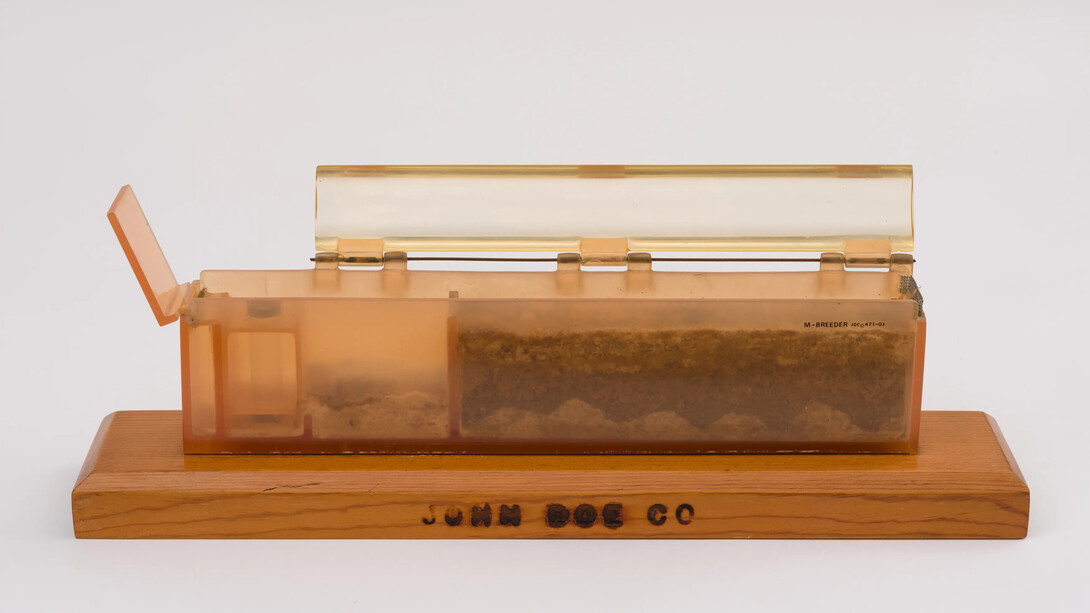
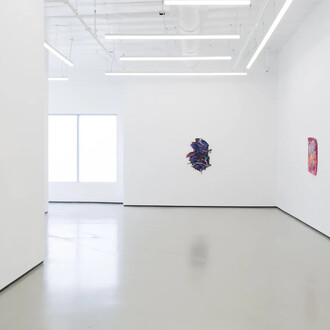
Philip Martin Gallery is pleased to present, Everything in the universe is energy, an exhibition of important tabletop and wall-mounted works by Carl Cheng. The online show features pieces from across the Los Angeles-based artist’s oeuvre, highlighting different modes and periods in his work.
Carl Cheng: Everything in the universe is energy, takes its title from a 2025 statement made by Cheng on the occasion of his major retrospective tour, Carl Cheng: Nature never loses, curated by Alex Klein in partnership with Roland Wetzel and Stijn Huijts. As Cheng notes in a forward to the exhibition’s catalog, “Everything in the universe is energy. Energy expressed in form is nature. From nature evolved humans. From humans evolved technology. Whether technology is used or missed, nature never loses. Nature is still everything.”
Cheng’s comments get to the big topics in his work, all explored and expressed in his Nature machines of the 60s and 70s, Art tools of the 70s and 80s, Alternative TV, and Liquid/Solid pieces. Carl Cheng takes a material and conceptual approach that pushes the boundaries of traditional object making, post-minimalism, systems art, environmental art, and social practice. For nearly six decades, he has produced pioneering works exploring, as Mark Johnstone has written, “technology and nature as levers, one applied to the other, in order to discover and reveal the beautiful wonders of each.” Cheng plays a unique role in the history of American contemporary art practice and the history of art in California. In his work, entropic process has a way of finding its own level; best laid plans have unexpected consequences; and “nature never loses.”
Carl Cheng began his studies in art and design at the University of California, Los Angeles, in 1958. There he worked with professors like Don Chipperfield, John Neuhart, Henry Dreyfus and Robert Heinecken, each of whom emphasized material exploration, problem-solving and cross-pollination. In 1964 Cheng received a fellowship to study at the Folkwang School of Art (Essen, Germany), where he experienced a post-Bauhaus pedagogy that placed art and design together with dance, theater and music. Cheng’s experience in Germany also gave him his first exposure to life outside Southern California, as well as a viewpoint on racial and cultural politics in the United States that has stayed with him his entire life. In the mid-60’s Cheng began experimenting with fabricating plastic as a basis for sculpture and photography. These works explored California as an unstable location, took on consumerism and critiqued the American Dream. Cheng worked for Charles and Rae Eames—one of their “transformers”—doing models for their exhibitions. He was involved with Experiments in Art and Technology, well known for their 1967-1971 program, Art and technology at Los Angeles County Museum of Art (Los Angeles, CA). In 1970, Cheng was one of only a handful of Los Angeles-based artists to be included in curator Peter Bunnell’s landmark 1970 Museum of Modern Art (New York, NY) exhibition, Photography into sculpture, a show described in its original wall text as “the first comprehensive survey of photographically formed images used in a sculptural or fully dimensional manner.”
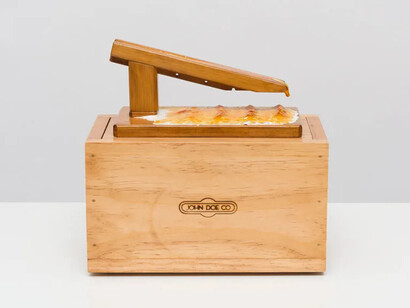
Cheng has long questioned the role of individuals in a mass media society driven by corporate interests. His registered entity, John Doe Co., which he established in 1967, has served as a means to engage with and at the same time critique corporate culture (in addition to offering the Asian-American artist a sense of anonymity in the face of American Vietnam War-era racism). The use of corporate materials embeds John Doe Co. artworks in the absurdist visual discourse of American consumerism, an aspect of life Cheng continues to question in his art of the present day. John Doe Co.’s nature machines serve, as Cheng writes, to “model nature, its processes and effects for a future environment that may be completely made by humans.” Cheng’s landmark solo 1975 exhibition at Cal Tech’s Baxter Art Gallery (Pasadena, CA) Erosions & other environmental changes included a selection of nature machines as well as an entropic environment complete with insects, live plants, and various “specimen” viewing and delivery devices. Supply and demand (1972), which appeared in the Cal Tech show, comes complete with not only John Doe Co. fabricated machine and base, but also with moss, Venus flytraps, and the flies that feed them, completing a natural feedback loop.
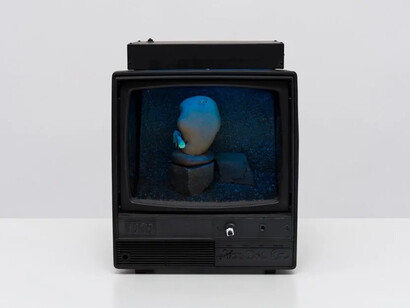
In 1974, in the midst of the Oil Crisis, Watergate and the Vietnam War, John Doe Co., Carl Cheng’s intentionally anonymous corporate DBA, produced a series of Alternative televisions, crafted per corporate literature, “for highest definition viewing of new alternative channel.” Carl Cheng installed his Alternative Televisions in a number of public and gallery locations, doing so first in bookstores on Berkeley’s Telegraph Avenue, like Moe’s Books and Shambala Booksellers. He later included the works in Tableau (1980) at the Los Angeles Institute of Contemporary Art (LAICA), where they appeared on stands alongside pieces by artists like Chris Burden, Kipper Kids, William Leavitt, and Alexis Smith. The benefits of the Alternative Televisions are extolled in John Doe Co. corporate literature. With an eye to what we might call hyperreality, and a goal of returning individual agency, John Doe Co. products take on the syntax of corporate language. They address the power of image and media in advanced technological societies, such as our own, and comment on our own place in relation to both technology and nature. “We never watched TV. We didn’t have one in my family.” Born in San Francisco, Cheng was raised in a family of five brothers in the San Fernando Valley area of Los Angeles, during a time of tremendous development and urban change. Alert to the language of both technology and nature, Cheng adapted television “carcasses” by removing their tubes. Initially he re-fashioned them as aquariums, and homes for fish; for later installations Cheng removed the fish, citing the environmental concerns he also addressed in performance/sculpture pieces like Last fishing trip (1967). Today, John Doe Co.’s Alternative Televisions feature LED lights that illuminate their highly detailed interiors with a range of colors. They combine natural elements like stones, machine-made plastic plants and “samples” - small sculptures made from the materials Cheng found foraging in not only California, but also Japan, Indonesia and India, where he lived and worked throughout the early 1970s.
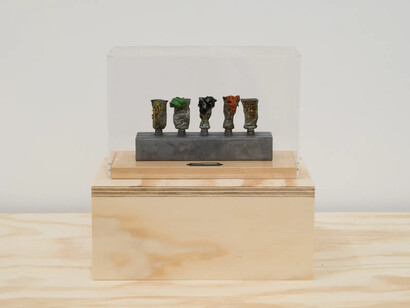
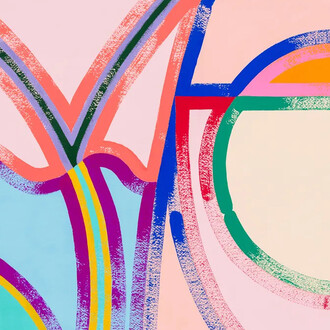
Cheng’s Liquid/Solid works were produced in China in 1980-81, only a few years after the fall of the Gang of Four. Alex Klein comments that Cheng, “often finds inspiration in site specific contexts and materials that are ready at hand,” going on to note that his Liquid/Solid pieces use, “items purchased from a local chemist shop while staying in Shanghai in 1980, when the country was slowly opening its borders and resources and art supplies were scarce. Each day, Cheng systematically used pipettes and droppers to apply dots of paint and glue to blank sheets of paper, which he would then place in the cabinet drawers in his hotel room to dry overnight.” Like his Nature machines and his Art tools, Carl Cheng’s Liquid/Solid works model phenomena both natural and human-made. “Cheng has never considered himself a painter,” Klein writes. Instead, he sees in a sense, “the dots applied in his Liquid/Solid series as ‘microbes’ aiding his investigations into biological phenomena.” One of the works in the exhibition, Tube paint squeeze winbat: (Why I never became a painter) (1976), is a humorous take on the medium; another piece, Art tool paint experiments, dip and drip in display box (1972), is an Art Tool, meaning a tool designed to give Cheng an “automated” means by which to approach traditional expression. Carl Cheng blurs the line between nature and human invention, positing an interconnected view of the material world: “There’s no difference between picking up bolts to use in my work and going out there and digging up some earth. It’s all the same.”