English
 Español
 Français
 Deutsch
 Italiano
 Português
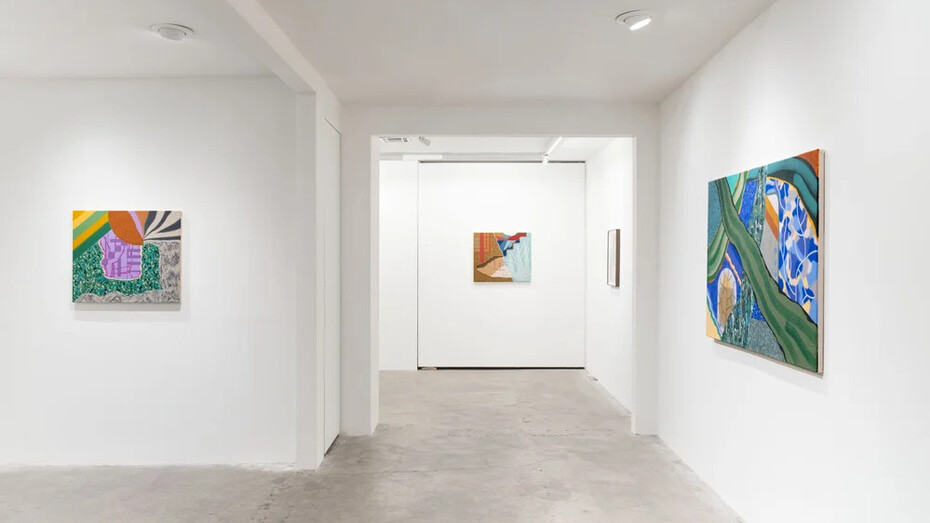
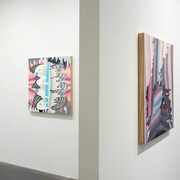
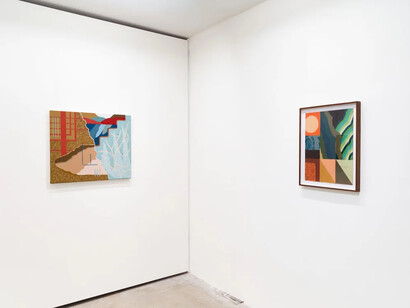
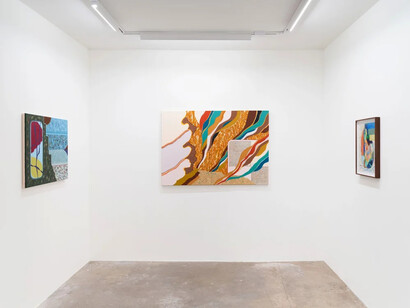
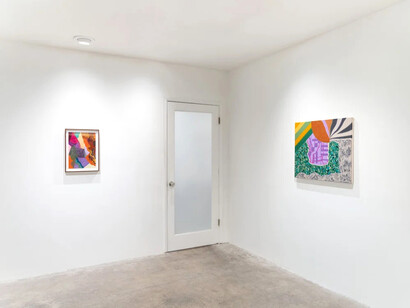
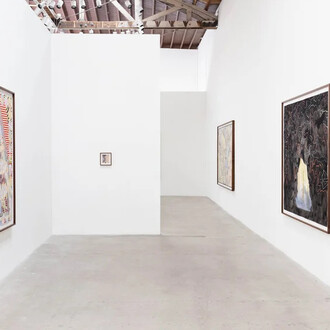
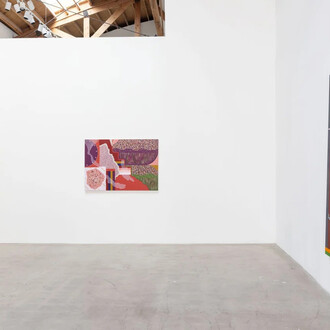
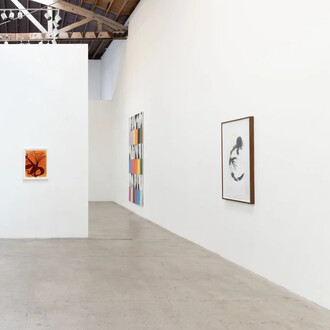
Moskowitz Bayse is pleased to present Seeds and circles, an exhibition of paintings and drawings by Berlin-based artist Franziska Goes.
Franziska Goes’ paintings resist a fixed sense of scale or position, at once alluding to maps, cross-sections, diagrams, horizons, and viscera. Her forms are defined by their movement: lines branch, divide, and reconnect, while circles emerge as cells, moons, apertures, or seeds without settling into a single identity. Borders become sites of passage and translation, with meaning gathering through movement rather than recognition.
Modern abstract painting often sought coherence through the purification of a singular visual language. While Goes’ paintings recall Paul Klee’s generative line, Arshile Gorky’s fusion of organic forms with abstract space, and Anni Albers’s understanding of color as inseparable from pattern, rhythm, and structure, she foregrounds productive tension by inviting such concerns to coexist within a single picture.
Her drawings offer a similar pictorial intelligence with greater immediacy. Wax pastel records pressure, speed, and recurrence: grids are crossed by branching bands, modular structures accumulate through the movement of the hand, and forms appear as provisional rather than resolved. Where the drawings register thought at the point of its inscription, the paintings give those impulses room to expand, overlap, and become spatial. Together, the two mediums reveal Goes’ interest in how a form changes as it passes between scales, materials, and states of attention.
The artist’s process is rooted in active and expansive observation; she gathers photographs and makes sketches of elements, details, textures, materials, and colors from her own experience moving through both nature and the built environment. In the studio, these observations enter into dialogue with purely formal decisions, allowing images to develop through a dance between gestural experimentation and meticulous control.
The title Seeds and circles describes this translation. A seed is a proposition with the potential to generate an image; a circle suggests return, but never to precisely the same place. Across Goes’ work, forms recur in altered states—enlarged, fragmented, layered, or displaced—so that repetition becomes a fluid process of transformation. Her images operate through recognition without resolution: we encounter a shape that seems familiar, only to find it shifting between the organic, the diagrammatic, and the abstract. What emerges is a visual world built through recurrence, variation, and the continual migration of forms.