English
 Español
 Français
 Deutsch
 Italiano
 Português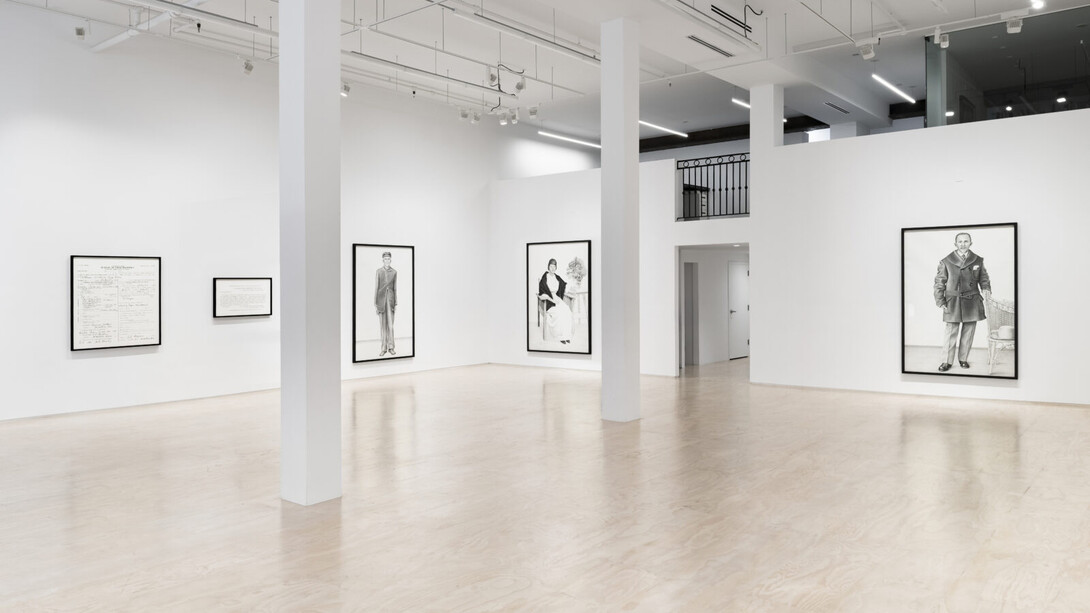
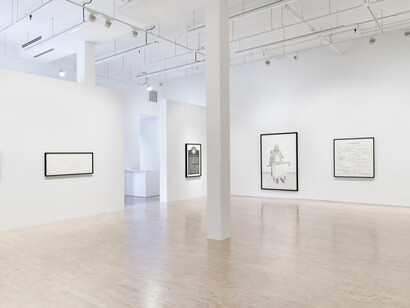
Jessica Silverman is delighted to present Lineage, the gallery’s first exhibition with Lava Thomas, opening on September 10 and running through October 24, 2026. Known for her monumental portraits, Thomas’s newest body of work focuses on figures from her own ancestry in post-Emancipation Texas. On view will be eight large-scale graphite and Conté pencil drawings on paper alongside a series of hand-drawn reproductions of archival documentation. Following the gallery exhibition, works in the show will travel to Amon Carter Museum of American Art in Fort Worth, Texas for Lava Thomas: in our own regard, curated by Michaela Haffner, Assistant Curator of Paintings, Sculpture, and Works on Paper opening November 7, 2026.
At five feet tall and nearly eight feet wide, East Side Elementary Schoolhouse (2026) is the artist’s first architectural portrait. Depicting the modest building where generations of Thomas's family were educated, the drawing renders its weathered wood siding down to the grain, while leafless, spindly trees that flank the structure reinforce its sense of longevity. Built in 1882, the schoolhouse is a historic landmark, standing as both a testament to Black communities’ commitment to education and evidence of the inequities imposed by segregation.
In 2013, a chance discovery led her to uncover her grandmother's photo album—a trove of family photographs from the early twentieth century. Subsequent years of research expanded this personal discovery into a deeper engagement with public records and an archive built through legal struggle and deliberate acts of documentation. For more than a decade, these materials have shaped a sustained body of work within her practice. Thomas's portraits position her ancestors—direct descendants of enslavement—within a tradition of commissioned portraiture historically associated with social consequence and permanence. From van Dyck to Manet, European portraiture placed Black figures at the margins, often subordinate to a central white subject. Thomas overturns this hierarchy, placing her ancestors where Western art traditions failed to.
As a child, Thomas spent hours drawing and listening to the stories of elder women who gathered in her grandmother’s beauty shop. She distinctly recalls a calendar on the salon wall that featured the work of Chicago Black Renaissance artist Charles White. For young Thomas, White was a North Star, showing her how a disciplined hand could shift cultural perceptions. From Maya Angelou to the women who led the 1955 Montgomery Bus Boycott, Thomas’s portraiture has centered on people who have triumphed over hardship and performed heroic acts of self-determination.
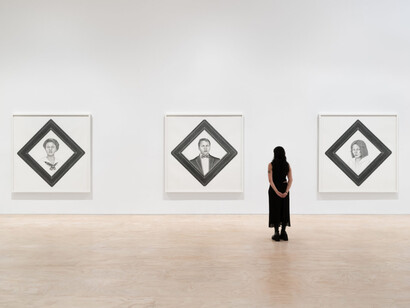
Three portraits distinguish their sitters in diamond-shaped frames. In Unnamed but not unknown II (Promise) (2026), one of the artist's female ancestors appears within a faceted graphite border whose painstaking construction echoes the attentive labor of the portrait itself, extending Thomas's act of preservation beyond the figure.
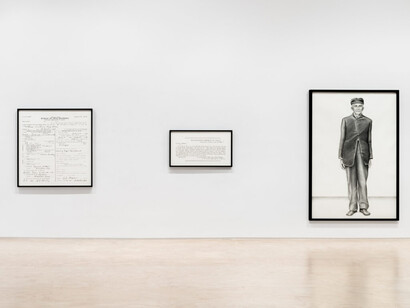
Four works feature full-length portraits that recall early 1900s Black studio photography where clothing and furnishings project self-possession and agency. In Grace and bearing (2026), featherlight linework depicts a female ancestor in a string of pearls and billowing skirt; dense charcoal creates a velvety black shawl that drapes across her shoulders. In I stand upright in my own Regard (2026), a male ancestor dressed in a double-breasted overcoat returns the viewer’s gaze without deference, his eyes intensified with a tint of brown watercolor. Standing beside a Victorian wicker chair—decades before the photograph of Huey P. Newton seated in a Peacock chair became an icon of Black liberation—Thomas's ancestor embodies a long visual history of Black self-fashioning and autonomy.
The exhibition also presents graphite reproductions of obituaries, military pension files, and landmark signs. Recomposed by hand, these legal and visual documents become integral to Thomas's account of family lineage—recording, verifying, and transmitting it.
In "Lineage," what begins as one family's story becomes an argument for how Black history persists. Though rendered in erasable materials, Thomas’s drawings insist upon permanence. Their materiality reflects the precarity of the historical record, while their scale and labor affirm the enduring significance of their subjects. At a moment when the federal government is targeting museums and monuments in an attempt to suppress public memory of Black life in the United States, “Lineage” advances a cultural imperative to assert their lives as constitutive of American history.