English
 Español
 Français
 Deutsch
 Italiano
 Português
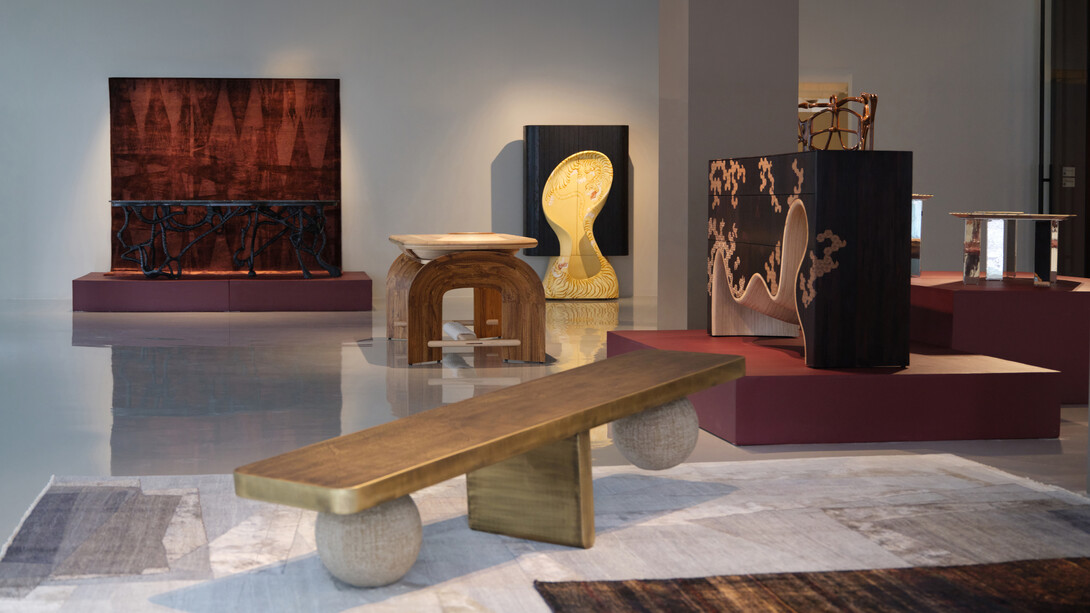
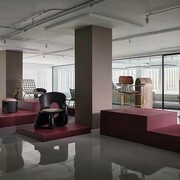
House of Santal, the contemporary design gallery and online platform dedicated to presenting South Asian craftsmanship through a forward-looking design lens, is pleased to announce its second exhibition, Roopantara: matter in metamorphosis, opening September 30. Bringing together designers and practices from the region, the exhibition considers transformation as both a philosophy and a method, examining how inherited knowledge, material intelligence, and making traditions can be re-authored through contemporary design.
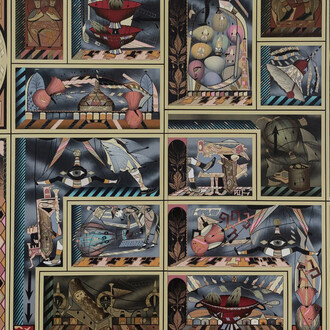
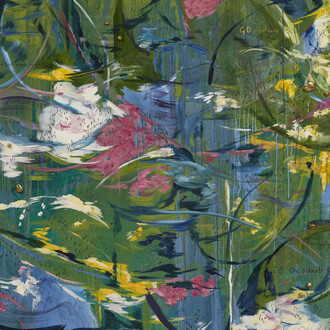
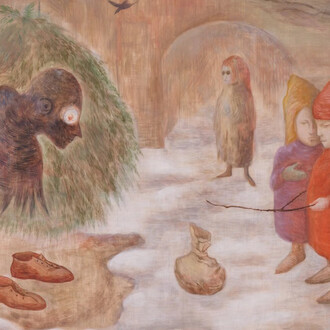
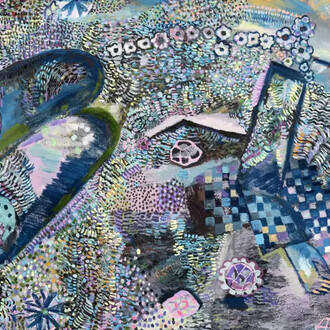
Following the gallery’s inaugural exhibition, Roopantara continues House of Santal’s inquiry into South Asian craft by turning its attention to the act of “making” itself. The exhibition considers craft not as a fixed legacy to be preserved, but as a living system that evolves through experimentation, reinterpretation, and time. The title Roopantara comes from the Sanskrit for a change of form, and the works on view embody movement, ambiguity, and continual becoming. Where the gallery's inaugural exhibition surveyed what South Asian craft can be today, Roopantara goes a step further, into the act of making itself. Across screens, consoles, benches, cabinets, and seating, the exhibition asks what happens when makers stop preserving tradition and start transforming it.
“At its core, Roopantara is about looking at craft as something that is constantly becoming,” says Founder and Curator of House Santal Raksha Sanikam. “We wanted to bring together designers who are not simply referencing tradition, but actively questioning it – stretching techniques, materials, and inherited forms into something unexpected. For us, that space between preservation and reinvention is where the richness of design lies.”
The exhibition features Saira Yousaf & Shahbaz Lahore of Lahore, Pakistan; Abin Chaudhuri of Kolkata; Aaj & Khushi Patel of Gandhinagar; Jwalant K. Kanika Madewala & Agarwal of Ahmedabad; Nithika & Annanya Agarwal of Kolkata; Keerthi Tummala of Hyderabad, Veeram Shah of Ahmedabad; and Rug & Kilim. Each of the participating artists takes tradition as its starting material and treats technique, ornament, and form as open to revision.
Abin Chaudhuri (Kolkata), whose work was selected by the Museum of Modern Art for its Uneven growth publication and traveling exhibition, pushes familiar structures into states of tension and movement. On view new works include: Urban gravity and lehar.
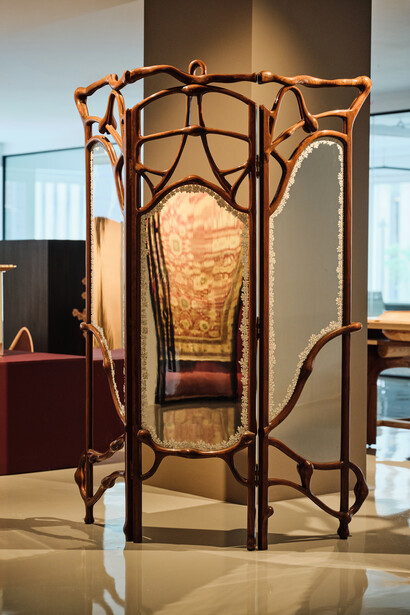
Saira Yousaf & Shahbaz Lahore (Lahore) reinterpret period ornament through three-dimensional, tactile forms, including the Mountain screen, Antler settee, Nouveau screen, Undulating mirror, and Ribbon console.
Aaj & Khushi Patel (Gandhinagar) embed transformation in the making process, letting material and the hand shape each form, as in The Kodo table.
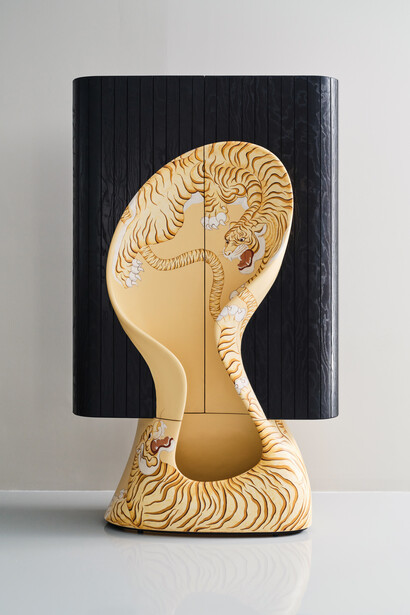
Jwalant Madevwala & Kanika Agarwal (Ahmedabad) distill Sadeli inlay and Indian miniature painting into subtle ornament across the Fragments console and Roar cabinet.
Nithika & Annanya Agarwal (Kolkata) explore the evolution of material over time in Sylvan echo and the Trace console.
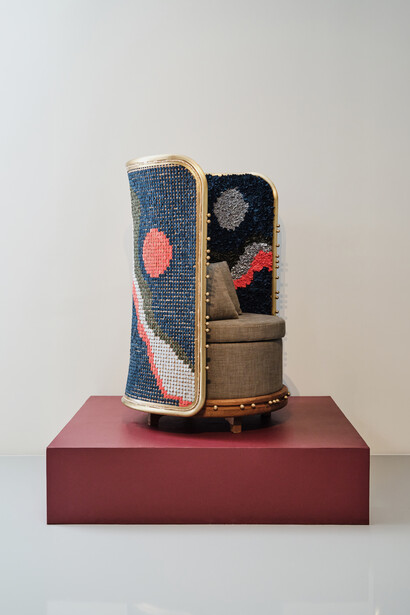
Veeram Shah (Ahmedabad) uses Anuj Sharma's stitchless Button Masala technique to create adaptable textile surfaces in The button Masala armchair.
Keerthi Tummala (Hyderabad) pairs pyrite inlay with stone and reflective chrome in the Rock pyrite dining table and Ori cofee table.
Rug & Kilim reworks traditional and contemporary motifs in hand-knotted wool and silk, including Diamonds Vintage, Art Deco Breeze, City Lights, and Modern Fragments.
Together, these works demonstrate the breadth of contemporary approaches to South Asian craft, where heritage serves not as an endpoint but as a foundation for experimentation. Through Roopantara, House of Santal highlights the designers who are actively expanding the possibilities of craft, creating new connections between inherited knowledge and contemporary design.