English
 Español
 Français
 Deutsch
 Italiano
 Português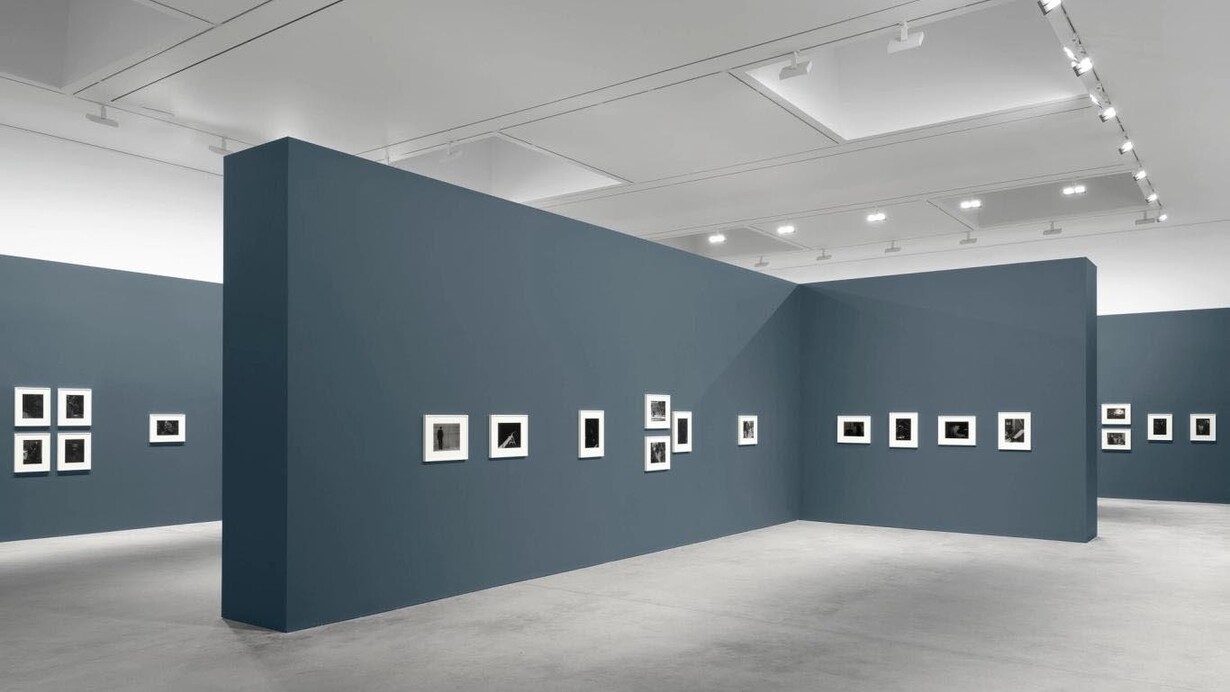
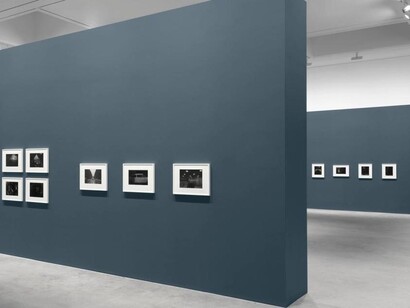
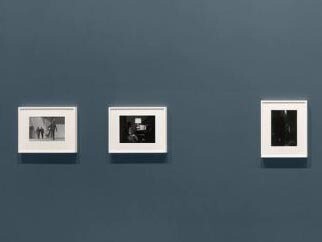
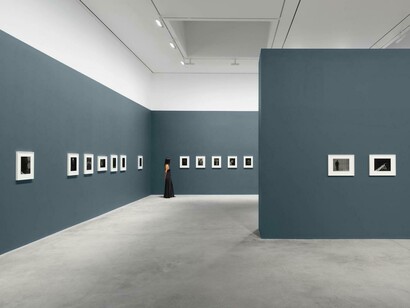
David Zwirner is pleased to announce an exhibition of photographs by Roy DeCarava curated by Ebony L. Haynes, at the gallery’s 606 N Western Avenue location in Los Angeles. On view is the sound i saw, DeCarava’s unwavering exploration of the relationship between the visual and the aural created between the late 1940s and the 1960s. Bringing together more than 130 images, this is the largest presentation of this body of work since its inaugural exhibition at the Studio Museum in Harlem, New York, in 1983. Presented in an adjacent gallery at 616 N Western Avenue is a listening room inspired by the artist’s work.
Over the course of his more than six-decade career, New-York-born-and-based DeCarava produced a singular oeuvre of black-and-white photographs of modern life that combine formal acuity with an intimate and deeply human treatment of his subject matter. DeCarava worked with a handheld 35mm camera, which enabled him to move easily throughout the city, allowing him to recognize and identify with his subjects. The artist’s pioneering work privileged the aesthetic qualities of the medium, helping it to gain acceptance as an art form in its own right. Unlike most photographers of his day, DeCarava developed and printed his own images, cultivating over time a distinct and enduring visual language defined by a rich tonal range that approaches a painterly form of expression.
Following the acclaim of the 1955 publication The sweet flypaper of life—which featured DeCarava’s photographs alongside an original text by poet Langston Hughes—the artist sought expanded ways to engage viewers. The combination of images and words in The sweet flypaper of life had helped to advance for the public DeCarava’s concept of photography as uniquely suited to expressing a range of human emotion and experience and, confronted with a rapidly growing reserve of gelatin silver prints, he began to plan a new book. DeCarava’s original maquette of the sound i saw, painstakingly assembled by hand in the early 1960s, included 300 images, which he augmented with a free-verse poem of his own. Arranged according to a visual rhythm, the images were paired with judiciously placed language, asserting the primacy of the photographic image as a powerful tool for communication.
This body of work juxtaposes images of everyday life in New York City—elegiac street corners, deliverymen working, children playing, riders waiting for the train—with images of jazz musicians. DeCarava was an aficionado of jazz, which he saw as a complementary art form to photography, and he often spent evenings haunting the city’s jazz clubs, always with camera in hand. Many of the period’s jazz greats—such as Miles Davis, Count Basie, Billie Holiday, and John Coltrane—are glimpsed both mid-set and off-stage in moments of repose, emphasizing their status not simply as musical icons, but as everyday people, workers trying to make a living. Taken together, DeCarava’s highly nuanced prints redirect the viewer’s attention to the sounds of life, offering—as he noted—“images for the head and for the heart.”
Theorist and filmmaker Radiclani Clytus observes that, “As significant as The sweet flypaper of life is within DeCarava’s oeuvre, the sound i saw is singularly noteworthy. Unencumbered by the intrusion of collaboration or an exhibition format that would restrict his editorial vision, it remains DeCarava’s most complete photographic statement to date.”
In 1983, DeCarava presented 125 photographs from the sound i saw at the Studio Museum in Harlem—the first public display of this body of work in any capacity. In the exhibition’s catalogue, which featured only a small portion of the images, curator C. Daniel Dawson noted that, despite the presence of myriad jazz images, “DeCarava does not consider this the definitive photographic statement on jazz. It is to him a much more personal endeavor.… It is an attempt to share with us his reflections on life and the process of living, using the jazz world and photography as his instruments.”
the sound i saw was eventually released as a monographic publication by Phaidon in 2001, and it was reissued posthumously in an expanded format by First Print Press and David Zwirner Books in 2019. The exhibition at David Zwirner Los Angeles includes numerous works that were on view at the original presentation at the Studio Museum in Harlem, many of which have not been exhibited since that show.
This marks only the fourth solo presentation of DeCarava’s work in Los Angeles, following on the acclaimed 2019 exhibition Roy DeCarava: the work of art at The Underground Museum. In 1996, Roy DeCarava: a retrospective was presented at the Los Angeles County Museum of Art, and prior to that the artist’s work was featured at the Los Angeles Center for Photographic Studies in 1982.