English
 Español
 Français
 Deutsch
 Italiano
 Português
There are trips one takes simply to rest, to escape, and to breathe, and then there are journeys that unexpectedly loosen something deep inside us, stirring memories we believed had long settled. My recent visit to Fiji was meant to be the former; somehow, it became the latter.
The highway from the airport to the resort traced the length of the Fijian Coral Coast, more than a hundred winding kilometres between hills washed in lush green. Coconut palms leaned into the light rain, their fronds whispering above vast cassava fields rooted in red earth. The scene felt uncannily familiar. It carried me back to the Biên Hòa motorway from Saigon to Thủ Đức: the same gentle slopes, the same humble green of cassava, the same red soil softened by monsoon rains. I had been on a small bus with its engine running by burning coal, travelling on that road to a coastal village as a rendezvous for the escape on the last remaining day in the country.
A few locals stood by the roadside, bags in hand, raising an arm for a lift, a cheap, improvised form of transport. Life here moved at a pace I recognised from my youth: slow, unhurried, unbothered by the world’s noise.
Now and then, the taxi slips past small towns, the kind one walks through in five minutes and finds themselves back where they started. The sea lapped beside the highway, blue and patient, its ripples folding like the pleats of memory. A breath of salty wind drifted through the window, and suddenly I felt myself drawing closer to home.
I had heard that beaches in Vietnam are now so crowded that one sees only feet, not sand. In my time, a trip to the beach of Vũng Tàu was already a rare treat for a provincial boy. White, sandy beaches in Nha Trang or Phú Quốc Island belonged to another world. But each era has its ways. I do not complain; my life in Australia has been full of blessings.
When the taxi finally reached its destination, the intermittent rain had just lifted. After checking in, I wandered through the vast seaside garden: coconut palms, bougainvillaea, frangipani, and hibiscus – plants that endure sun and wind all year, their blossoms bright as fallen scraps of sky.
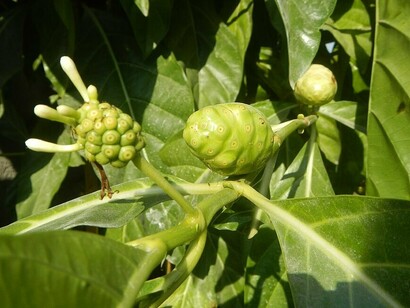
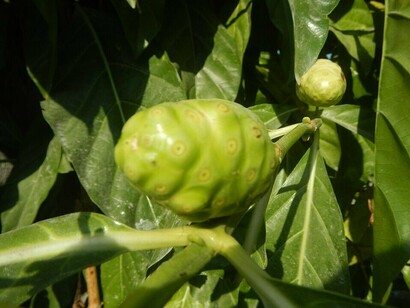
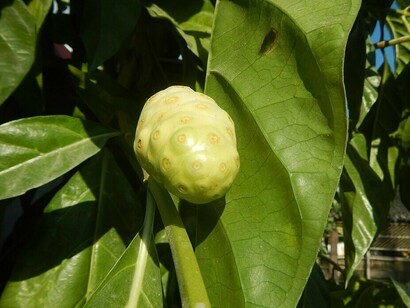
And then I saw it: a small tree, its branches dotted with knobbly fruit. My heart stopped. More than sixty years had passed since I last saw a noni tree.
A quiet tremor rose in me. Every person far from home has something that unlocks the heart: a village temple, a banyan tree, a familiar voice. For me, it was this unassuming tree, standing in a foreign garden, waiting like an old friend.
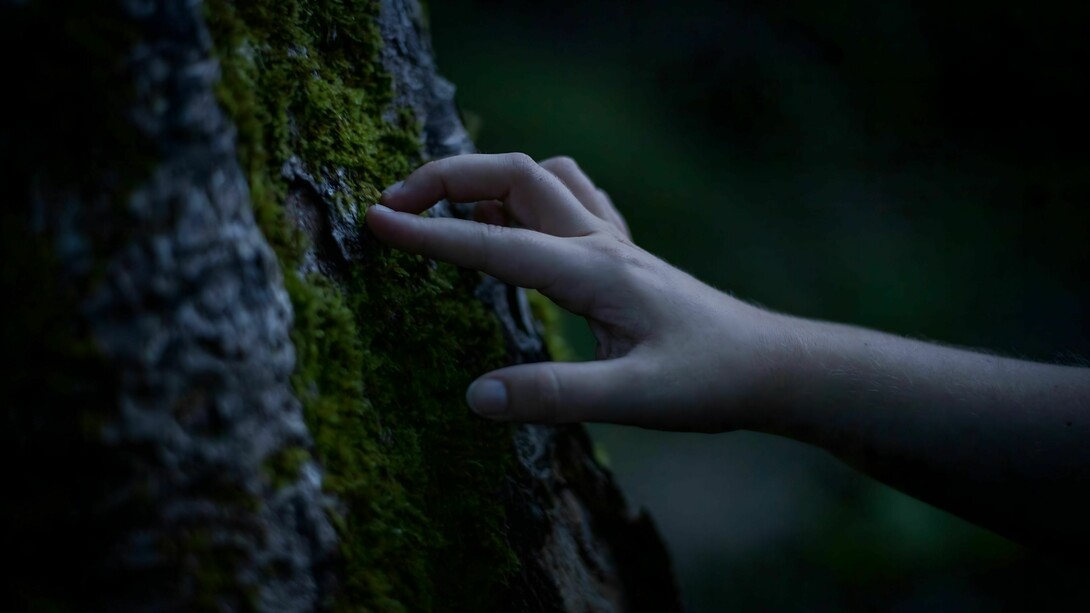
I touched the rough skin of the fruit. Its pungent scent rushed straight into memory, pulling me back to a childhood marked by both tenderness and loss. In an instant, images flickered before me: the burning house, the makeshift days of evacuation, the bushy, unkempt garden, the red lacquered coffin, and the gentle eyes of the mute relative. My eyes stung. I felt again the helplessness of a child whose mother has stepped away.
That night, sleep would not come. Outside, the rain fell in soft threads, arriving and departing like the whisper of an old lover. Coconut leaves rustled in the wind. The sea breathed against the shore in a steady rhythm, like the heartbeat of the night. Each raindrop seemed heavy enough to stir something deep within me, carrying me back to days I thought I had left behind.
In my hometown, Gò Công, rain often arrived without warning, thunder shaking the sky. Back then, we had no running water; everything depended on the heavens. As the only son among ten siblings, I was responsible for catching rainwater in the big clay pots along the side of the house. Sometimes the rain came at midnight. I would hear my mother stir awake, then quietly step outside to collect water. Duty pulled me from the warm blanket of my bed, and the two of us worked in silence until the rain stopped. Her gentle eyes on those nights remain with me still, like a small lamp that has never gone out.
When I was a little over three, my peaceful life was shattered. My mother told me our family house was burned to the ground as collateral damage of the war. We became refugees in another town.
There, we learned to survive on our own. It was the darkest chapter of our family’s life. My mother became a street vendor, carrying two baskets from dawn to dusk: one filled with cheap goods, the other with my baby sister. My father did any job he could: restaurant helper, bus driver, whatever kept us alive.
Our family were scattered among different households. For years, we moved from place to place every few months. Once, our temporary shelter was an old tile-roofed house with large wooden doors and pillars and a wide garden. The owner was an elderly woman living alone. I never knew whether she had children or whether they had been claimed by the long, cruel war. She chose one of my older sisters and me to stay with her. Perhaps she loved children.
The house was always shut, silent. At night, the old woman asked my sister to massage her back and limbs. She always wore pure white clothing. In a dark room at the centre of the house stood a red lacquered coffin she had prepared for herself. That image haunted me then and long after. I loved her, yet I feared the pale ghosts my childish mind imagined drifting around the coffin. So during the day, I hid in the large garden behind the house.
And in that bushy, unkempt garden stood the noni tree.
It was not tall; its branches were lush but brittle. Every day, my sister and I visited it, searching for ripe fruit. Young noni fruits were green and bumpy like duck eggs; when ripe, they turned soft, yellow or white, with a pungent smell. To eat them, you dipped them in salt. But we rarely tasted any, just when the fruit was nearly ripe, the neighbourhood children would pick them clean.
Years later, after much saving, my parents bought a proper house across from the town hospital. A distant cousin, who was mute and deaf from birth but gentle by nature, was entrusted by his father with tending the pigs and chickens in the family’s large garden of their house, not too far from ours. In truth, we were not blood relatives. His father had two wives: the first was my aunt, who bore no sons, so he took a second wife. My cousin was her child. I simply called him “the Mute Brother,” never once wondering what his real name was.
Whenever he passed our house, he stopped by and handed us a few ripe noni fruits from the garden. The fruit might not have been delicious, but his quiet, earnest eyes told me it was given with a full heart. I learned to eat noni with chilli salt from those days.
In 1977, his entire family fled Vietnam by boat. Their vessel reached the Malaysian coast but was towed back out to sea. Then it sank. All of them drowned.
Was it destiny’s quiet mercy? Perhaps a new life in a foreign land, full of hardship and struggle, would have been yet another sorrow laid upon his gentle life.
I miss the noni tree, and I miss the taste of the noni fruit he once placed in my hands.