English
 Español
 Français
 Deutsch
 Italiano
 Português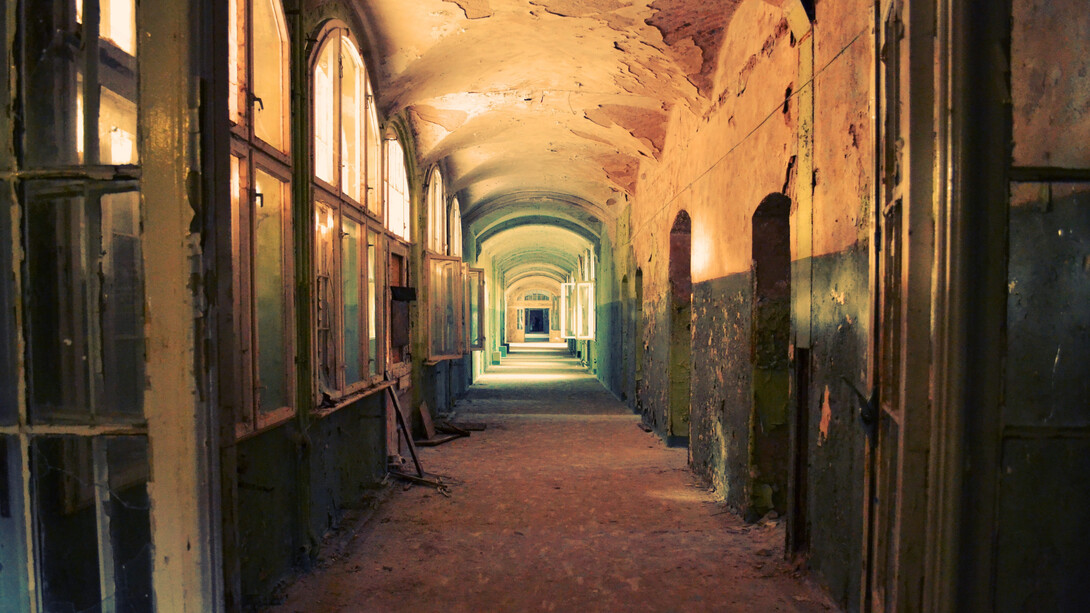
I.
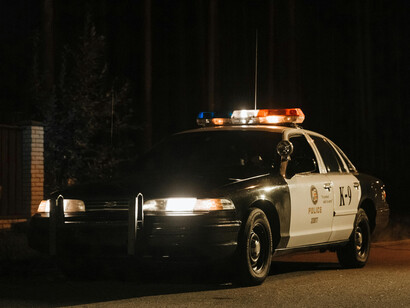
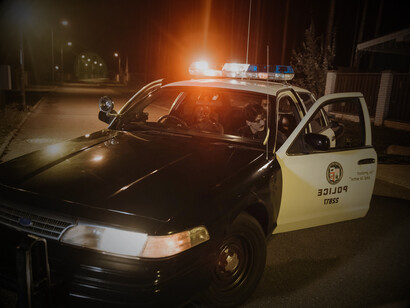
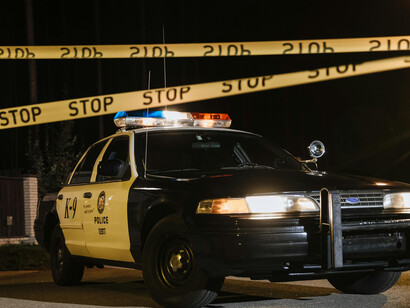
The police van chases orange, blushing red lights across street intersections.
Acid rain hammers the windshield, relentlessly. My skin bristles with needles of hypertensive veins pulsing under pallid skin. Window tight, the inside air reeks of fast-food joints and over-perked coffee.
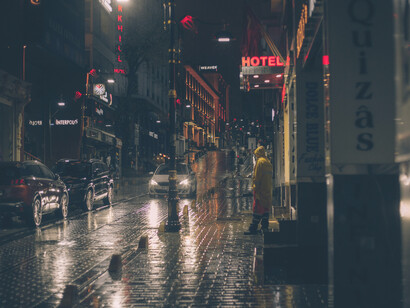
Steam coils impatiently from sewer grates up into the noxious air. A rat scurries across neon reflections into a rotten pizza box tossed in the gutter. Trash bags huddle in doorways like dozens of refugees dozing.
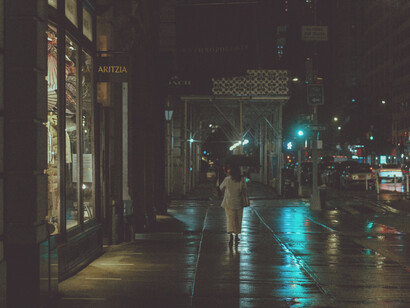
A labyrinth of asphalt streets blurs past, hostile and unfamiliar. Windows of skyscrapers glow anemic like irritated eyes that never blink.
Red, blue, and white strobe sirens wail in emergency hues. The car seems to know exactly where it’s going. I have no clue.
I grip the backseat as if in handcuffs―as if I had been arrested for wanting to be in the wrong place at the wrong time.
II.
First assignment: I’m already trespassing in a cheap film noir rip-off.
Two cops sit before me: one driving, his peaked cap shadows a rugged face with bushy eyebrows scarred by thirty years of smog. His uniform is pressed but exhausted.
The other face is fresh grocery green from the academy; his chest badge gleams like a quarter tossed into a fountain that grants no wishes.
I try to clear my throat, trying to puncture the near-hostile silence before it swallows me whole. I knew I was not a welcome camper.
“So… How long have you been on the force?” I query, playacting my role as a cub reporter.
The driver’s knuckles grip the wheel. His voice grinds out like a cheap coffee blender: “Thirty years,” he exhales with a statement heavy as a judge’s sentence. “Much too long a stretch.”
The rookie grins, insecurely. “Me? Just started.” He taps his badge like it’s armor.
I force a laugh.
“Rookie? Guess that makes two of us. My first assignment. Proud to be riding with NYC’s finest!”
The veteran snorts, his eyes flicking like a rattlesnake’s to the rearview mirror: “Flattery won’t make this little excursion any easier.”
III.
The van screeches to a halt. Outside, a concrete monolith looms—thirty stories of apartment nightmares and insomnia.
We step into the torrential downpour. The building towers above, steel bones vanishing into the storm. Somewhere up there, it’s glowing advertising red over the rooftop. ‘Must be why they call it the Big Apple, a rotten apple,’ I muse cynically… ‘Nothing to do with the few winning the fixed big bets at the racetrack...’ but dare not say it.
The sirens oscillate long after our moment of arrival―before that sound is replaced by the low hum of a city swarming with fat cicadas that emerge from the underworld sands of Coney Island amusement every 17 years―only to die in a few weeks if not gobbled alive first by wasps, spiders, ravens… or else by apocalypse-fearing doomdayers who are preparing for final days by learning how to eat insects instead of meat.
IV.
Inside, the lobby reeks of bleach. A security guard stands frozen, eyes wide, as if we just woke him up from an early morning nap.
He nods at the veteran cop as if he had seen him sometime before, then stutters, “Elevator’s out.” The officer-in-charge does not reply.
“Damn, just figures! The elevator’s dead,” the rookie mutters. The veteran jerks his chin toward the stairwell. We’re going to the thirteenth floor.
“Thirteen?” My voice cracks… “As if bad luck needs a number.”
The veteran’s smirk guffaws through the dim light.
“In this city, my man, luck’s just an excuse for not having any… not having any hope for anything better, that is….”
V.
The stairwell yawns like a sore throat, swallowing us whole. The air is damp and stale, tasting of mildew. The paint of beige walls peels like old scabs. The fluorescent lights buzz overhead like cicadas trapped in a room trying to escape.
By the seventh floor, my thighs burn. By the tenth, my breath rasps from drinking much too much grappa at an Italian dive the night before. The rookie sweats nuggets of fast food grease. The veteran moves like the RoboCop myth becoming AI reality—slow, steady, and relentless.
The stairwell feels like it’s closing in, narrowing with every turn, each marked “emergency exit.” At long last, we arrive. The floor of bad luck, of anti-hope.
The number 13 glares from a tarnished plate, greenish-yellow corrosion gnawing its edges. Time itself must truly have wanted to avoid this floor and its entrance.
The hallway stretches ahead, long and silent, lined with doors that look identical. The handles of a brass few seem to twitch—as if someone was waiting for the right moment to open the door after we pass.
VI.
The smell hits first—thick enough to swallow. My stomach knots.
The veteran draws his pistol, black steel glinting under a flickering light. “Stay behind us,” he says, voice low, eyes scanning like the anti-terrorist AI robo-cop he has become.
The jittery rookie follows, his hands trembling. I clutch my notebook, wishing it were bulletproof.
The apartment door looms at the end of the hall. It’s crooked. It appears to be hanging slightly off its frame, but the lock still looks intact. The wood splinters near the knob, but it’s not broken enough to cry “forced entry.”
Nevertheless, it feels like the door is somehow faking, somehow pretending to be secure. The knob dares us to turn it.
The veteran calls the PD dispatcher, “We got the OK to break it open!”
VII.
Inside, lights flicker… the TV screen's blazing fuzz rasps like those cicadas outside buzzing everywhere. Drawers gutted, clothes strewn all about like trashed confetti. A single lamp flickers in the corner, its shade tilted like a broken football helmet.
A mess, but not a titanic struggle. No proof of a break-in, I presume…
I could sense without seeing something hiding… something that doesn’t want to see the light. It was definitely not a sixth sense. The stench was so strong…
The veteran slowly pushes the bathroom door open with his boot.
“Clear left,” he says. The rookie nods, breath shallow.
The vet doesn’t flinch. He moves in, slow and deliberate. Yet his gun is no longer raised.
I follow, with every nerve screaming to turn back; curiosity drags me forward like a fishhook in my cheek.
In the tub lies a body, face forward, arms twisted unnaturally, like the discarded puppet of a child. There’s blood splattered like ink on the floor.
There were no horror story clichés of ominous words written on a cracked mirror, only a ceramic sashimi knife with a Yanagiba blade by his side.
The rookie swallows hard, “Jee---Zus!!!!” He almost pukes on the spot.
The veteran doesn’t flinch, not even holding his nose.
VIII.
“I learned about this on the beat. Never was I trained to deal with this kind of thing…
He paused, unable to speak…
“Sometimes they can use the police as an excuse… You come in to help them, and they kick and scream… They try to blame you for their misery and even threaten you… And then you don’t know what they are going to do next…
Both the rookie and I stare―wondering where the rap about his not-so-beatific suicide beat was leading… He adds, “In a way, I guess, it was lucky”—as if contradicting his previous remark that believing in luck was just an excuse for not having any hope at all…
“Yeah,” the rookie interjects, “I get it; no matter what, they blame it all on the cops!”
As if talking to a ghost, the veteran continues to ramble, “I always had to deal with the horror after the fact…” He then stares mindlessly back into the bathroom. “Actually, more of the force die by suicide… than they do in the line of action…”
The rookie just stares into emptiness…
And I had thought it was the buzzing of cicadas that was driving me crazy.
IX.
I jotted down the facts of our investigation. I must disembody myself and report my experience as an amateur sleuth. Only the facts, without expression, without history, without soul.
I report: As the veteran, one of NYC’s finest, explained, “The men often die clean, with a single blow to the chest, having removed their shirts. Yet the women jab and jab in outrage. We come upon their crimson clothes and illegible notes of protest in clenched hands.”
“Some jump from the top of the skyline. But then you have to examine the bodies very carefully. Some are pushed. And even then, the icepick is the most popular instrument for family feuds, leaving little mark.”
X.
As I try to candy-coat the truth, what message will the television convey tonight? Can it report the moans of retracting throats, what seem to be chants of hysterical monks, and hymns for the soon-to-be damned?
Can it reveal my film of one lying clean as a eunuch within a pure white fiberglass-reinforced polyester tub as he stares out, blood leeched from his veins?
From out of its stainless steel cabinets, refrigerated samples, and sterile vials, the autopsy cannot tell us the news fit to print, reporting a muscle as tough as tripe swallowed whole.
The pathologists—busy as in a canning factory—are not concerned.
True or not, it’s labelled "suicide." And is now one of many household gods.