English
 Español
 Français
 Deutsch
 Italiano
 Português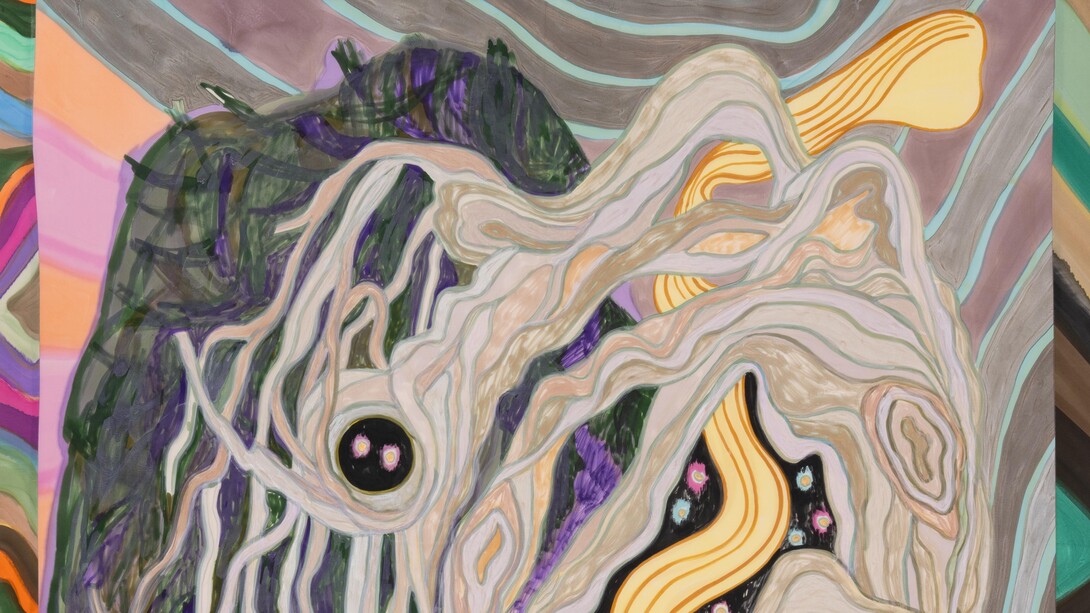
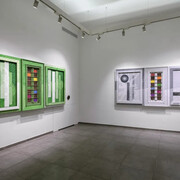
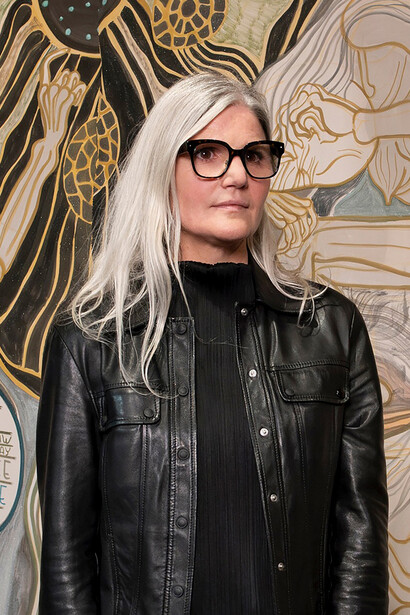
21Art Padova presents Ancestral energies. Transformations of mind and matter, a solo exhibition by Emma Talbot (Stourbridge, 1969), one of the most original voices in British art and winner of the Max Mara Art Prize for Women in 2020.
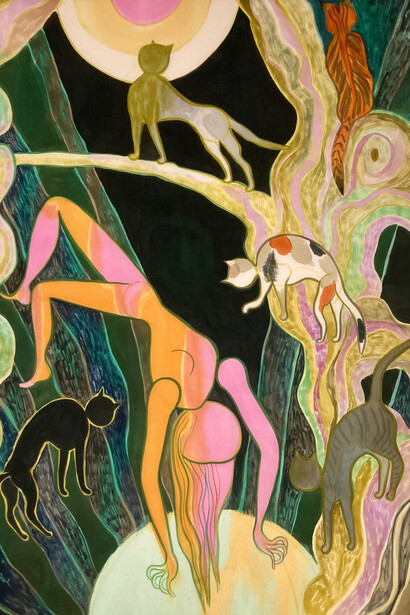
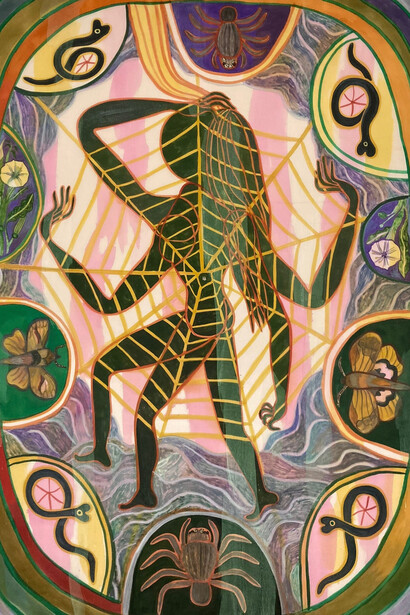
Curated by Cesare Biasini Selvaggi, the exhibition is open to the public from 25 September 2026 to 30 January 2027 and presents, for the first time in Italy, a series of paintings on silk created by the artist between 2023 and 2025.
The exhibition offers a profound reflection on the visceral and philosophical nature of transformation, understood as a perpetual flow that unites human experience and the matter of the natural world. Starting from the Einsteinian principle that «everything is energy» – an indivisible, shared force that cannot be extinguished, but is destined for perpetual metamorphosis – the works on display combine figuration, abstraction and decorative motifs to map the invisible dynamics that traverse space and the psyche.
In this research, nature reveals itself as both ancient and radically contemporary: a witnessing entity, whose elements – from millenary rocks to floating waves – balance the fragile with the monumental.
Talbot’s human figures, faceless and structured as true avatars, move within dreamlike settings. Endowed with multiple limbs and expanded anatomies, these almost hybrid subjects float, fall and perform simultaneous actions, going beyond the literal nature of the human body to convey the complexity of our mental states, projections and memories.
«In open dialogue with posthuman theories and moving beyond the anthropocentric perspective», writes curator Cesare Biasini Selvaggi, «Talbot’s work challenges the presumed separation between humankind and the cosmos, placing us within a complex and interconnected inter-species network. In an age marked by technological acceleration and ecological crisis, Talbot’s painting reminds us how virtual imagery and artificial intelligence extensively depend on the Earth’s physical resources. Ancestral energies thus invites the viewer to rediscover a sense of wonder for the natural world and to embrace a shared responsibility, suggesting that only by recognising our profound integration with matter can we envision a sustainable future».