English
 Español
 Français
 Deutsch
 Italiano
 Português

Jess and Etim first learned that love isn’t just about chemistry — it’s about culture, rhythm, and the small, ordinary shocks that reveal who we really are. Many couples discover compatibility through candlelit dinners, poetic confessions, or matching playlists. But for them, the real test wasn’t fireworks or romance.
It was food.
It started in Willesborough, long before the flights to Africa, before the grandmother with wisdom thicker than stew, before either of them imagined trying to blend two worlds that rarely brushed shoulders.
It started with dinner — the infamous Sunday roast.
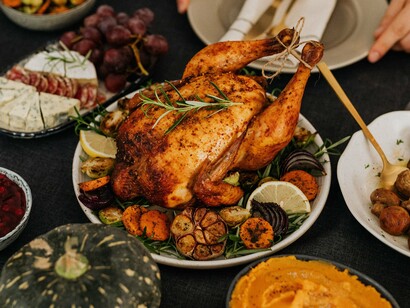
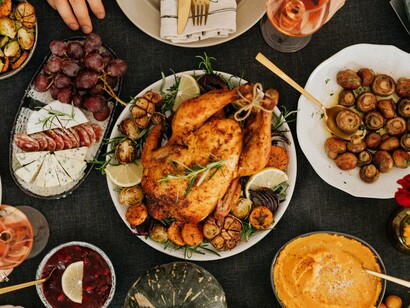
To the untrained eye, a Sunday roast seems harmless. Comforting even. A national treasure. But Jess knew the truth. In her household, it wasn’t simply a meal — it was a ritual. A system. A carefully divided plate that followed rules older than she was.
The potatoes must be golden and identical in size. The beef must be carved with the seriousness of surgery. The peas must never — under any circumstances — touch anything else on the plate.
Jess had warned Etim days in advance.
“Please behave,” she whispered as they walked up to her parents’ front door. Her voice carried the urgency of someone escorting a lion into a room full of gazelles. “And don’t ask my dad why the food has no spices.”
Etim raised an eyebrow. “Why would I ask—?”
Jess stopped. “Please, love. Just trust me.”
He shrugged, amused but obedient.
Once seated at the table, Jess watched her parents present the roast with the pride of people unveiling a national monument. Her mother served everything with the precision of a mathematician. Portions perfectly spaced. Nothing touching. No chaos.
Etim looked at his plate as though it were a puzzle missing several pieces.
Jess squeezed his hand under the table, a silent Don’t do it. Don’t say anything. My dad will combust.
But halfway through the meal, her father — attempting friendliness — leaned in with the kind of earnest expression that never ends well.
“So, Etim,” he said, “Jess tells us you’re quite the cook. What’s your secret?”
Jess’s spine stiffened.
Etim smiled politely. “Well, sir… seasoning.”
The silence that followed was biblical.
Even the peas froze.
Jess’s dad blinked, as though someone had questioned the queen's existence. It took Jess several minutes to restart conversation, but the damage — or the awkward comedy — was done.
Later that night, Jess found Etim standing in her parents’ pantry staring at a lonely jar of paprika as if mourning its neglect.
“Baby,” he whispered dramatically, “your people are suffering.”
Jess burst into laughter — the kind that shakes the shoulders, waters the eyes, and makes everything brighter. That was the moment she realised something profound: love doesn’t erase differences. It illuminates them and somehow makes them funny.
There was no fence to jump or wall to break.
But ground where two new melodies could wake.
A harmony that distance served to mend,
And love became the space where paths extend.
The pasta incident
Weeks later, on a rainy Thursday that smelt like wet pavement and soft beginnings, Jess decided she would cook for Etim in her flat. It felt like the natural next step — a chance to give back, to try, to show she could enter his world the way he had entered hers.
It went tragically wrong.
When Etim opened the door, a smoky haze rolled out like a confused cloud that couldn’t find its way home. The fire alarm blinked angrily, threatening to scream. And there, in the middle of the chaos, stood Jess wearing her pink, frilly apron embroidered with Kiss the Cook.
She stared at the pan as though it had betrayed her.
Inside was pasta so burnt it looked like an archaeological discovery.
“I wanted to surprise you,” she groaned. “But I think the pan hates me.”
Etim laughed so hard he had to lean against the counter. Not a mean laugh — a warm, affectionate, delighted laugh.
He gently turned off the stove and pulled her into a smoky hug.
“You tried to cook for me,” he said softly. “That’s already the sweetest thing anyone has done.”
Jess covered her face. “I almost set my flat on fire!”
“Real love,” he teased, “always begins in a burnt kitchen.”
Maybe it was the haze, or the closeness between them, or the sound of rain tapping softly at the window — but something inside Etim settled. As if a truth he had been carrying finally reached its moment.
He took her hands, still warm from the pan, and whispered,
“Jess… marry me.”
No ring. No grand speech. Just honesty in a kitchen full of smoke.
Jess’s eyes widened — then softened. She smiled through the mess, touched his cheek, and whispered,
“Of course.”
They kissed surrounded by the scent of burnt pasta, and somehow it felt perfect.
Their love, they decided, wasn’t the candlelit, flawless sort.
It was messy. It was smoky. It was real.
Welcome to Africa
Months later, after engagement celebrations, after gently navigating questions like “So… where will the wedding be?” and “What culture will the children follow?”, they finally flew to Etim’s home in Africa.
Jess arrived wide-eyed. The moment her feet touched the reddish earth of Etim’s village, she felt a mix of excitement, nervousness, and awe. Everything was louder, brighter, and warmer. Children ran barefoot, yelling greetings. Women carried baskets effortlessly on their heads. The air smelt of spices, firewood, and something she immediately loved but couldn’t name.
Etim’s mother hugged her with both arms and her entire heart, pulling Jess so tightly against her chest that Jess momentarily thought she might disappear into her embrace. She felt instantly welcome — but also incredibly aware of how much she didn’t know.
Each morning, Jess sat beside Etim’s mother as she cooked. The kitchen was a semi-open space with a charcoal stove, a wooden table, and shelves stacked with jars filled with ingredients Jess had never seen before. The food was a symphony of aromas — earthy, sharp, sweet, and fiery.
Jess took notes furiously, determined to learn everything. She counted spoons, estimated measurements, and tried to guess the ingredients by smell.
After three days of cooking lessons, she finally asked:
“Could I… maybe have the recipes?”
Etim’s grandmother — a small woman with a presence bigger than the entire room — turned slowly toward Jess with an expression that was equal parts fond and amused.
“Ah, my daughter,” she said, chuckling, “African people don’t measure anything when they cook.”
Jess blinked. “You don’t?”
“No.” Grandma waved her hand dismissively. “We don’t use cups and spoons. We use memory. We use the ancestors.” She lifted the pot lid, letting out a fragrant puff of steam. “A sprinkle until the ancestors say enough. A pour until the spirit says stop.”
Jess stared. “So… no written recipes?”
The grandmother’s laughter filled the kitchen like music. “It’s not about recipe,” she said. “It’s about rhythm.”
She gestured for Jess to come closer. Jess leaned in, eager.
“We learn by standing beside our mothers and grandmothers,” the old woman said. “By watching. By feeling. No clocks. No notes. Just the senses.” She dipped a spoon into the pot and tasted it. “Mmm. Needs more salt. Taste.”
Jess tasted it. It was rich and layered, nothing like food she’d grown up eating.
Grandma continued:
“Every dish carries history inside it. From the West Indies… from India… from the people who survived long enough to teach their children how to season properly. African food is not just cooked — it is inherited.”
Then she lifted her hand and tapped Jess gently on the forehead.
“You cook with this,” she said. “Not with spoons.”
Jess’s eyes stung unexpectedly.
Suddenly, Willesborough roast made sense. Burnt pasta made sense. Her journey with Etim — the laughs, the differences, the learning — made sense.
Two worlds. Two kitchens. Two rhythms.
And somehow — beautifully, astonishingly — they met in the middle.
Because love, like African cooking, isn't measured. It’s remembered. It’s felt. It’s passed down.
And it’s shared — one imperfect, unforgettable meal at a time.