English
 Español
 Français
 Deutsch
 Italiano
 Português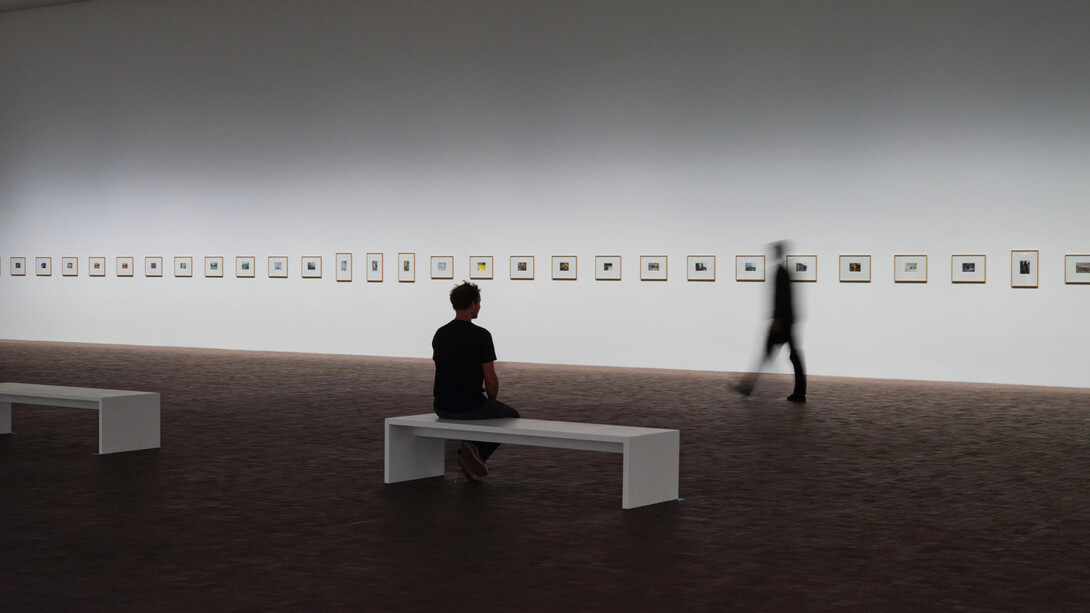
Gerhard Richter is one of the most influential artists of our time, whose work has continuously reshaped the relationship between painting, photography, and perception.
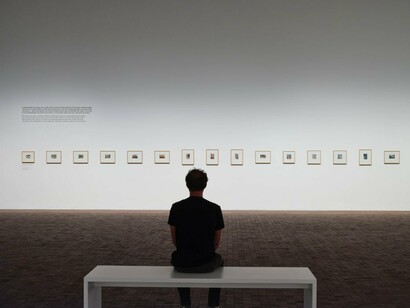
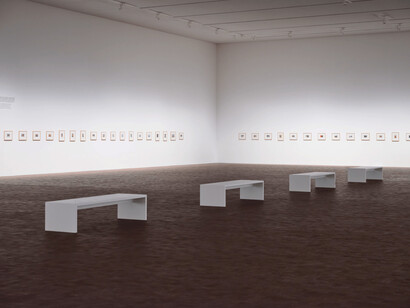
Overpainted photographs is a body of work that occupies a unique place in his practice. Begun in the late 1980s, these works bring together two central and often opposing forces in Richter’s art: the photograph and the painted gesture. Working directly on small photographic prints, Richter applies oil paint, varnish, or enamel, by smearing, scraping, pressing, or dragging it across the image. The result is neither simply a photograph nor a painting, but a hybrid form in which both media are fundamentally altered.
These works are modest in scale, yet radical in implication. The photograph, often understood as a document, a trace, or a stable record of the visible world, is interrupted by paint, a medium of tactile, opaque, and contingent nature. Richter does not illustrate the image or refine it. He subjects it to a material intervention that unsettles its descriptive clarity and suspends its authority. What emerges is a charged surface in which revelation and concealment, accident and decision, intimacy and distance, coexist.
The source material frequently comes from Richter’s own photographic archive, including family portraits, landscapes, city views, or holiday snapshots. These are ordinary images, rooted in private life and everyday observation. Once overpainted, they are displaced from the realm of personal record. The paint neither fully erases nor simply covers the image beneath. Instead, it redirects vision, creating a unique relation between what can still be seen and what has been withheld. The image becomes unstable, open, and unresolved.
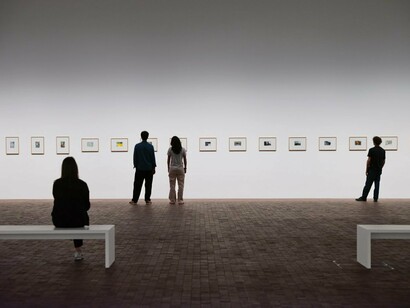
Included in the exhibition are also photographs from the Grauwald (2008) and Museum visit (2011) series. These works extend Richter’s overpainted photographs into two distinct meditations on seeing. In Grauwald, photographs taken in a forest near the artist’s home are veiled with grey lacquer, turning landscape into a space of distance, instability, and introspection. Nature appears suspended between presence and disappearance. In Museum visit, Richter shifts to the museum itself, tracing the movement of visitors through Tate Modern during a single day. Veils of white and vivid color register changing levels of activity, transforming the gallery space into a restless field of perception, memory, and collective experience.
Richter’s methods are equally important to the meaning of the works. Many were made using leftover paint from his abstract canvases, transferred by chance through pressing or scraping. The final image is shaped not only by intention, but by contingency, by the unpredictable interaction between paint and photograph. This element of controlled chance gives the works their particular force.
The Overpainted photographs crystallize questions that run through Richter’s entire practice, concerning the instability of representation, the limits of perception, and the difficulty of separating image from belief. They show that seeing is never neutral, and that every image is subject to transformation, interference, and doubt. In an age defined by the endless circulation, saturation, and manipulation of images, these works remain remarkably prescient. This exhibition offers a rare opportunity to encounter them together and to recognize their enduring importance in Richter’s practice and within contemporary art at large.