English
 Español
 Français
 Deutsch
 Italiano
 Português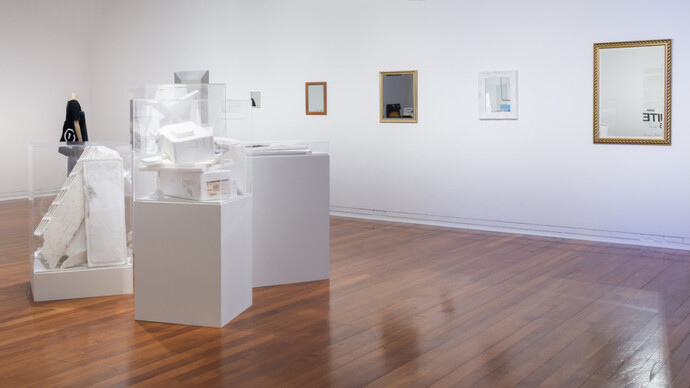
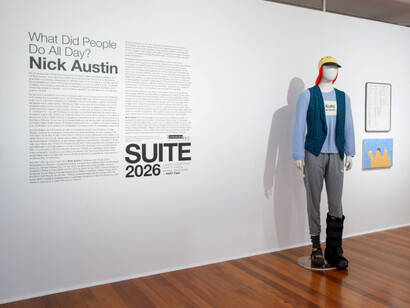
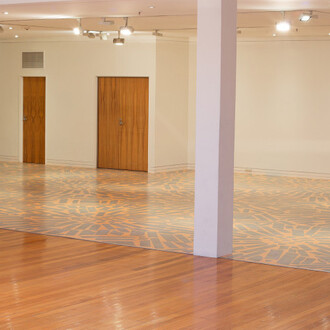
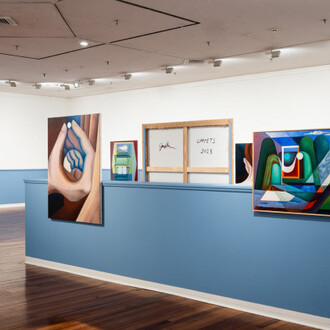
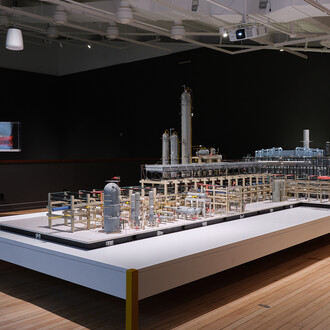
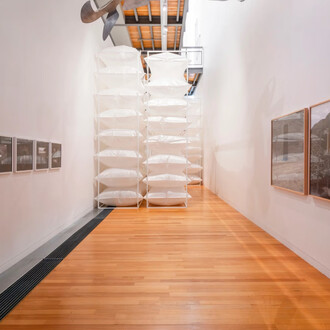
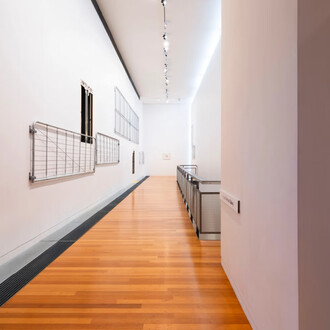
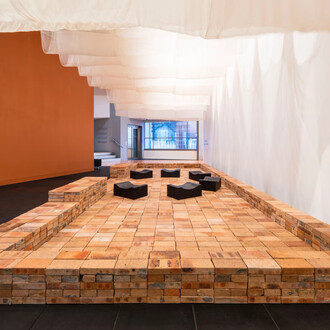
What did people do all day? presents a series of new sculptures by Nick Austin, alongside earlier works that together explore some of the recent concerns of his practice. These artworks reflect on the passage of time, stages of life, legacy, and place, bringing found objects together in Austin’s characteristically thoughtful way – with generosity, care, and deep consideration.
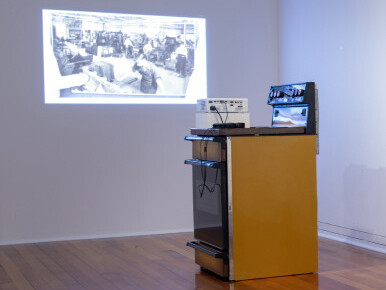
Threaded through this exhibition are different ways to think about collections and collecting. In particular, Austin’s works create opportunities for people to consider some of the meeting points that exist between collections, people, and stories. His works prompt consideration of the way in which objects and materials accumulate and shed information as they move between different contexts – across generations, through time, and between domestic and institutional spaces. His sculptural assemblage Digital oils (2025) is a quasi-social history display centring on a collection of photographs that Austin came across in the cloth-gloved care of Hocken Collections Uare Taoka o Hākena. There are other echoes of museological and archival conventions across the exhibition, extending from modes of display, to the way in which objects are grouped and inscribed.
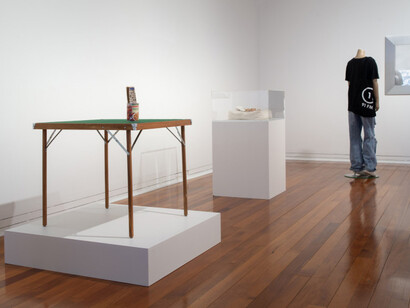
Archives and collections are sites where objects become loosened from their people, despite the best efforts of cataloguing. Austin’s To be a rest home (2025) prompts thoughts about artists and their legacies, pointing toward some of Aotearoa New Zealand’s most celebrated women artists, whose names now circulate like free radicals within the corporate world of aged care. What did people do all day? is also punctuated by ways to think about time and how it is marked, measured, and occupied. From Contractions (23 March 2010) to Breath spectrum (2025), Austin has made works that reflect on the arc of a lifetime, from urgent minutes of birthing through to the more elastic hours of later life, punctuated by the hourly news bulletin.