English
 Español
 Français
 Deutsch
 Italiano
 Português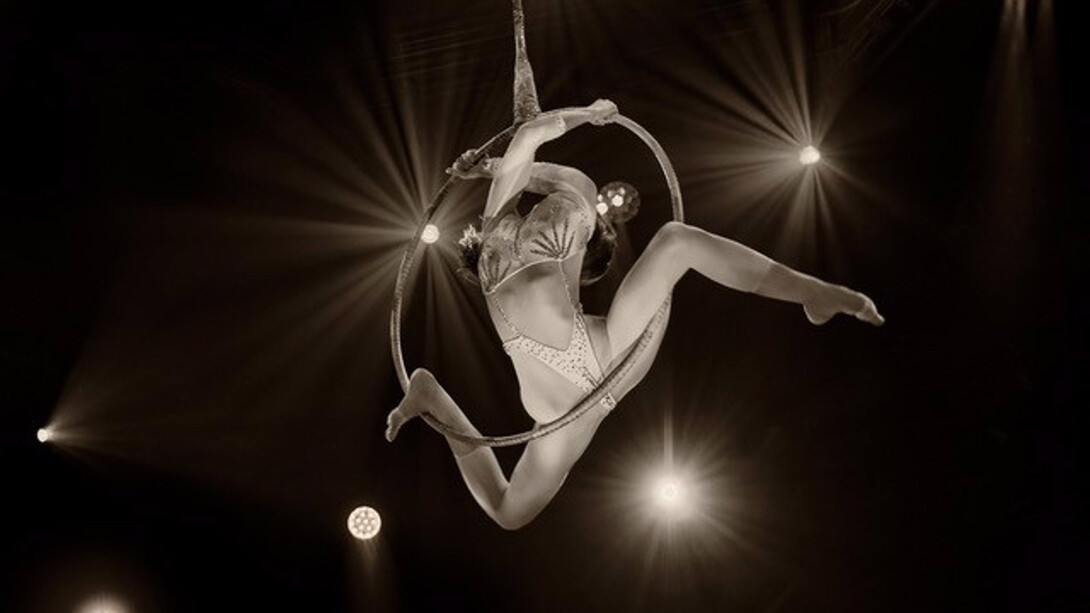
When I went to a small tent traveling circus in Hyannis, Massachusetts three summers ago, the first picture I took seemed to me to be a metaphor for life. An acrobat was suspended many stories in the air, hanging from a bar by one hand, and an absent-minded clown on the ground apparently held the end of the rope that kept him aloft. We, the audience, feared for the acrobat’s safety. In the photo it didn’t look like the clown was responsible for keeping the acrobat in the air (which of course he wasn’t) so the picture didn’t work. But I knew I had found a subject that spoke to me.
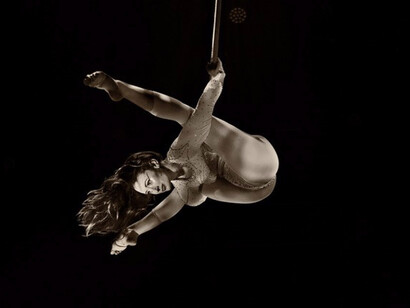
The circus is very photogenic. It has dramatic lighting, perfectly-toned bodies, elaborate costumes and death-defying acts. But I didn’t want to capture what was in front of me like a journalist. That had been done. And beautifully. I was in search of something purely photographic. What the camera sees that we do not.
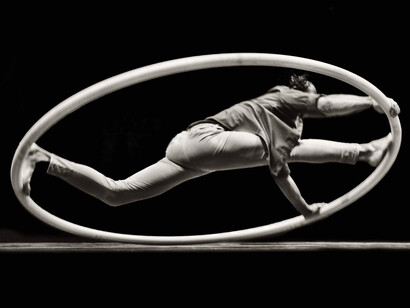
In the past three years I have photographed acrobats, aerialists, break dancers, burlesque dancers, contortionists, hoop divers, pole dancers, and trapeze artists. These athletes were located in California, Georgia, Massachusetts, New York, New Jersey, and Texas but they hail from Australia, Germany, Japan, Mexico and South Africa. They are affiliated with AirOtic Soiree, Circa, Circus Vazquez, Flip Circus, The Hook, Ill-Abilities, Fly-by-Night Dance Theater and Big Apple Circus. Watching the performers' extraordinary feats, the audience roars with laughter, gasps, covers their eyes and stares in disbelief.
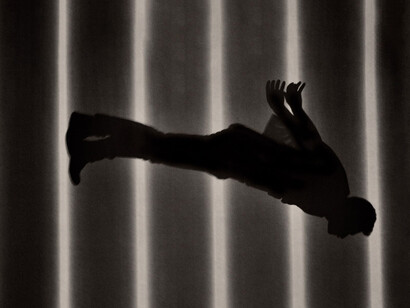
Because I wanted to capture the moments that happen so fast we aren’t conscious of seeing them, I photographed at ten frames per second. The photos revealed the anatomy of a fall, the trance-like state of concentration, strange positions and optical illusions. As a portrait photographer I have always sought to capture the specificity and identity of an individual. For this series I often obscured the face in shadow, behind a gesture or flying hair so the images were more iconic. I witnessed the performers’ agony and ecstasy. They are dependent on each other for their lives. Their connection may be even more profound and intimate than sex.
(Text by Amy Arbus)