English
 Español
 Français
 Deutsch
 Italiano
 Português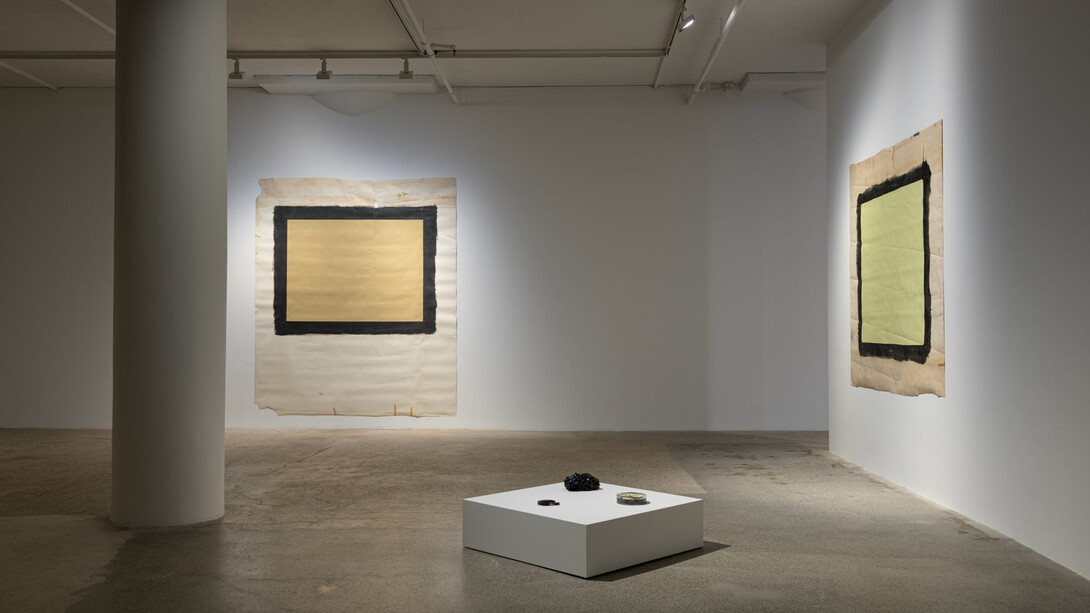
Tony Conrad (1940–2016) was a galvanic figure across multiple strains of the avant-garde. His protean career spanned five decades and resisted authority in all its forms; as Conrad remarked, “the job of an artist is to discover laws to violate that haven’t been made yet.” Best known as a trailblazer in the fields of both drone music and structural film, he also worked in video, performance, painting, installation, public access television, and “paracinema”: experiential works that defied the logic of what the moving image might be.
Conrad’s first film—still his most notorious and influential—was The flicker (1966), a stripped-down sequence of black and white frames that alternate with a throbbing intensity. Though austere in its conception, the work was entrancing in its effects, causing phantom colors to emerge as if from behind closed eyes. In the catalogue for Conrad’s 2018 retrospective at the Albright-Knox, curator Cathleen Chaffee called The flicker “a stroboscopic attack on both the filmic medium and the audience’s senses.” Conrad’s interest in such perceptual excess drew on his work in sound: a co-founder of the Theatre of Eternal Music (with John Cale, La Monte Young, Marian Zazeela, and others), he induced hypnotic tones from mathematical intervals, and The flicker maps similar harmonic structures onto pulses of light. That arsenal of non-narrative possibilities for film expanded in Straight and narrow (1970), made in collaboration with his then-partner Beverly Grant, in which successive frames of horizontal and vertical bars create a heady moiré against a rhythmic soundtrack. “Leaving the pictures out of a film,” as Conrad wryly put it, let him act on the body of the viewer, leading them on “a hallucinatory trip through the unplumbed grottoes of pure sensory disruption.”
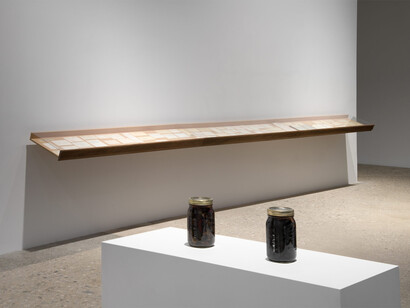
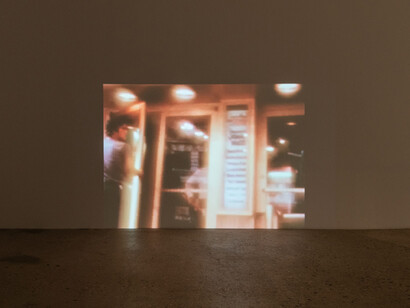
Increasingly sly forays into the materiality of cinema would occupy him throughout the 1970s. Often working from home while raising a young child, Conrad likened film processing to domestic activities, subjecting strips of celluloid to pickling, roasting, or deep-frying until the results were unprojectable. He wove lengths of microfilm and another substrate called Kalvar into a latticed textile known as Flicker matte. Loose connection (1972) applies the tools of documentary to a family trip to the A&P, recorded with a custom camera rigged on baby carriage wheels. But perhaps the most iconic of these interventions took the form of his Yellow movies: sheets of paper topped with rectangles of cheap house paint that would discolor with age. Dispensing with celluloid and projection alike, the Yellow movies isolated duration as cinema’s defining trait, resulting in what Conrad called “a film that would last a lifetime.”
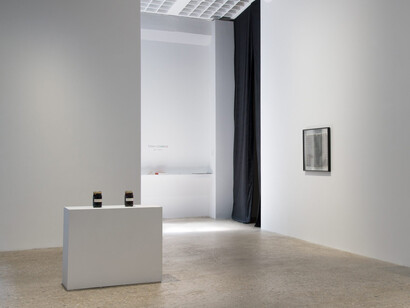
Conrad’s sprawling and idiosyncratic body of work is also shadowed by a trove of ideas that went unrealized, a selection of which are exhibited here for the first time. These archival jottings show the antic yet rigorous mindset he brought to all he did, tinkering with inherited cultural forms to dismantle them from within. For the art historian Branden Joseph, that roving intelligence made Conrad “integral to the ‘secret history’ of the ’60s” and their wake—a legacy of restless experimentation in previously siloed genres that he found new ways to bridge.