English
 Español
 Français
 Deutsch
 Italiano
 Português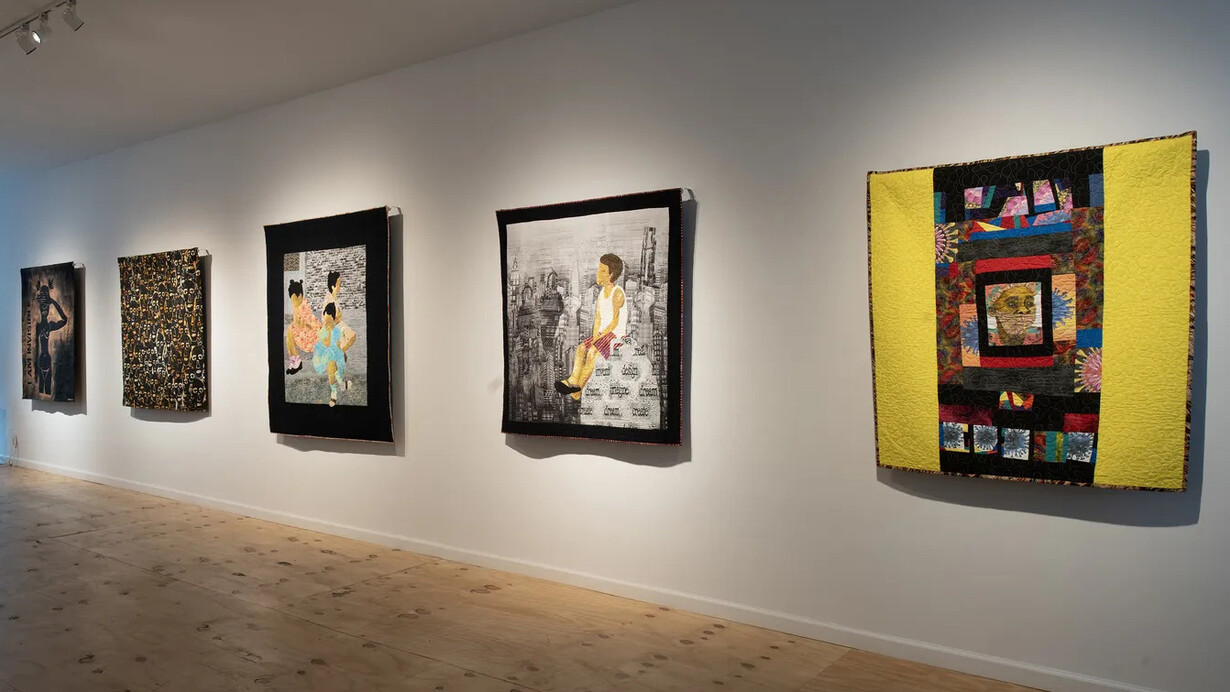
A rare and historic selling exhibition drawn from the personal collection of artist and curator Carolyn Mazloomi.
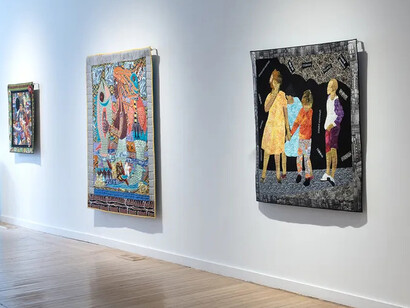
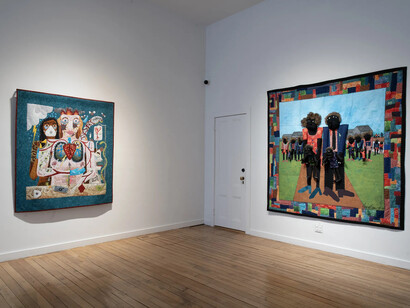
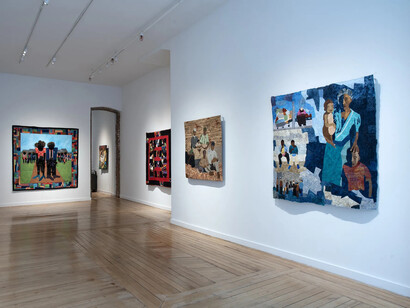
After more than four decades of collecting, Mazloomi, founder of the Women of Color Quilters Network and one of the foremost champions of Black American textile art, is sharing her collection, presenting collectors and institutions with a singular opportunity to acquire works she has spent a lifetime gathering. Her collection is recognized as among the most significant archives of Black quiltmaking in the United States, with major acquisitions already made by the Smithsonian American Art Museum and the International Quilt Museum. This exhibition brings together works by twelve extraordinary artists from Mazloomi’s collection, quilts that function simultaneously as fine art, historical archive, and cultural testimony asserting once and for all that Black quiltmaking deserves a central place in the American art canon.
Masters of the stitch: threaded stories presents works by Wendell Brown, Marion Coleman, Carolyn Crump, Michael A. Cummings, Sharon Kerry-Harlan, Peggie Hartwell, Viola Burley-Leak, Ed Johnetta Miller, Clara Nartey, Donna Chambers, Kathy Nida, and Juanita Yeager.
“This collection has been my heart and soul putting together and represents the work of artists I truly admire,” states Mazloomi. “It is my pleasure to share this with the wider world, and I hope collectors and museums will treasure and value these works as I have, keeping them for future generations and preserving the legacies of these incredible artists.”
“It’s an honor for our gallery to present such a singularly important collection of cultural history and material culture,” states Claire Oliver. “We see our role in presenting this collection as one of cultural and art historical preservation: to ensure that these works are treasured for generations to come and positioned as a crucial chapter in American art history.”
The quilts in this collection preserve Black cultural history that might otherwise have been lost, overlooked, or undervalued; including family histories, migration stories, spiritual traditions, and civil rights narratives, told in the artists' unique vernacular. Black American quilts occupy a singular position in the history of American art: they are simultaneously an intimate domestic practice and a form of public witness. For generations, these textiles carried stories that could not always be spoken aloud, of family, faith, resistance, grief, and joy. Mazloomi's collection insists that this tradition be recognized not as folk curiosity but as a vital, continuing, and formally sophisticated body of work.
The artists in this exhibition work across an extraordinary range of techniques, narrative appliqué, improvisational piecing, rust-dyeing, digital printing on fabric, machine embroidery, three-dimensional construction; yet share a commitment to making work that speaks truth to history and elevates the voices of communities whose creative legacy has too long gone unheralded.
The twelve artists gathered here represent generations of mastery and a breadth of vision that defines Black quiltmaking as a living tradition. Marion Coleman fuses geometric precision with vibrant color to chart interior and communal landscapes. Carolyn Crump uses the quilt surface as a site of political witness, embedding historical memory into every seam. Sharon Kerry-Harlan weaves personal narrative into abstract form, transforming autobiographical experience into universal language. Peggie Hartwell layers text and image to create quilts that read as both visual poetry and social document. Viola Burley-Leak grounds her practice in the spiritual and ancestral, drawing connections across generations of Black womanhood. Ed Johnetta Miller works in bold, improvisational compositions that celebrate the expressive freedom at the heart of the African American quilt tradition. Clara Nartey bridges her Ghanaian heritage and American experience, creating works that speak across cultural boundaries with grace and authority. Donna Chambers investigates memory and place through richly textured surfaces that invite close looking and contemplation. Kathy Nida constructs densely populated narrative quilts that teem with figures, stories, and wit. And Juanita Yeager brings a painterly lyricism to her fabric compositions, blurring the line between quilt and canvas.
Highlighting the exhibition are Michael A. Cummings and Wendell Brown who stand as two of the most consequential figures in the history of Black American textile art. Cummings, whose decades-long career has earned him a place in major museum collections across the country, is celebrated for work that synthesizes African textile traditions, particularly kente and kuba cloth, with the improvisational boldness of jazz and hip-hop, producing quilts of extraordinary visual force that have helped redefine what the medium can mean and do. Brown, equally groundbreaking, approaches the quilt as a three-dimensional object as much as a flat surface, pushing the boundaries of textile art into the realm of sculpture and installation; his presence in this collection signals the breadth of Mazloomi’s curatorial ambition and her commitment to artists who refuse the limits others would impose on their medium.
Mazloomi’s legacy as a collector and advocate for textile art centers on an infrastructure she built: major traveling exhibitions, scholarly books and catalogs, museum acquisitions, and a mentorship lineage that continues to shape emerging artists. Long dismissed as a domestic craft, Mazloomi’s work and collection are a testament to her vision of these works as a distinctive chapter in American art history. These quilts are soft monuments to the cultural history of Black America, demonstrating a vernacular tradition, artistic vision and superlative craftsmanship.