English
 Español
 Français
 Deutsch
 Italiano
 Português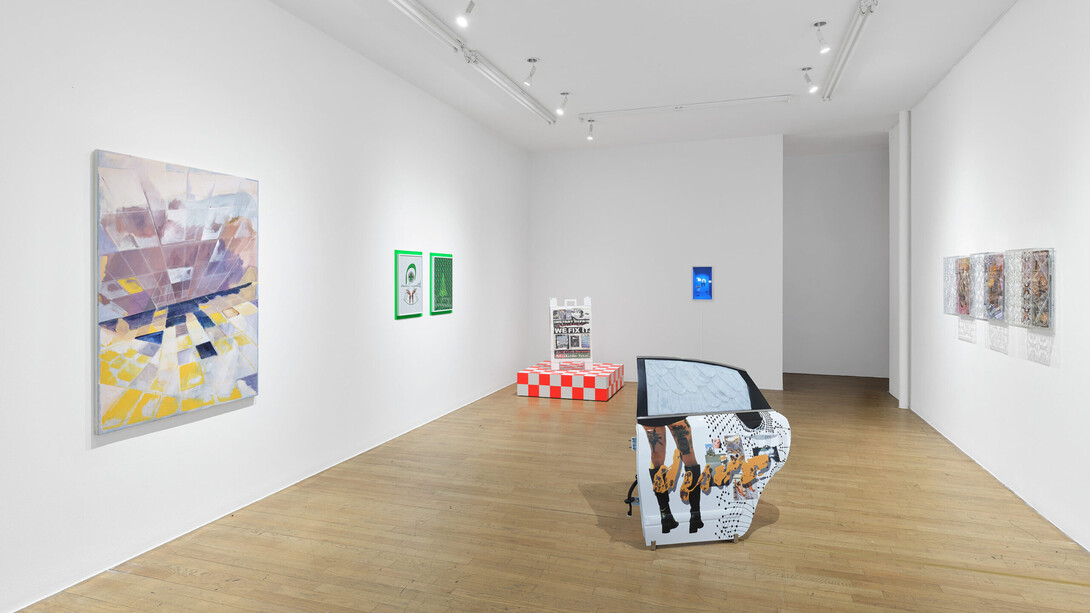
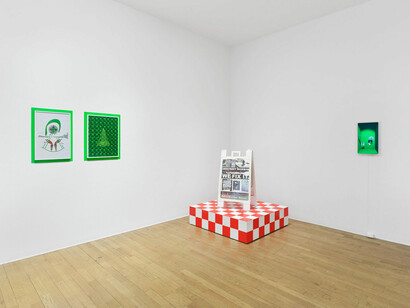
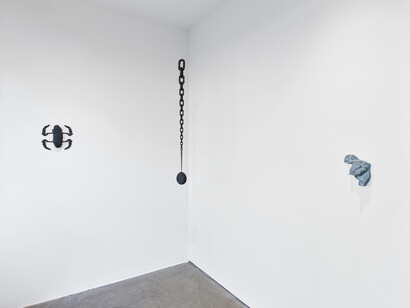
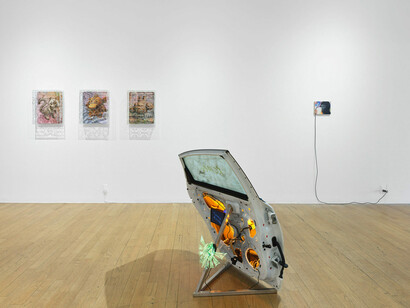
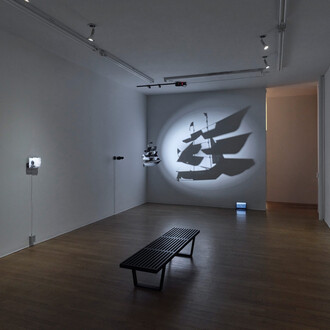
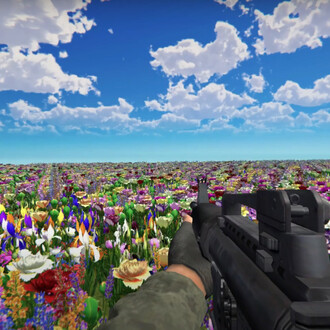
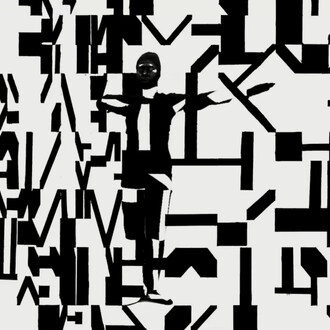
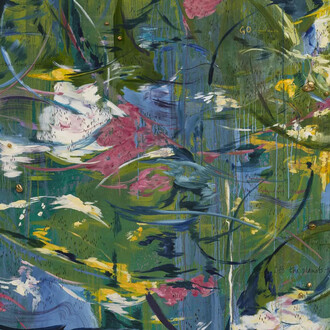
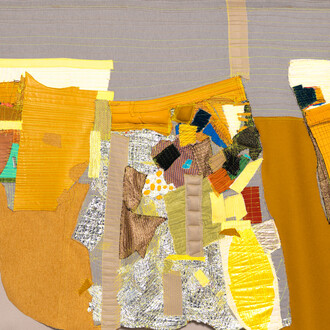
time is a flat circle is the second exhibition in a series of collaborations between Rip Space and bitforms gallery, co-curated by Vera Petukhova and Valerie Oakley. The exhibition brings together work by Erick Antonio Benitez, Ricardo Cabret, Lou Fauroux, and Umber Majeed in the consideration of how contemporary mythology is constructed, circulated, and transformed across digital images, networked systems, and cultural exchange. At its core, the exhibition holds a condition of simultaneity: multiple histories, geographies, identities, and temporalities unfold in parallel. Within this overlap, myth functions as a framework for experiences that resist singular narratives. For those navigating diaspora and cross-cultural identity, the past is not left behind but remains active in the present — home exists in multiple places at once, symbols migrate, and inherited memory coexists with contemporary life.
Extending this exploration of contemporary myth formation, Erick Antonio Benitez's work reimagines familiar cultural artifacts as carriers of collective meaning. In one series, a digital print layers Pokémon characters with Indigenous motifs and symbols drawn from contemporary culture. Suspended above the image, a vinyl-cut acrylic structure takes the form of the decorative gates commonly found on homes in El Salvador, where the artist's family is from. Functioning simultaneously as an architectural frame, and threshold, the overlay connects personal and collective histories while collapsing distinctions between ancestral and contemporary forms of storytelling. Together, these layered references suggest that myths are fluid structures through which ancestral symbols and digital forms of cultural memory circulate across generations and place.
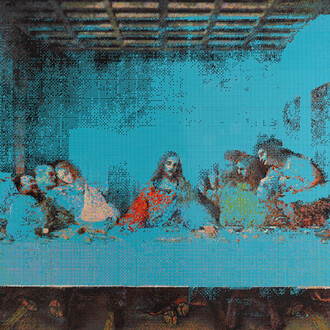
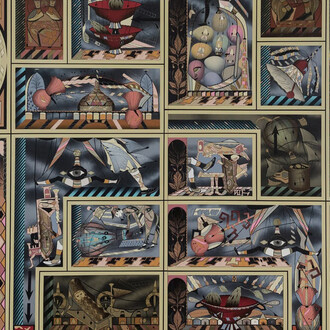
Umber Majeed traces how history, technology, and identity are produced through visual systems, including state iconography, family records, and the aesthetics of Pakistani diaspora. The artist moves between the imagery of nuclear nationalism and the visual vernacular of South Asian kitsch, tracing how both are sustained through circulation and adaptation. The aesthetics of early internet culture connect inherited visual traditions with contemporary experiences of migration and displacement, creating hybrid mythologies shaped by both history and digital infrastructure.
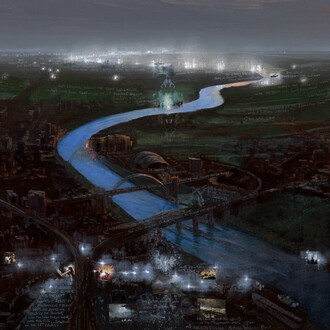
Many exhibited works attend to the infrastructures that uphold contemporary image culture. In Ricardo Cabret's practice, fiber-optic cables, communication networks, software systems, and algorithms are visually represented as metaphors for the invisible structures that connect individuals across space and time. Drawing from Puerto Rico's telecommunications infrastructure and its complex geopolitical, ecological, and colonial realities, his work reveals the material networks that underpin contemporary experiences of connection and belonging.