English
 Español
 Français
 Deutsch
 Italiano
 Português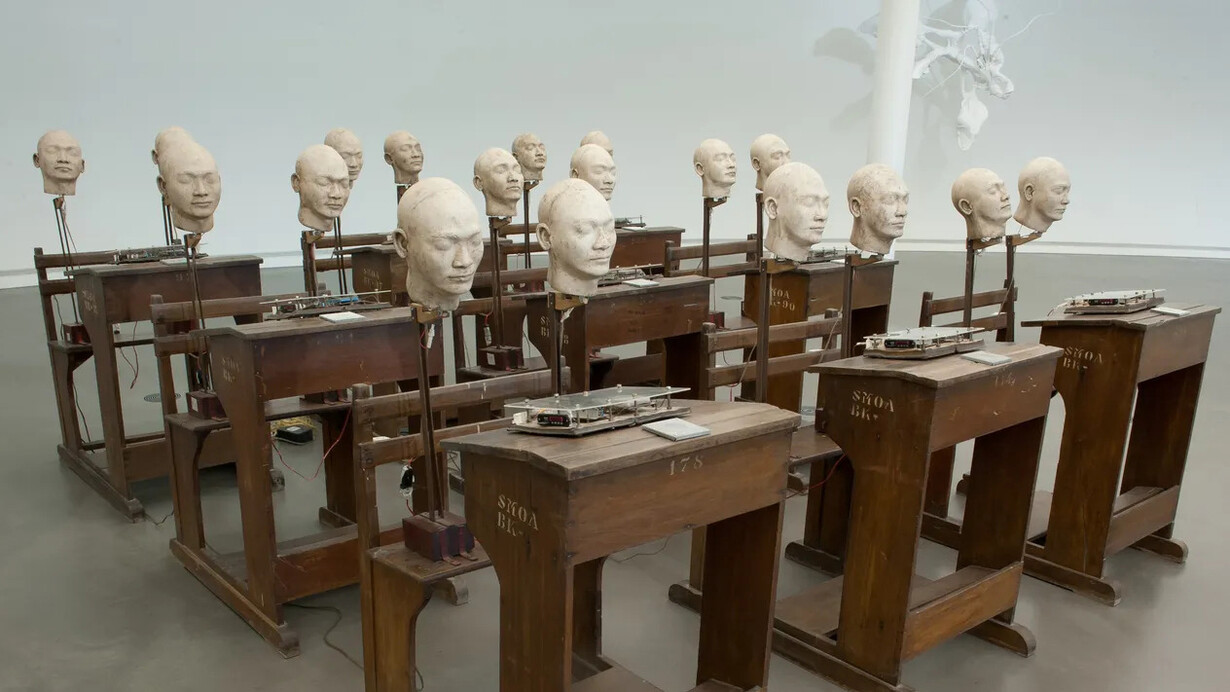
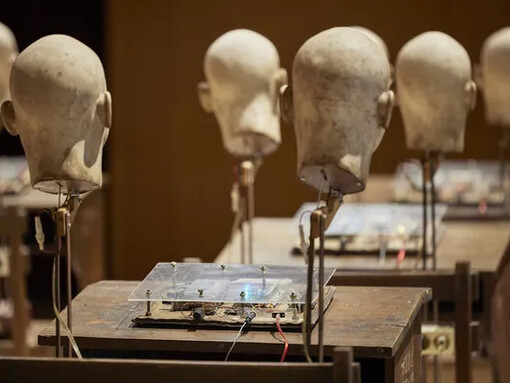
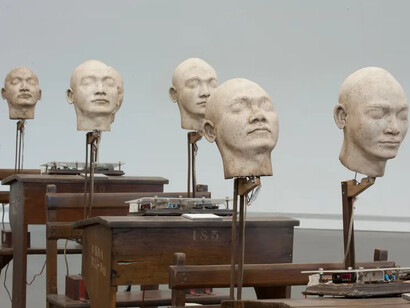
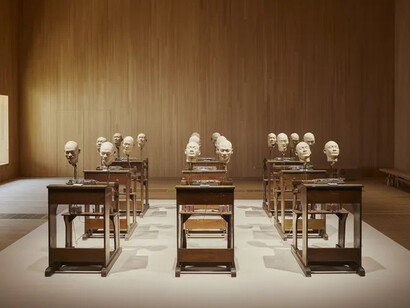
Heri Dono’s kinetic installation Fermentation of the mind (1992–1993) resembles a classroom, featuring rows of old wooden desks topped with white fibreglass heads. When activated by a pedal, the heads nod in unison and emit distorted chanting sounds. The work is inspired by Indonesia’s sociopolitical landscape in the early 1990s, particularly the state’s influence on public opinion and independent thought through propaganda. Drawing on the rich Javanese tradition of wayang kulit (shadow puppetry), Dono uses satire to reflect on history, society, and culture.
The installation transforms a familiar educational setting into a thought-provoking environment where conformity and authority become central themes. Through the synchronized movements of the heads and their repetitive vocalizations, Dono evokes systems that encourage uniformity of thought, prompting visitors to consider the relationship between power, education and collective behaviour.
At the same time, the work demonstrates the artist’s distinctive ability to combine political commentary with humour and theatricality. By incorporating references to traditional Javanese visual culture, Dono creates a dialogue between local cultural heritage and contemporary social realities, using symbolism and irony to address complex issues in an accessible way.
More than three decades after its creation, Fermentation of the mind remains strikingly relevant. The installation invites reflection on the mechanisms through which ideas are shaped, transmitted and controlled, while encouraging viewers to question accepted narratives and consider the importance of independent thought in society.