English
 Español
 Français
 Deutsch
 Italiano
 Português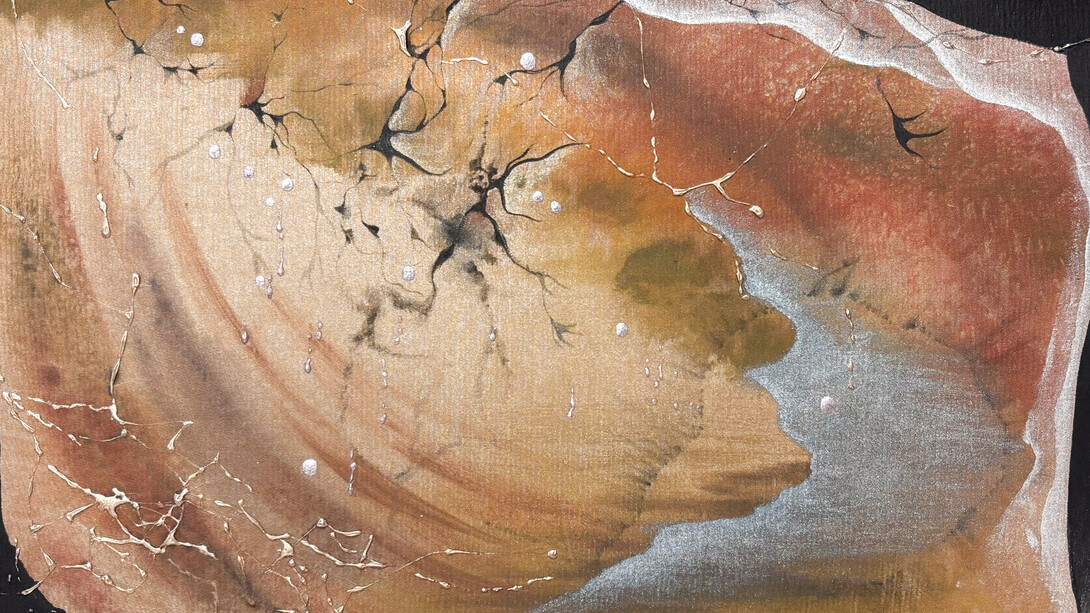
Through form, all things come into being. Neither fixed nor absolute, form is a continuous state of becoming through which the unseen gradually reveals itself. Matter and spirit, memory and imagination, thought and emotion are not separate conditions, but different manifestations of the same unfolding process. Form is not merely what appears; it is the trace of transformation itself.
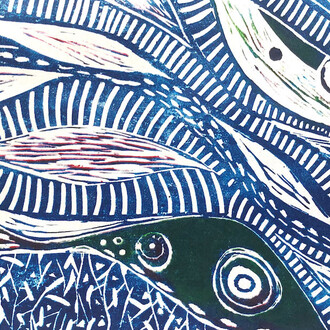
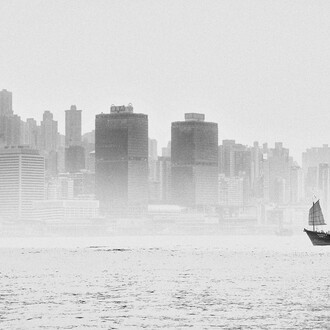
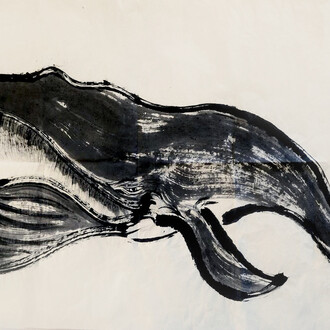
Bringing together seven artists from Hong Kong, Indonesia, France, Lithuania, and Germany, Form explores the many ways in which shape emerges through artistic practice. Across ceramics, photography, installation, painting, and textile works, form is examined not merely as an outward appearance, but as a process of transformation, perception, and becoming.
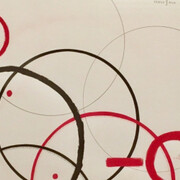
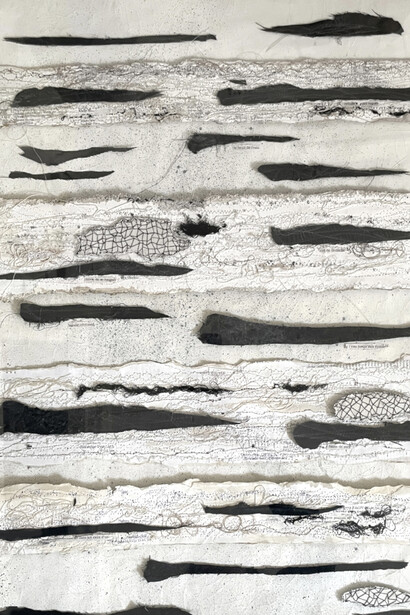
Ailsa Wong’s paintings draw from automatic drawing and subconscious imagery, unfolding as inner landscapes where nervous systems, spiritual ecologies, and animistic cosmologies intersect. Through ink and embroidery, chaussette b. traces parallels between bark, roots, skin, and memory, exploring how time leaves its mark upon both the body and the natural world. Gedvile Bunikyte’s geometric paintings translate inner energies and states of consciousness into luminous compositions informed by sacred geometry and practices of self-cultivation. Jendrik Schröder’s photographic series Leaf Studies transforms fallen leaves into an exercise in ecological attention, revealing unexpected formal connections between nature and everyday human spaces.
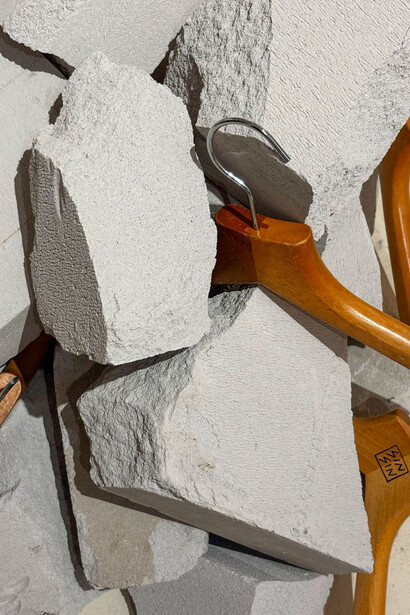
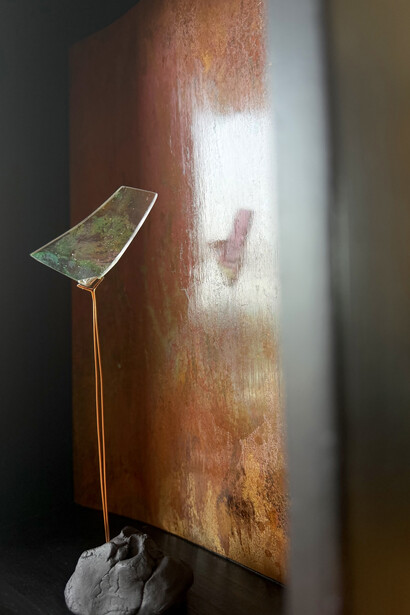
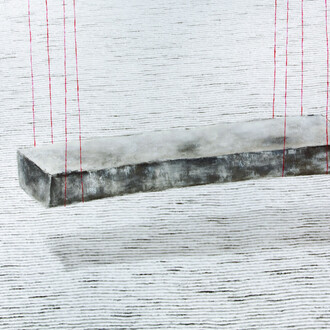
Joey Leung’s interactive ceramic sculpture The form of the good draws on Plato’s philosophy, inviting viewers to participate in the shaping of form, meaning, and value. Lie Fhung combines salvaged stained-glass shards, oxidised copper, and stoneware to create poetic assemblages in which discarded fragments are reimagined through transformation. Sin Sin Man’s Determination brings together old hangers and stones in a precarious balance, transforming everyday objects into a reflection on persistence, resilience, and the weight of navigating personal and collective realities.
Extending the exhibition beyond contemporary art, three invited guests offer complementary perspectives rooted in craft, material culture, and nature. Kathy’s handcrafted enamel jewellery combines Western colour sensibilities with Eastern minimalism, using traditional copper enamelling techniques and kiln-fired glazes to create unique forms shaped by material, process, and chance. Pulima explores craft, material culture, and cultural memory through indigenous crafts, folk art, ritual objects, textiles, rare books, and botanical specimens gathered from diverse communities across the world. Drawing on the philosophy of Ikebana, Shalom creates floral compositions that reflect the relationship between heaven, earth, and humanity while embracing balance, impermanence, and the beauty of natural forms.
Together, the artists and invited guests demonstrate that form is never static, but continuously emerges through the relationships and transformations that shape our world.