English
 Español
 Français
 Deutsch
 Italiano
 Português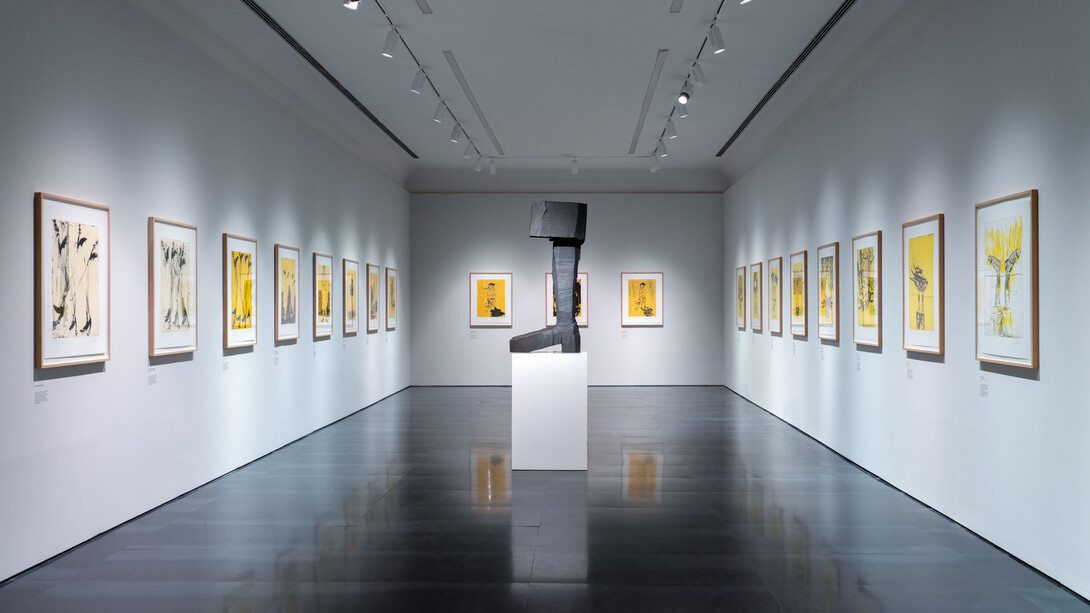
Museo Novecento in Florence presents Baselitz. Avanti!, a major exhibition dedicated to one of the undisputed protagonists of contemporary art, developed in close collaboration with the artist’s studio.
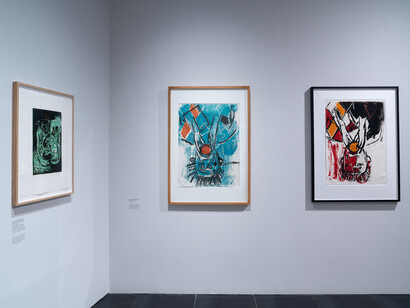
From 25 March to 13 September 2026, the museum hosts, for the first time in Italy, a large-scale exhibition project that foregrounds a fundamental yet often less explored dimension of Baselitz’s practice: printmaking.
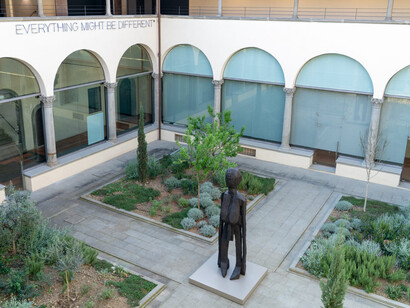
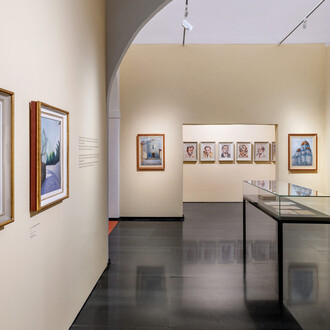
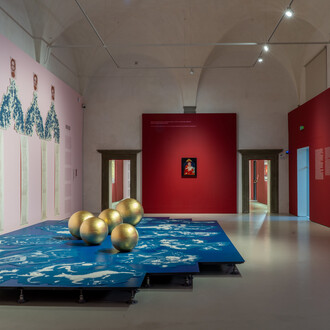
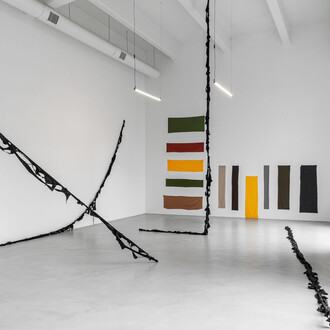
Spread across the museum’s three floors, the exhibition brings together approximately 170 works, including prints, paintings, and sculptures, offering a comprehensive view of the complexity and radical nature of a body of work spanning more than sixty years. The selected works reflect the wide range of themes addressed by the artist and reaffirm his conception of art as a process of transformation and subversive gesture, resolutely distant from any notion of reassuring harmony. Born in Germany in 1938 as Hans-Georg Kern and raised amid the ruins of the Second World War, Baselitz makes destruction, even historical, cultural, and social tragedy, a founding matrix of his artistic vision.
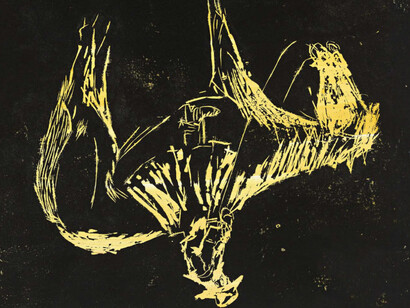
A pioneering and nonconformist figure of the postwar period, he has driven a radical renewal of artistic language, challenging academic conventions and rejecting any predefined models. His celebrated inversion of images stands as a symbolic and conceptual act that destabilizes perception and compels the viewer to begin anew.
The exhibition also highlights the deep connection between the artist and Florence, a city that played a decisive role in his formation. Baselitz lived in Florence for approximately six months in 1965 after winning the Villa Romana Prize, during which time he engaged with the anti-classical and expressionist art of the Italian sixteenth century, particularly the work of Rosso Fiorentino, Domenico Beccafumi, and Jacopo da Pontormo. Between 1976 and 1981, he returned to the city several times, culminating in his solo exhibition in 1988 in the Sala d’Arme at the Palazzo Vecchio.
Baselitz. Avanti! offers a rare opportunity to engage with one of the most significant figures in the history of art—not only of our time—whose work has dismantled the figurative tradition in order to regenerate it from its own ashes.