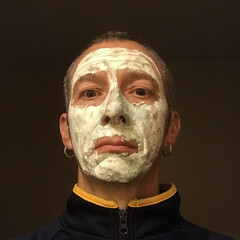
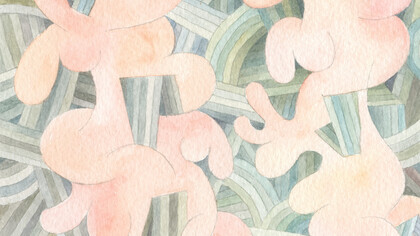
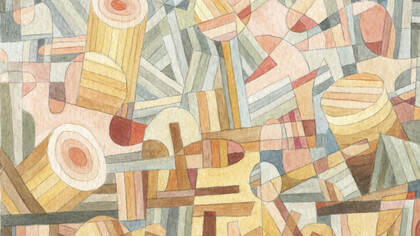
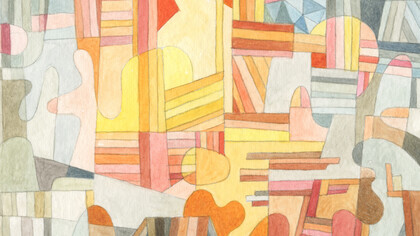
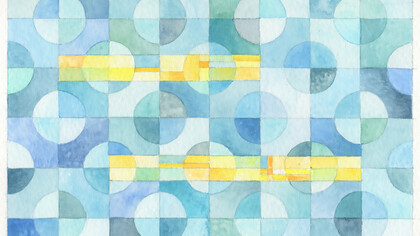
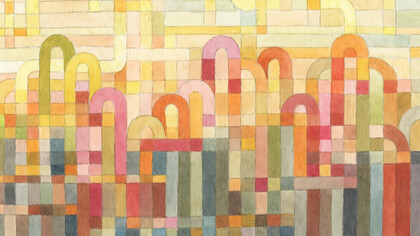
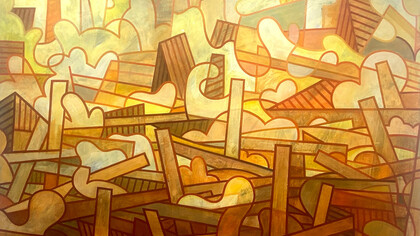
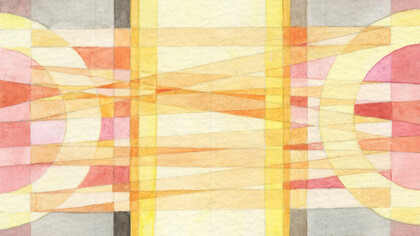
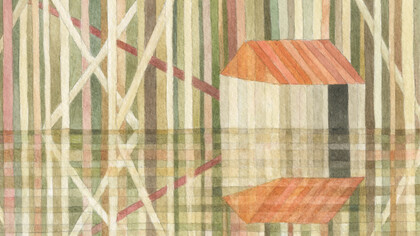
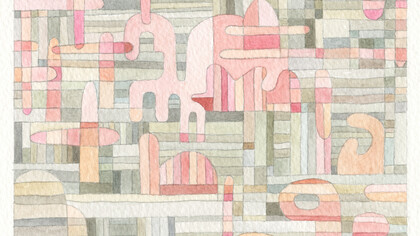
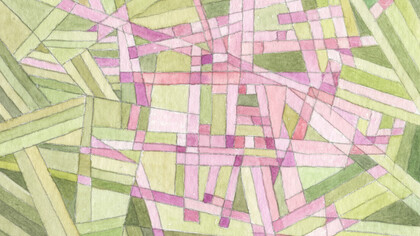
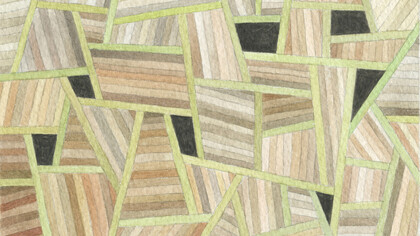
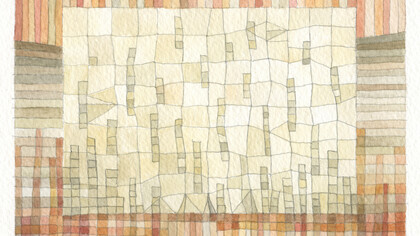
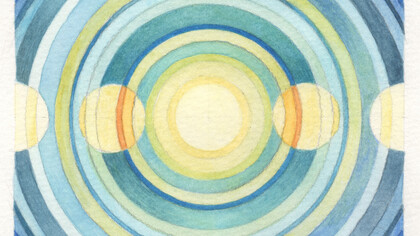
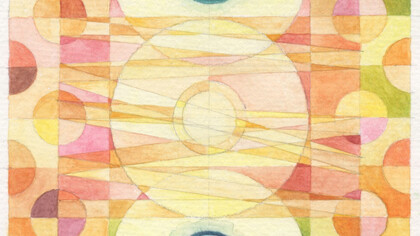
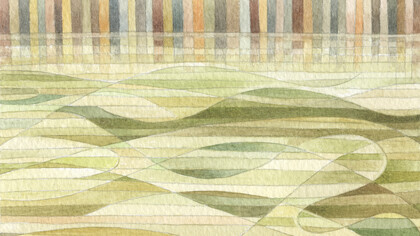
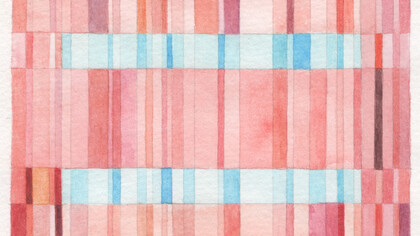
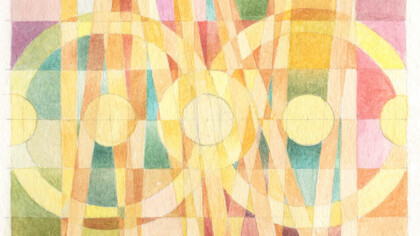
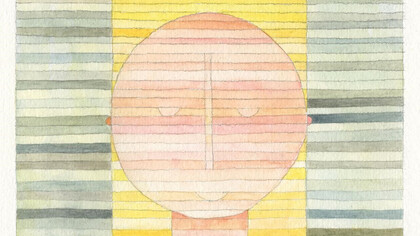
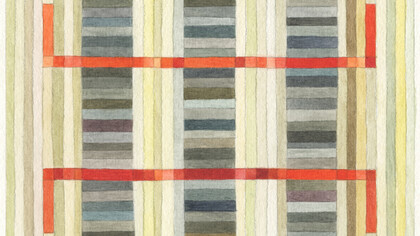
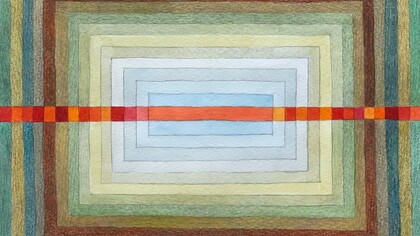
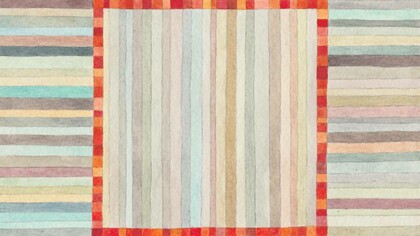
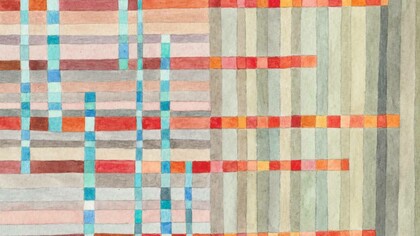
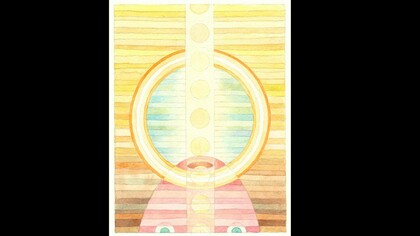
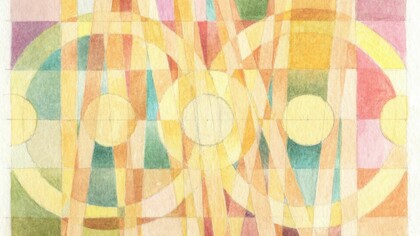
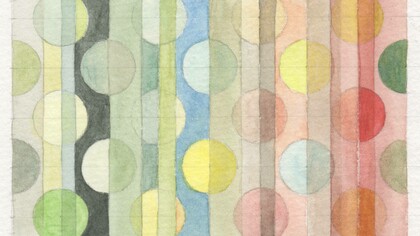
For over thirty years, artist Mark Weighton has been writing and creating artworks that explore an animist vision of the interconnectedness of existence. From his studio in the Surrey Hills, UK, he has exhibited work internationally which features in several notable public and private collections across Europe, Asia and the Americas. His current output is spiritually and environmentally motivated, employing a wide range of media to actively highlight the pressing issues surrounding Earth's climate crisis. His large sculpture installation 'BURNT WOOD', fabricated entirely from recycled plastic lumber and displayed at the 2021 United Nations COP26 Climate Conference in Glasgow, received acclaim across international press and media platforms.
Alongside painting and sculpture, writing plays a consistent role in his practice, with contributions made to a variety of UK publications. He has been writing a monthly column for Meer since 2022, which expands on his enduring fascination with the interconnected nature of existence through a broad assessment of current affairs.
Additional written work, including his poetry, can be found on the Substack.com literary forum. Mark also teaches, gives lectures, plays football badly, tends his garden and allotment, sleeps well and has occasionally illustrated children's books for Hodder Hachette. He is the extremely proud father of four grown-up children.
He says, “Bearing in mind our current climate crisis, I believe it’s time to re-examine our relationship with the planet and each other. What are the consequences of our culturally entrenched behaviour today? What can we do? What destructive habits can we change now to prevent further suffering? Can we consistently employ our thoughts, words and deeds to bring benefit to all rather than only those we deem important? Are the economic and political systems we have developed fit for purpose? Are the social systems that have brought so much benefit to humanity in such a short period of evolutionary history also endangering our long-term survival?
I have been arguing for some while that before long most art will be climate or environment art. To not have the climate breakdown at the heart of art practice is, to my mind, a denial of the issue. As the world burns in front of us, most aspects of our lives will be affected no matter where we live. Our security and cost of living; how we work and get around; even how we eat will be forced to change while the consumerist juggernaut of unsustainable economic growth thunders on towards oblivion.
Let’s not forget it is us at the wheel. Let’s hope there is still time to change course or, better still, stop the engine immediately, get out of the dangerous vehicle and walk away as swiftly as we can towards a more sustainable, equitable and connected future.
I firmly believe in the interconnected nature of existence. If this cherished understanding that there is no separation holds true, whatever we do to ‘other’ should be considered an act directed at Self. The assertion bestows additional urgency upon the edict beloved of so many spiritual teachers, to ‘do unto others as you would have done unto you.’ To harm is to harm Self. To love is to love self.
A negatively inspired action adds to the collective negativity of consciousness. A positively inspired action adds to the wellspring of collective positivity. We draw from or add to either account whether aware of the process or not. How wonderful then to realise the personal capacity to draw inspiration from and add to the well of positivity as an act of conscious will. I maintain that this personal choice can become the foundation of an increasingly joyful life experience aligned with the infinitesimally diverse biosphere of which we are all part.
My commitment to my art practice is a case in point. I was very lucky to have realised in my early twenties that my wellbeing was inextricably linked to my creativity. As life choices emerged, I always aimed to take the option that allowed me to continue making art. I therefore managed to resist financially rewarding but ultimately distracting career opportunities in favour of following my passion and have forged an autonomous path that I gratefully tread to this day. Each daub on a canvas and every line in a drawing is made with the positive intention to bring benefit to all and, at the very least, to do no harm. Each artwork becomes a talisman: an embodiment of the positive thought that birthed it; an act of defiance in the face of the unhelpful, restrictive cultural norms and pressures that dictate what a ‘meaningful’ life should look like.
At a time when global consumerism is doing a splendid job of homogenising the human experience, we should learn to treasure and protect our colourful diversity before we lose it. If we lose diversity (for good reason, the very essence of evolution and our presence on this beautiful planet), our time here as a species may well be unnecessarily curtailed. Some suggest that wouldn’t be a bad thing – in effect, positive thinking. I prefer to think that there are still choices for all of us to make, regardless of circumstance, that sustain an abiding, harmonious, peaceful narrative in this tiny corner of a tiny galaxy amongst the billions that exist in our universe, for the benefit of all.”
The only way to deal with an unfree world is to become so absolutely free that your very existence is an act of rebellion.
(Albert Camus)
Further work by Mark Weighton can be found at his website.

 English
 Español
 Français
 Deutsch
 Italiano
 Português