English
 Español
 Français
 Deutsch
 Italiano
 Português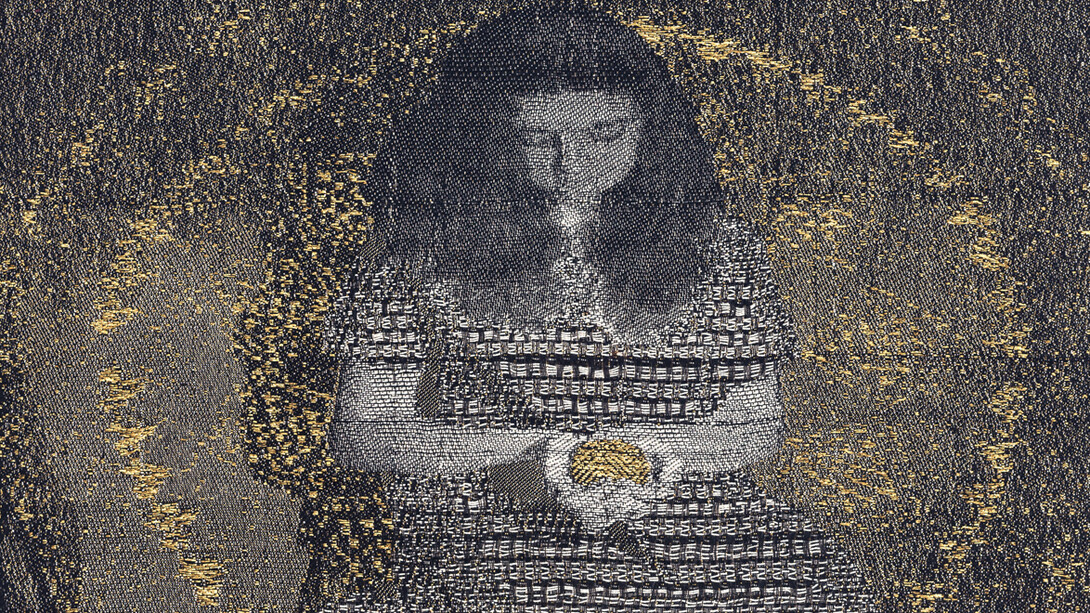
...the joining of a fiber that runs through time.1
(Ruth Corcuera)
Thread can be understood as one of humanity’s earliest technologies. Spinning, twisting, knotting, and weaving are actions that not only produce objects but also organize time and memory.
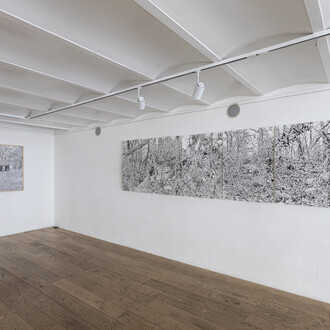
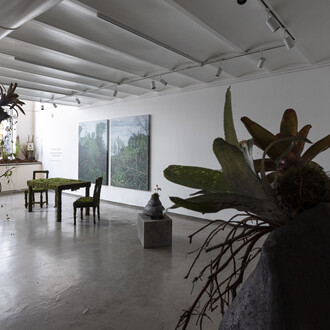
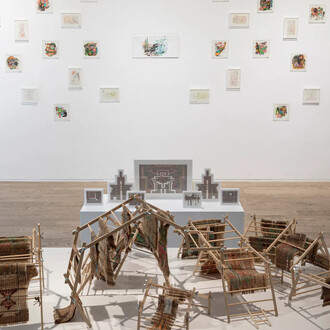
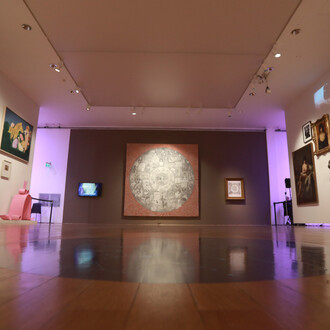
In this exhibition, textiles emerge both as gesture and as creative process— an autonomous language that is nevertheless connected to a broader field of relationships between body, technique, and materiality. The works gathered here are developed through a variety of artisanal and mechanical procedures, including embroidery, weaving, sewing, and assemblage.
Beyond the diversity of methods employed, these artists succeed in bringing together making and creating within a shared pulse.
The creative landscape unfolds through multiple axes: dialogues between genres, intersections of tradition, heterochronic temporalities, and diverse narratives that place different modes of production in tension. Plant fibers, inherited techniques, industrial processes, and digital technologies coexist, transforming thread into art.
Rather than affirming fixed identities, the exhibition proposes a reflection on territories, generations, and practices that reveal the textile horizon of the Americas.
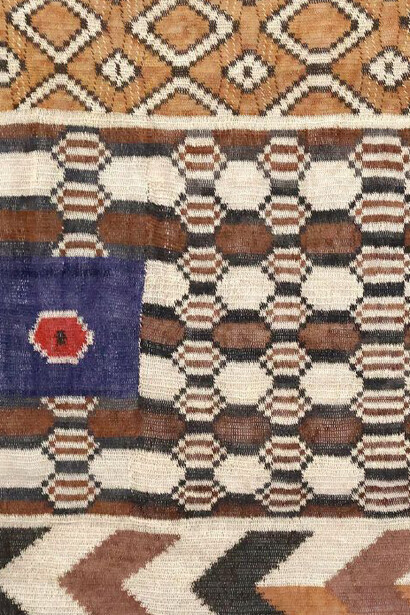
Analy Villagra, a Wichí artist from La Curvita, Santa Victoria Este, Salta, Argentina, works with chaguar fiber as part of a broader textile knowledge system maintained by Wichí women. Through the linking of bags and the weaving of cloths, these women commemorate and reactivate their cosmic origins.
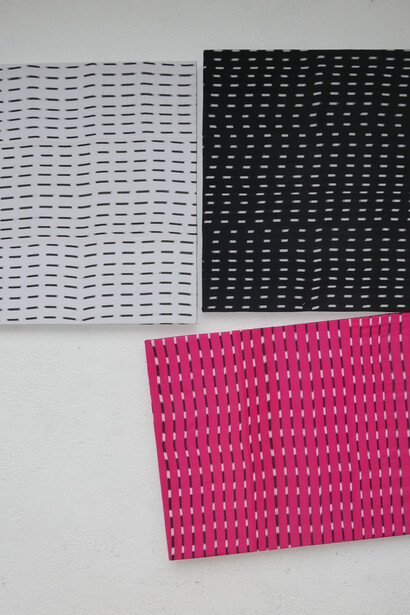
Antonio Pichilla Quacaín, a Maya Tz’utujil artist from San Pedro La Laguna, Sololá, Guatemala, employs thread as an active element within the jaspe dyeing process and as a vehicle for ancestral memory. His work is rooted in the weaving traditions and knowledge systems of the communities surrounding Lake Atitlán.
Diego Miccige, a textile artist from Buenos Aires, Argentina, uses thread as the constructive material of sacred geometry, creating legions of anthropomorphic guardians woven from silk thread as well as contemplative and venerable spaces.
Gabriela Nirino, artist, designer, and jeweler based between Buenos Aires and Seattle, intertwines mercerized cotton and gold thread through the Jacquard loom to create female figures inspired by the ñustas, or weaving virgins, connecting Andean textile imagery with women from her own affective lineage.
Jesús Casimiro, a Diaguita-Calchaquí artist from Luracatao, Salta, and Buenos Aires, Argentina, works with wool threads that embody the resilience of Diaguita textile legacies and their continuity. His practice evokes the poetics of ancestral weaving through the techniques of his community of origin.
Josefina Concha, an artist from Santiago, Chile, employs thread as an instrument of embroidery, exploring volume, density, the lightness of fabric, color, and the expressive potential of its reverse side.
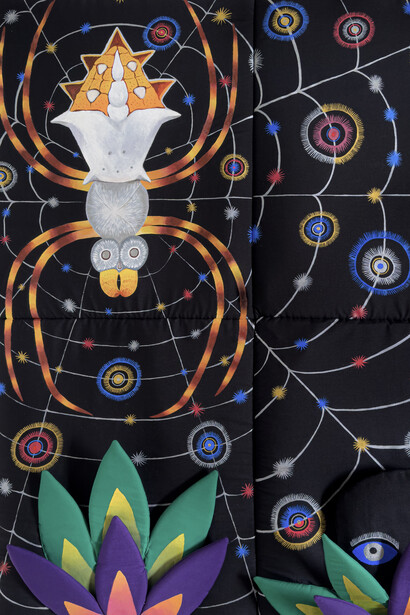
Tadeo Muleiro, an artist from Buenos Aires, Argentina, approaches thread as both a maternal inheritance and a sewing tool, creating soft, articulated, multiform panels through which he unfolds a mythological and magical universe.
Within the textile realm, an expanded territory emerges—one where knowledge, technologies, and ways of imagining community converge. Thread reveals itself as a living structure: a sensitive continuity capable of joining times, territories, and diverse ways of inhabiting the world.
(El hilo sagrado. Text by Roxana Amarilla)
Notes
1 Corcuera, Ruth. Arte textil del '60 al 2000, in Historia general del arte en Argentina, Vol. XII, Academia Nacional de Bellas Artes, Buenos Aires, 2015, p. 353.