English
 Español
 Français
 Deutsch
 Italiano
 Português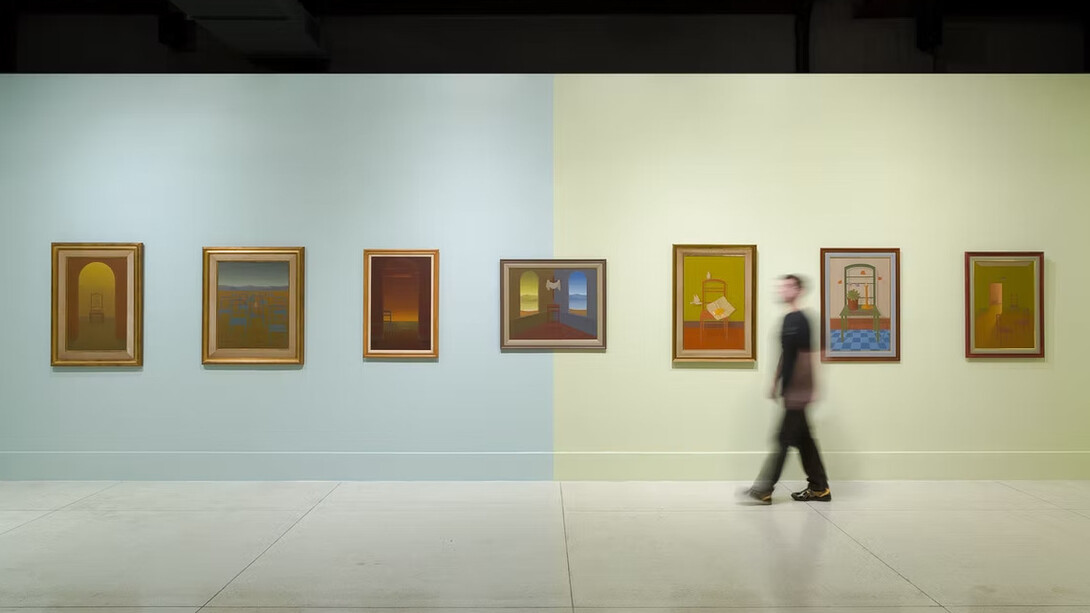
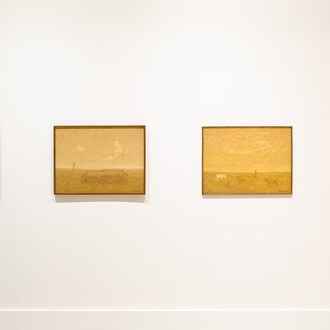
Perhaps the register that best suits Ruffinengo’s painting is that of the question. The question that seeks to unravel the mysteries of what one sees and feels. Answers might be found in the poetry of light striking objects but none are straightforward and it is that sensation that guided the painter for five decades. It is as though he were forever shrouded in an indomitable nostalgia and only moved to paint when his emotions were at their most profound. His was a path whose destination was always uncertain; he never knew whether it would lead to a magical tenderness or whether the cosmic drama would end up asserting itself. It was when it led him right between the two that achieved a perfect synthesis, the chromatic palette that appropriately reflected his inner motivations. When he wasn’t painting, he passed the time waiting for the necessary intimate poetic state to come over him once more.
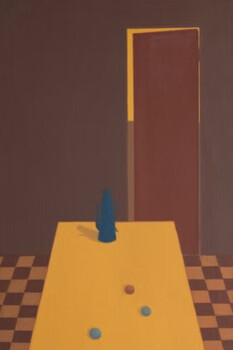
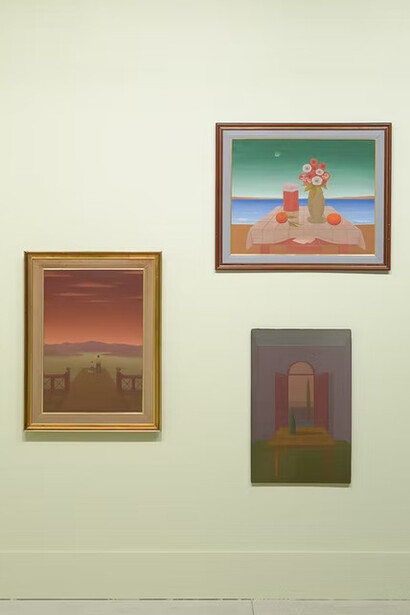
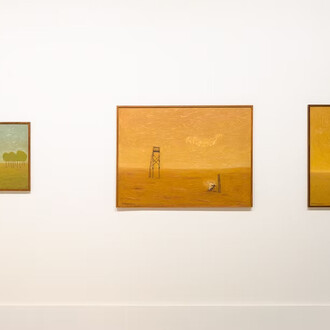
Ruffinengo’s adventure with painting began when he set out with no formal training at the age of 36. Guided by intuition, he observed the spaces of his home as though they were the world itself; his furniture and objects served as models with which to tell a story he hadn’t quite plotted out but that he knew he liked. To give himself a little breathing room, he made windows through which he imagined dreamscapes featuring the languid elegance of cypresses and mountains bringing their curves to the plains, soaring from horizontality up into the clouds. He knew that he mustn’t linger on the dream aspects of the landscape, that he had to keep his feet on the ground and occasionally went out to search the corners of Gálvez for the geometry that so reassured and satisfied him. He sought out market galleries for their arches, walls and streets in order to experiment with subtle variations of color and revel in the serenity of shadows.
These were the sixties and he heard people calling his work naif, primitive and ingenuous but because he was only learning, he didn’t mind. As he delved further, he encountered something that paralyzed him. The good times ended when death struck close to home and his mind was overcome with uncertainty. This marked the beginning of a long journey of philosophical enquiry. Everything that he had once seen through a lens of wonder was now regarded with fatalism. Grief, loneliness and silence – a terrible silence – became the materials with which the painter addressed a dark mystery he could not understand. The seventies would arrive with him immersed in these moods and in an interview he would say: ‘I am a pessimist, from an interior, sitting in a chair, the only perspective from which I view my life is that of mortality.’ He began to feel the call of metaphysical painting more strongly, it seemed to lend him the will to examine the enigmas of the universe through art.
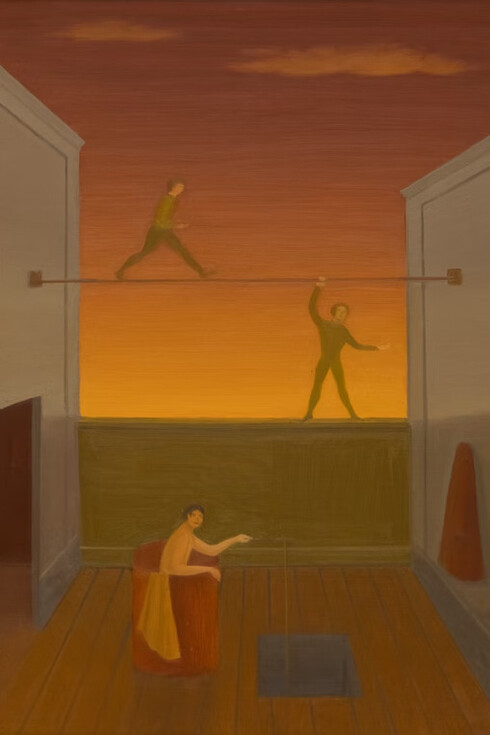
Haunted by the divine, he became a painter of the shadows and from there, little by little, he moved on to different times of day. The rhythm that he best came to understand was that of dusk. In the mysterious glare of these hours he found the path to redemption and began to produce painting after painting of saturated skies along with considered fantasies that brought him back to wonder. In the nineties, memories of a remote past began to arrive. The mysterious suburbs were inhabited by acrobats, the only characters fit to live in his landscapes. He had spent so much time in anguish that now, to prevent the paintings from becoming routine, he looked to unleash the magic. He no longer travelled through the plane in the same way as he had done before. He unstitched his obsession with clean, but not cold, outlines, on checkered floors. Bold green, gold and blue skies turned metaphysics into an amusing game. He wanted to paint everything and to do that he needed to forget everything.
(Text by Cristian Osuna)