English
 Español
 Français
 Deutsch
 Italiano
 Português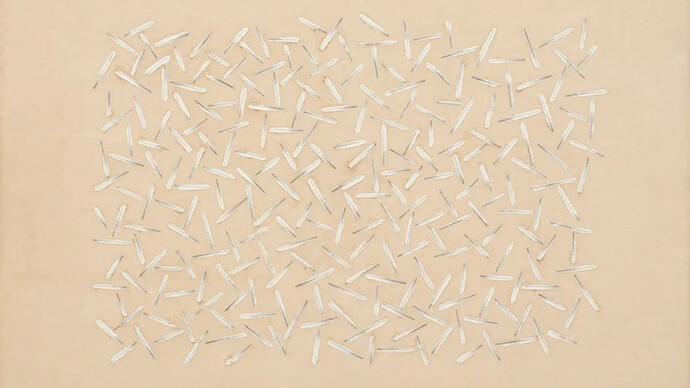
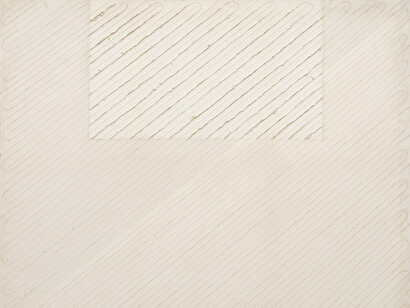
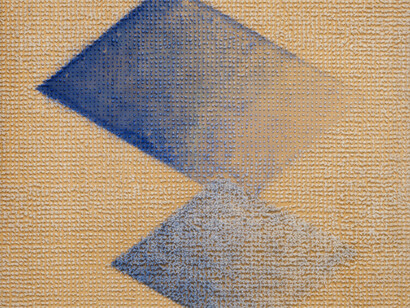
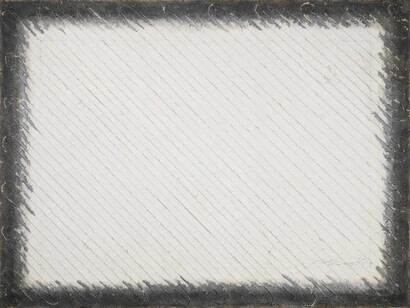
Johyun Gallery is pleased to present Where threads breathe, a solo exhibition of Kim Hong-Seuk from June 11 to August 2, 2026. Kim developed a distinctive visual language of his own, and this exhibition marks Johyun Gallery’s first presentation dedicated to revisiting his practice, which deserves renewed attention within the history of Korean contemporary art and the trajectory of Dansaekhwa. Centered on the Opening and shutting and Germination series, the exhibition explores the artist’s painterly experiments created through the interplay of canvas, thread, and hanji paper.
Kim Hong-Seuk, based primarily in Busan, developed his formal language within the broader current of monochrome painting that shaped Korean modernism. Working with thread, hanji, and ink in place of conventional painting materials, he composed achromatic, monochromatic surfaces informed by the East Asian compositional principle of yeobaek. The bringing-together of thread, hanji , and canvas in his work does not seek to represent or present some completed form; rather, it holds the force and tension of a state not yet disclosed, and the process of becoming. What he seeks through this practice, is to contain within his work the breath and han of the ancestors who once stood on the ground where he now stands.
Kim Hong-Seuk's surfaces are not empty, static spaces but fields through which energies and emotions flow. Built up through repetitive action using thread and hanji, the surface holds a latent force beneath it in delicate oscillation. This state of stillness-in-motion evokes the breath and han accumulated from the lives and labor of his forebearers, all that Kim sought to bring into his work. They are not punctual expressions but durative ones with condensation and endurance, with an ongoing life-rhythm within the current of change and becoming. This exhibition focuses on two series within Kim's practice, and Germination, tracing the reverberating malerisch states that pervade his lyrical surfaces as they hold within them the processes of transformation and becoming.
The Opening and shutting series disclose the latent state of the surface in its most condensed form. Pliable and docile, the thread at times clusters to form concentrated nodes of force; though its materiality tends toward the lithe and is easy to fray, repetition and alignment produce a calibrated order. The covalence of contrary properties yields a metastable surface: closed yet holding the potential to open, appearing still yet sustaining fine movement and tension within. The repeated strata and traces left by the thread render the boundary between interior and exterior, disclosure and concealment, semi-permeable and in constant flux, presenting the surface not as completed form but as a field of stored potential prior to becoming, a space of felt intensity.
The Germination series submits the material properties of hanji and thread to more direct activation. Hanji is layered over the threaded surface and then torn away, a repeated cycle of lamination and delamination through which Kim Hong-Seuk converted the traces of separation into the formal language of the picture plane. Force latent within the surface is disclosed outward through the topography of removal: fissures and ridges in the hanji, extruded surfaces, the residual imprint of thread. The soft substrate and the shear lines scored across it are in covalent tension, each penetrating the boundary between interior and exterior, holding the threshold between emergence and dissolution in suspension. Through these repeated cycles, the Germination series converts the picture plane into a tactile, vibrating field of becoming.
As the Opening and shutting and Germination series attest, Kim Hong-Seuk's practice privileges the incipient over the resolved: not the articulation of completed form or determinate meaning, but the nascent sensations and affective stirrings that arise within the flux of becoming. This exhibition traces the tension of states not yet precipitated and the emergent movements within them, attending to the quiet vibration and affective currents that suffuse Kim Hong-Seuk's painting. Before these reticent, lyrical surfaces where canvas, thread, and hanji converge, one may apprehend the breath and resonance accreted across sustained duration, and in that stillness, the sense of han that subsists within.