English
 Español
 Français
 Deutsch
 Italiano
 Português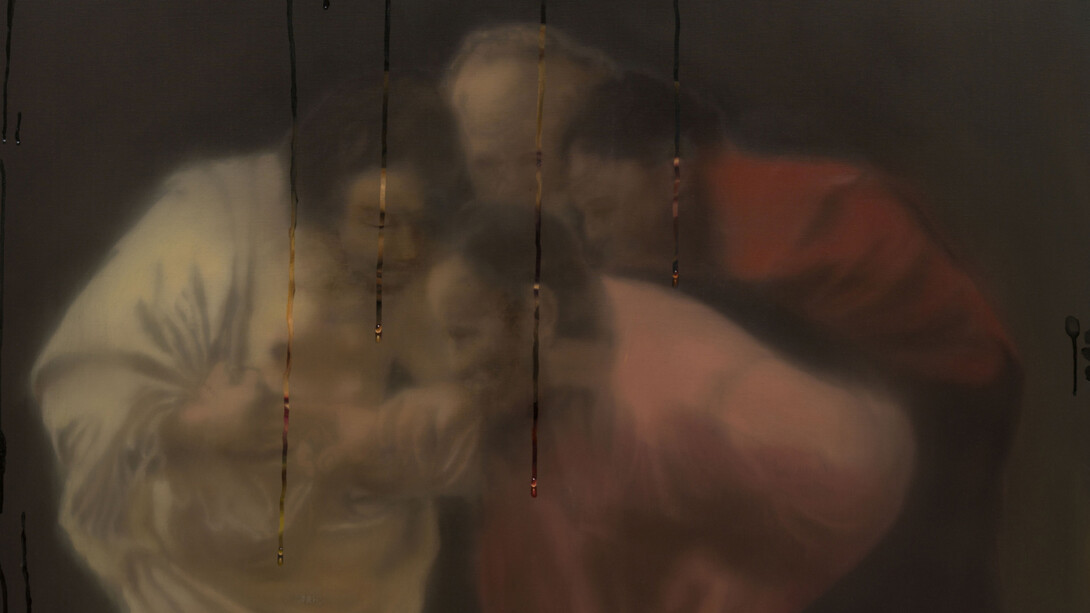
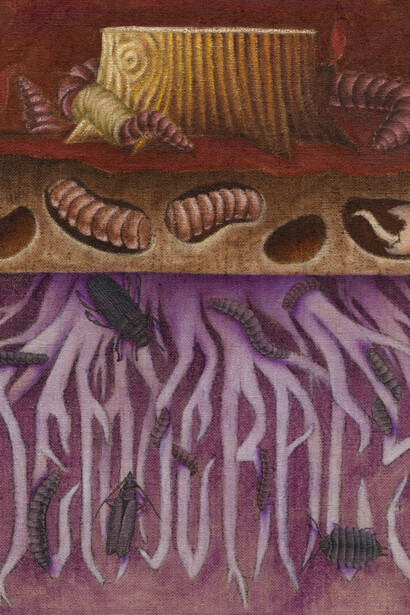
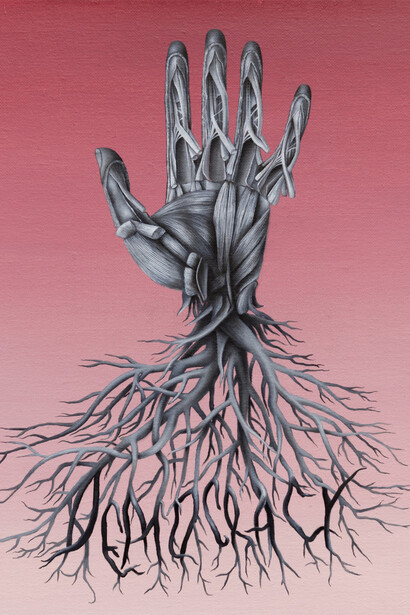
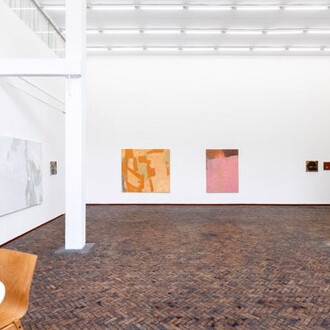
Invention of doubt engages with the fractures of our time, the fragility of democracy, questions of faith, and social upheaval. Emerging from its own cultural and political context, Europe is set in motion as part of a larger question that this exhibition puts into play. A poetic space opens up where a society between decay and hope comes into view.
The theme of Doubting Thomas is one of the most enduring subjects in Christian art. It depicts the biblical moment in which the apostle Thomas refuses to believe in the resurrection of Christ until he can physically touch Christ’s wounds. The story is fundamentally about doubt, evidence, and the fragile relationship between seeing and believing.
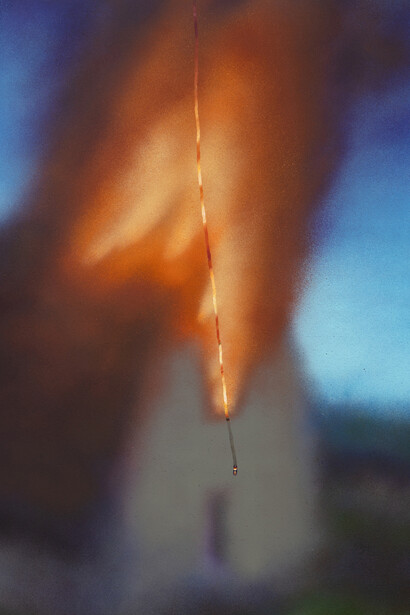
In the work of Mühlenbrink, this question becomes strikingly contemporary. Faced with his paintings, we too hesitate to trust what we see. Drawn closer, we inspect the surface, almost wanting to touch the work ourselves in order to verify the image. His fogged Old Master paintings conceal fragments of imagery beneath veils of paint and condensation-like surfaces, exemplifying Mühlenbrink’s acclaimed trompe-l’œil technique.
A gesture as simple as a finger wiping away condensation appears capable of revealing what lies behind the image, even if only momentarily. Yet the question remains: when presented with only a glimpse, is the mind truly capable of deciding what is real?
Contemporary reinterpretations of Doubting Thomas often move beyond religious meaning and instead use the biblical story as a framework for examining how societies construct truth. In this context, Thomas becomes a symbolic figure of modern skepticism, not only spiritual doubt, but distrust toward institutions, governments, media, and systems of power.
This atmosphere of uncertainty also permeates the work of Christoph Knecht. His paintings revolve around a sense of origin that has become unstable, something once familiar that now feels shifting and fragile. Europe no longer appears as a fixed idea, but as a vulnerable body in transition.
Knecht paints Europe as a crying face, a face covering itself, a continent searching for a new role within an increasingly unstable global landscape. His works reflect the weight of Europe’s colonial past, humanitarian crises at its borders, and the erosion of democratic certainty.
In other paintings, Europe appears through distorted hand gestures reminiscent of gang signs. Here, fingers form the word “Europe,” yet appear elongated, twisted, and uncanny. Familiar signs become unstable and estranged.
A recurring image in Knecht’s work is the bouquet. The bouquet becomes a metaphor for a Europe no longer functioning as a closed or stable form, but as something still moving, mutating, and unresolved. Decorative bulls emerge across tablecloths, invoking mythology, power, resistance, and historical memory.
Rather than offering answers, the exhibition lingers within the condition of doubt itself. Both Mühlenbrink and Knecht explore what happens when systems of certainty begin to fracture, whether in painting, perception, politics, or collective identity. Like Thomas, the viewer is left searching for proof, navigating the unstable territory between belief and skepticism, visibility and obscurity, trust and uncertainty.