English
 Español
 Français
 Deutsch
 Italiano
 Português
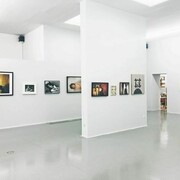
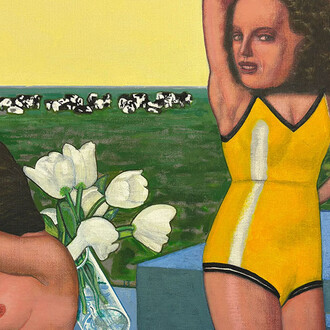
Six young artists—image makers—six fresh faces, Fresh Faces, who create the images of today, of the present. These are the artists who completed the “Vasanon” program over two years (2024–2025) as part of the demanding advanced program of the M.E.T. (Master’s in Visual Arts) at the Athens School of Fine Arts, where they expanded the boundaries of their art and of themselves. Six artists with highly personal and original work, with diverse visual styles, passionate about research and new challenges. Sensitive receptors of the contemporary state of affairs and the new human condition that has taken shape in the uncertain and threatening world we inhabit. I believe that the visual (artistic) act is the only bulwark against the gloom of our dystopian future. In this context, their works create a ray of light in the darkness that surrounds us. For me, the sole criterion for their selection was their aesthetic merit, because everything else is contained within it.
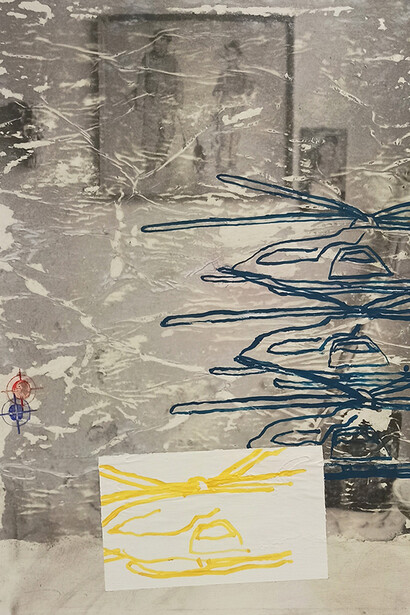
Konstantinos Grigoriadis-Zorbas: My artistic practice seeks to visually convey the coexistence and conflict between graphic design and graffiti, two distinct aesthetic systems that are ultimately creatively interconnected. Graphic design expresses structure, discipline, and rigor, while graffiti expresses immediacy and spontaneity. At the same time, I explore the potential of digital technologies, interventions in public space, and collaborative practices. I seek new forms of expression that balance structure and freedom, personal experience and the collective element.
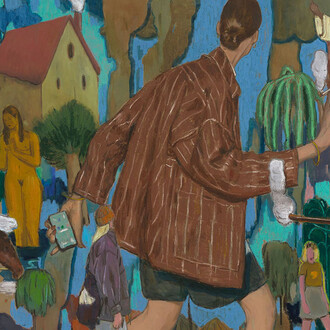
Demosthenes Barbas: My artistic and research interests focus on the field of painting, artistic practices in public spaces, and collective art forms. My artistic work has primarily been created and exhibited in public spaces. I began creating murals and paintings using traditional street art media as early as 2008, while in recent years, a large part of my work has focused on oil painting. At the same time, his artistic practice encompasses a wide range of media, including printmaking, typography, performance installations, and archival photography.
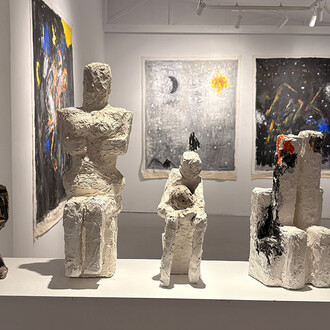
Shekine Naidi: The central focus of my artistic practice is the ongoing search for my identity—an identity that straddles East and West. An identity that is experienced internally as simple and beautiful, but in practice proves to be complex and laden with historical, political, and social issues. I draw inspiration from Persian fairy tales and miniatures, traditional craftsmanship, and sustainable materials (wool, stone) that are deeply connected to the earth and the body. Through these, I create contemporary, personal fairy tales, which I narrate through writing, video, and sculptural installations. My goal is to articulate new narratives that bridge the personal with the collective and to propose a different way of understanding reality. I explore the relationships between collectivity, the earth, and the body, seeking forms of existence where humans are not separated from their environment but are an integral part of it.
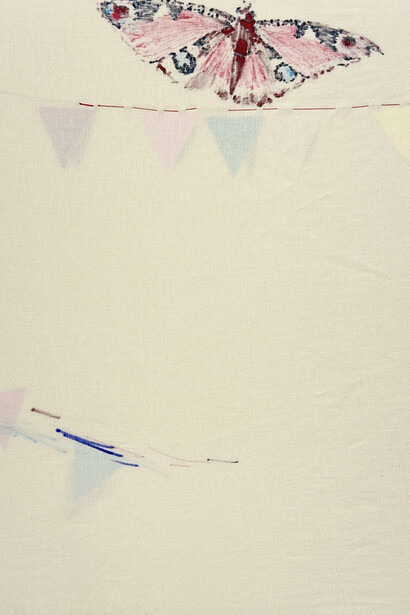
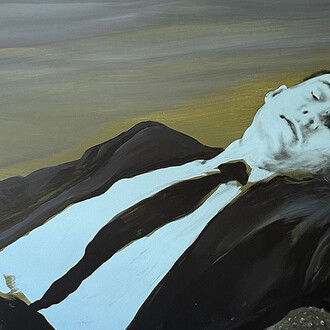
Achilles Dendis: My painting functions as a space where memory, desire, and loss coexist, leaving behind traces, repetitions, and fragments of images that persist in returning. The back of the canvas is transformed into an active field of painting and documentation, a fragile archive of time, where stains, marks, and traces of the process acquire their own autonomy. The works revolve around the concept of the void, as a space of projection, memory, and constant search.
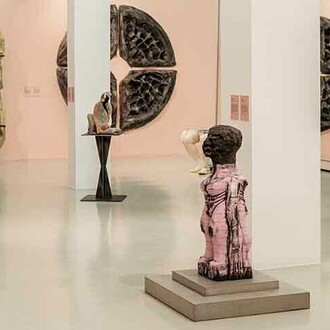
Mitsi Papazachou: Through hybrid sculptures and allegories, my work explores issues of identity, transformation, and existential quest, creating visual environments where the imaginary meets the experiential.
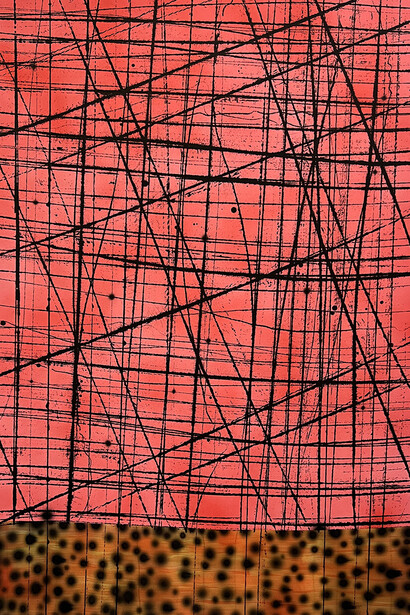
Nikos Tsikouras: My work presents a visual exploration of the relationship between the microcosm and the macrocosm, order and chaos, nature and the urban landscape. Through painting, the creative process emerges as more important than the final result, while “error” and chance are reinterpreted as creative elements. Physical engagement, gesture, and repetition are linked to ritualistic practices, leading to a visual “choreography” that captures paths, deviations, and rhythms. The choice of materials and colors is influenced by typography and the digital image, with an emphasis on dots, lines, and the randomness of application. At the same time, the act of touch and the manual process take on central importance in an era dominated by artificial intelligence and mass digital production.