English
 Español
 Français
 Deutsch
 Italiano
 Português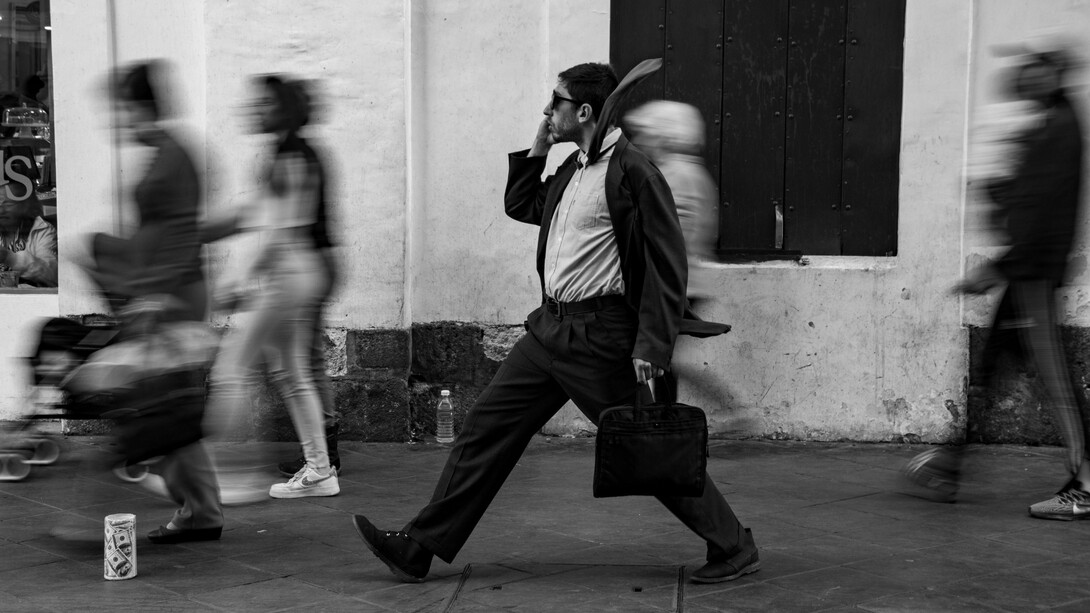
“How are you?”
“Busy.”
Many of us say this automatically. We don’t think much about it, but it carries a mix of exhaustion and pride. These days, being busy alerts others that we’re important, productive, and needed.
A few years ago, I noticed something curious in my own life. Whenever I had a free afternoon, I felt uneasy. If there wasn’t a class, article, message, or project to focus on, I became restless. Rather than enjoying the free time, I rushed to fill it.
At first, I thought I was simply being productive.
Later, I realized I was afraid of being still.
I know I’m not the only one. All around the world, millions of people keep themselves busy. Our schedules are packed, notifications never stop, and taking a break can feel wasteful. We admire people who work all the time, while relaxing now feels almost unusual.
But what if our obsession with busyness is not a sign of success?
What if it is a symptom of something deeper?
More researchers, psychologists, and writers are starting to ask why we’re so attached to being busy. They suggest it’s less about finishing tasks and more about our self-image, desire for approval, avoidance, and even fear.
Perhaps the real question is not why we work so much, but "Why do we find it so difficult to stop?”
Why busyness makes us feel valuable
In many cultures, being busy is now closely linked to our sense of personal worth.
People no longer show their status just with money or possessions. These days, being busy is a status symbol. If someone is always busy, we see them as important. If their calendar is full, we assume they’re successful.
Without realizing it, many of us absorb this belief.
We begin to equate activity with significance.
This creates a tricky mental trap. When we get things done, we feel good about ourselves. When we rest, we feel guilty.
That’s why vacations can be hard for many people. Even when we finally get a chance to relax, our minds keep racing. We feel the need to check emails, answer messages, or plan the next thing.
The problem is that self-worth built on productivity is fragile.
No one can keep up a fast pace forever. There will always be slow periods, setbacks, illness, or changes. If our value depends only on achievements, taking a break can feel like it threatens our identity.
The psychologist Christina Hibbert1 argues that busyness often becomes a false substitute for self-worth. Instead of believing we are valuable because we exist, we convince ourselves we are valuable because we are occupied.
There is a profound difference between the two.
The social pressure to appear busy
We are naturally social. We imitate what others approve of. We see what society praises and start doing it ourselves. In a culture that celebrates hard work, we learn to value it as well.
Think about social media. How often do we see posts celebrating deep rest, long walks, or quiet reflection?
Instead, we see far more posts about packed schedules, early mornings, endless meetings, and people announcing how hard they work.
The message is clear:
Busy equals ambitious.
Busy equals successful.
Busy equals important.
Over time, being busy turns into a performance.
We don’t just work; we want others to see that we’re working.
This leads to a cycle where people, often without realizing it, compete to look busier and more overwhelmed than others.
Ironically, this competition rarely leads to meaningful results.
Many people spend their days answering emails, attending meetings, checking notifications, and handling small tasks but make little real progress.
We often mistake being busy for being productive. We assume that constant activity means progress and that feeling tired means we accomplished something important.
What are we really trying to avoid?
One of the toughest truths about busyness is that it often distracts us.
Not from our work, but from ourselves.
When life becomes quiet, questions emerge.
Am I happy?
Am I living according to my values?
Do I enjoy the path I am on?
What am I avoiding?
For many, these questions feel uncomfortable because they challenge the identities we’ve built around our jobs, achievements, and responsibilities.
Staying busy gives us an escape. As long as we’re moving, planning, producing, and responding, we have little time left to look inward.
This brings to mind a question I explored in a previous article: Who are you when you’re alone?2 It sounds simple, but many people find it hard to answer.
We often define ourselves by our jobs, social status, relationships, or achievements. But when those roles fade, we’re left facing something deeper: ourselves.
The trouble is, modern life rarely gives us a chance to sit with that reality. Every quiet moment can be filled with a notification, podcast, video, email, or another task. Being busy has become one of the most accepted ways to avoid facing ourselves.
In my article The beauty of silence: life's wisdom in quiet moments3, I wrote that silence isn’t just the absence of noise, but the presence of awareness. Silence gives us space to listen to our thoughts, notice our feelings, and reconnect with parts of ourselves often hidden by daily demands.
The fear of being alone with our thoughts
In his work on mindfulness and awareness, the Vietnamese Zen master Thich Nhat Hanh4 frequently emphasized the importance of stopping.
It’s not that stopping is unproductive. Stopping helps us see clearly.
When we’re always on the move, we rarely look at the deeper patterns behind our actions.
Many people find, during meditation retreats or quiet times alone, that they’ve spent years avoiding themselves.
The philosopher Blaise Pascal wrote centuries ago that many human problems arise from our inability to sit quietly alone in a room.
Today, his words feel more true than ever. We live in a world that tries to erase every quiet moment. Yet silence is still one of the few places where real self-understanding can grow.
Without quiet, we rarely reflect. Without reflection, we don’t gain wisdom. Without wisdom, we might spend years working hard on things that don’t really matter.
Why the busiest people are not always the most productive
One of the most persistent myths in modern culture is the belief that success requires endless hours of work.
People often celebrate stories of eighty-hour workweeks. But research and history tell a different story.
Dan Koe5 points out that many people confuse long hours with meaningful work. Being busy often means we’re unfocused, not necessarily productive.
Think about how creativity works. Writers, scientists, artists, and inventors rarely come up with their best ideas while rushing from one task to another.
Their breakthroughs often happen during walks, rest, conversations, reading, or quiet reflection.
One famous example is Charles Darwin.
Darwin changed modern science, wrote important books, and developed the theory of evolution. Yet stories about his life show he worked in focused bursts and spent lots of time walking, reading, and thinking.
He didn’t succeed by working nonstop. He made time for deep thinking. This pattern appears again and again throughout history.
The challenge is that focused work isn’t easy to spot. Being busy is obvious, but deep thinking can look like nothing is happening—even though that’s not true.
Rest is not the opposite of productivity
One of the most harmful beliefs today is that rest and productivity are opposites.
They are not.
Rest is part of productivity.
Researchers and productivity experts now say that focus, creativity, and problem-solving all need time to recover. If we’re always busy and never rest, we become less effective and more burned out.
Think about athletes.
No top athlete trains at full intensity every hour of every day.
Rest and recovery are part of their routine. Muscles grow during recovery.
The same principle applies to the mind.
Creativity grows in spaciousness.
Insight grows in stillness.
Wisdom grows in reflection.
Some of the most valuable activities in life appear unproductive on the surface:
Taking a long walk without a destination.
Watching a sunset.
Reading a book slowly.
Sitting quietly with a cup of tea.
Spending uninterrupted time with loved ones.
Practicing meditation or yoga.
Simply doing nothing.
These moments almost never show up on performance reports. But they often matter more than another hour spent answering emails.
A different definition of success
Perhaps the solution is not to eliminate busyness entirely.
There will always be times in life when we need to work hard. Starting a business, raising children, pursuing goals, and helping others all require real effort.
The trouble starts when being busy becomes our whole identity.
When we can’t separate who we are from what we do.
When our sense of worth depends on staying busy.
When we lose the ability to rest.
A healthier approach may involve asking different questions.
Philosopher Alan Watts often said that life isn’t just about reaching the finish line. It’s more like music—the point isn’t to finish the song quickly but to listen and enjoy it.
In a culture that’s always speeding up, that way of thinking feels almost revolutionary.
Perhaps success is not having a completely full calendar.
Maybe real success is knowing what truly belongs on your calendar.
The next time someone asks how you are, try resisting the automatic response.
Instead of saying "Busy."
Pause.
Take a breath.
And consider a different answer.
One that has nothing to do with productivity.
One that reminds you that your worth was never tied to how much you accomplished.
After all, a meaningful life is not built solely through action. It’s also built by being present, reflecting, feeling wonder, and having the courage to pause and notice that you are alive.
References
1 Addicted to Busyness? What It Means, & 6 Steps to Overcome. Christina Hibbert.
2 Discovering your true self: who are you when you are alone?. Andrés Castellano Ballestero. December 2024.
3 The beauty of silence: life’s wisdom in quiet moments. Andrés Castellano Ballestero. January 2025.
4 Stop Running | Teaching by Thich Nhat Hanh. January 2024.
5 Harsh Truth: You Don't Need To Grind 24/7 To Be Successful. Dan Koe. May 2025.