English
 Español
 Français
 Deutsch
 Italiano
 Português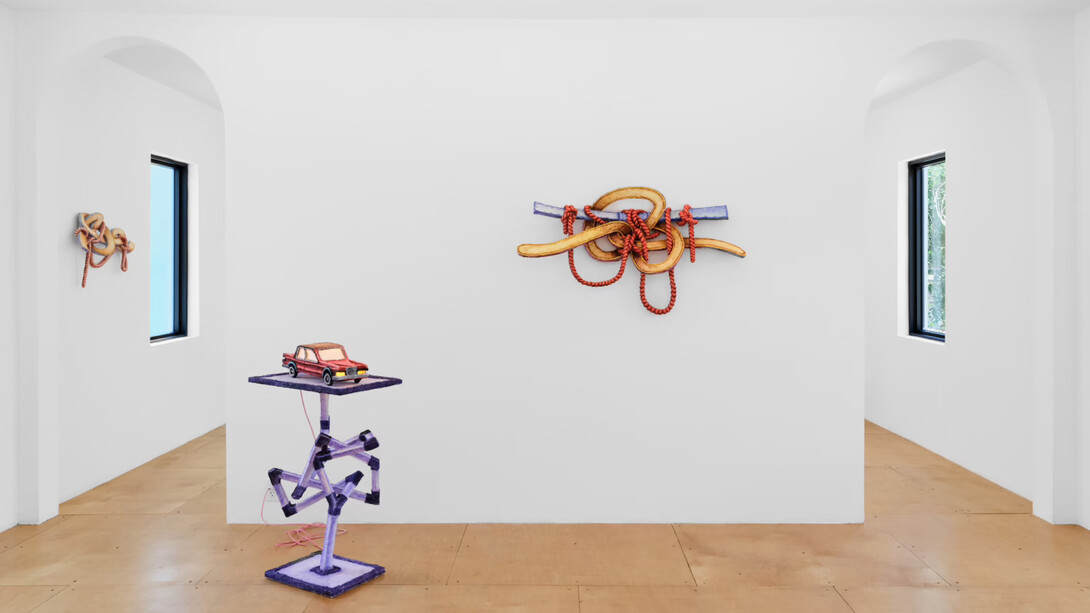
Nina Johnson presents a solo exhibition by Eamon Monaghan centering on the form and logic of knots. Featuring fifteen new sculptural works, the exhibition marks a significant shift in Monaghan’s practice, which has previously focused on constructing exterior and interior spaces. These new works foreground abstract material experimentation and functional objects while distilling his interest in form, tension, and spatial complexity.
Born outside Chicago, Monaghan studied biology at Carleton College in the Midwest before moving to New York, where he lived with his twin brother, also an artist, and began producing work. Monaghan is best known for his surreal world-building—interior and exterior spaces developed as stages for figures and unfolding scenarios, which feature tilted rooms, serpentine staircases, and impossible architectures.
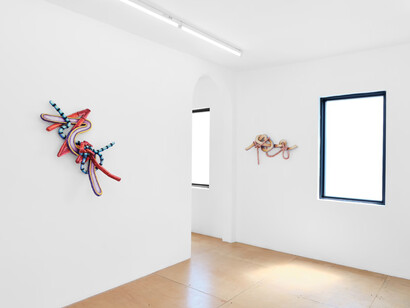
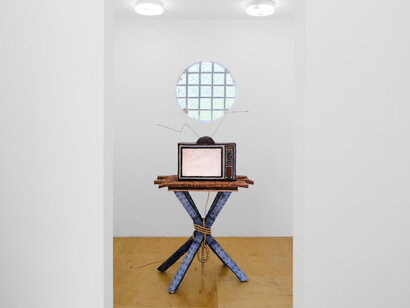
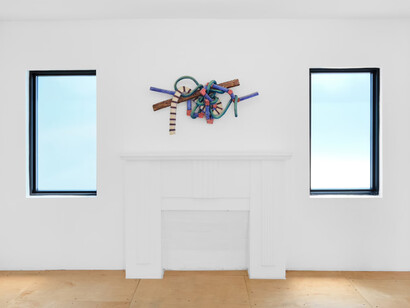
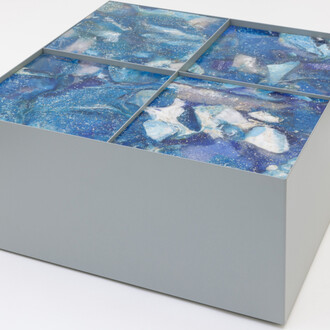
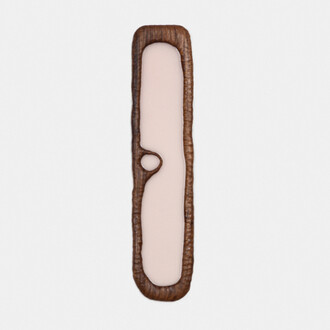
In Knots, Monaghan departs from narrative figuration and spatial illusion to focus on material possibilities, particularly that of papier mâché, and the abstract complexities of knotting. The exhibition presents four freestanding tables, four lamps, and seven wall-mounted sculptures constructed from steel, aluminum, wood, cardboard, aluminum foil, papier mâché, and watercolor. Nearly all the works incorporate some form of a knot rendered through abstracted materials, with the lamps as the sole exception.
“This show has been about developing shapes and forms that come from intertwining and knotting various ‘materials’ that I’m sculpting,” Monaghan explains. Knots operate here as both structure and metaphor, suggesting connection, accumulation, and restraint, while also allowing for unpredictability and play. The works emphasize physical entanglement over representation, arriving at forms that feel animated without depicting particular figures or scenes.
A key development in this body of work is Monaghan’s use of papier mâché, a material new to his practice that introduces greater flexibility and improvisation. Its responsiveness enables an exploratory approach to form-making. In shifting toward functional objects—something he has previously explored only through prop-making for his films—Monaghan further complicates the relationship between utility and sculpture.