English
 Español
 Français
 Deutsch
 Italiano
 Português
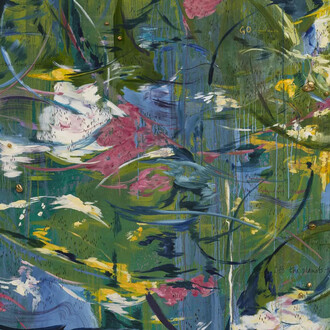
Nina Johnson is pleased to present Siren song, a solo exhibition of new work by Chicago-based artist Katelyn Eichwald. Comprising intimate oil paintings on canvas, the exhibition reimagines the mythological siren not as a cautionary tale, but as part of a world shaped by self-contained narrative, fantasy, and collective desire.
In classical mythology, sirens occupy a space of infamy, luring sailors to their deaths with an irresistible song. Rather than approaching the patriarchal myth through its usual protagonists — the doomed sailors — Eichwald inhabits the sirens’ vantage point. Sailors drift through their world occasionally, appearing not as heroes but as objects of beauty, amusement, or even malice.
The exhibition also draws in part from literary interpretations of the myth, including Siren song by Margaret Atwood, in which a siren seduces a sailor by performing vulnerability:
Come closer. This song / is a cry for / help: Help me! / Only you, only you can, / you are unique / at last. Alas / it is a boring song / but it works every time.
Another reference comes from the poet Mary Ruefle, who imagines the sirens singing the story of the sailors’ own lives back to them. In this reading, their power lies not in enchantment but in offering the listener the most seductive narrative: his own. Eichwald extends this logic toward the narrative structures of romance novels, where desire unfolds as a plot and pleasure is shaped through the storytelling itself.
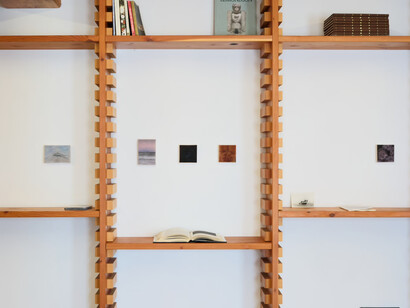
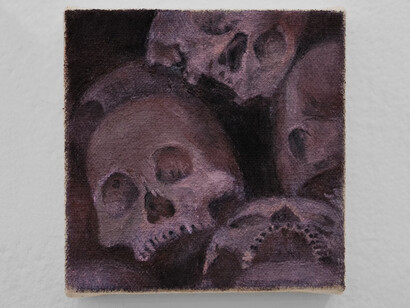
Working from these ideas, Eichwald’s paintings offer glimpses into the world of the sirens: a lighthouse in daylight, a school of fish or a lone shark, the muscled torso of a sailor, a seashell repurposed as a communal ashtray, piles of skulls tinged with pink and purple. At times the works function as film stills or storyboards, capturing moments of a larger narrative. Throughout the exhibition, this narrative extends beyond the paintings themselves through the gallery’s Exhibition Library, displaying books, images, and collected objects. These materials create pauses within the space, shaping its rhythm and offering further insight into the visual and literary references that inform the work.
Ultimately, the most significant relationships in these scenes are those among the sirens themselves. They gather, watch the horizon, and speculate together. The exhibition suggests a sisterhood in which men appear more as objects of desire than devotion — a means toward a shared experience of lust, self-love, and community.