English
 Español
 Français
 Deutsch
 Italiano
 Português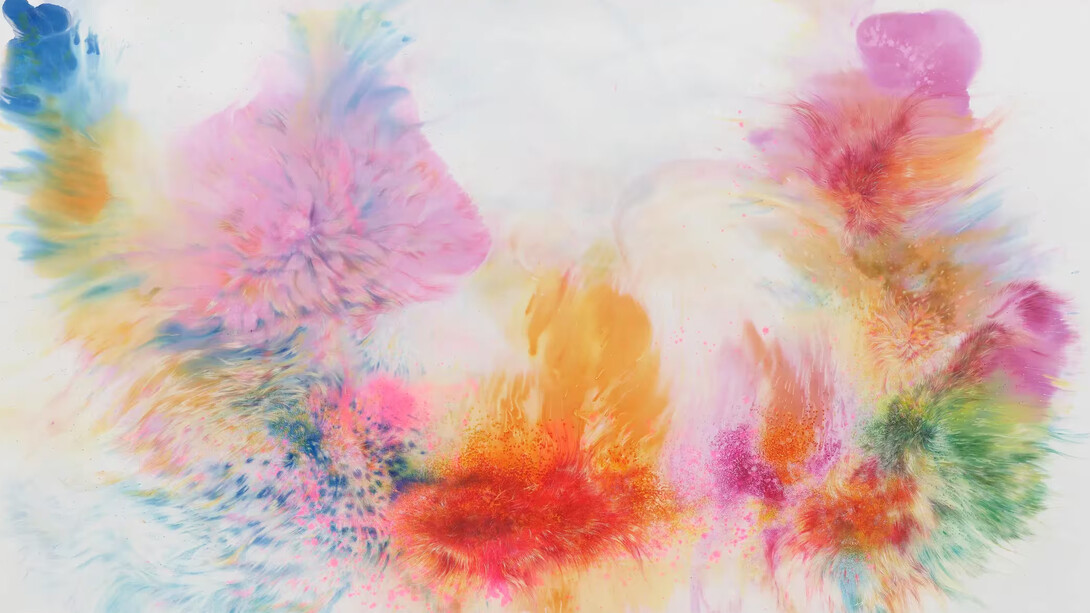
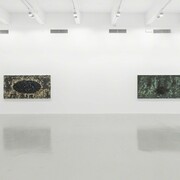
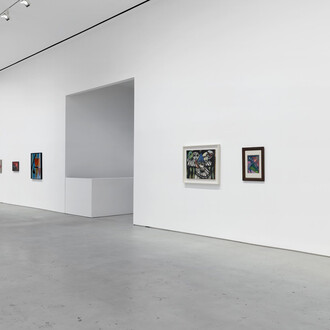
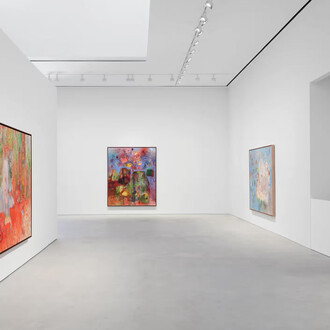
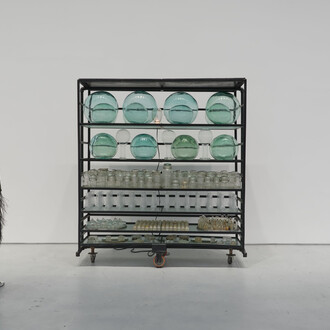
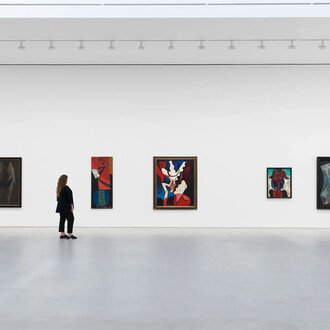
On the heels of two major solo museum exhibitions in 2025, Firelei Báez will unveil an ambitious, enveloping constellation of radiant new paintings and works on paper, along with new large-scale bronze sculptures, in her first New York exhibition with Hauser & Wirth. Across two floors of the gallery’s 22nd Street location, Báez extends her ongoing engagement with colonial legacies and the natural, spiritual and cosmic reverberations of the African diaspora.
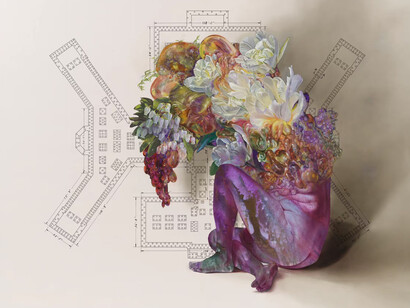
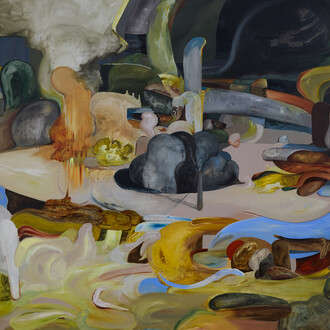
A storyteller and world maker, Báez works within the tradition of history painting while quietly undoing the very conventions through which histories are fixed and made legible. In this presentation, she subtly shifts her focus away from the discernible, if chimerical, figures that occupy her previous bodies of work to achieve a more atmospheric sensibility, one that invites a broader, deeper understanding of how bodies and nature shape our experience of being in the world.
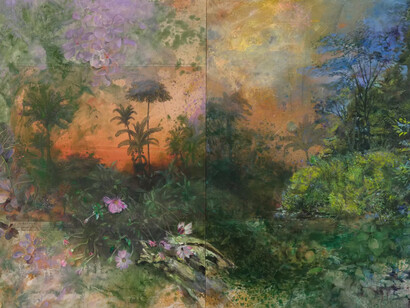
A highlight of the exhibition is View of nature (2026), an eight-panel painting stretching across the entire back wall of the gallery’s first floor. Based upon John Emslie’s 1852 engraving similarly titled, this work traces gradations of climate and geography from the equator to the Arctic Circle—a visual palimpsest that permits its taxonomic structure to flicker through to the surface.
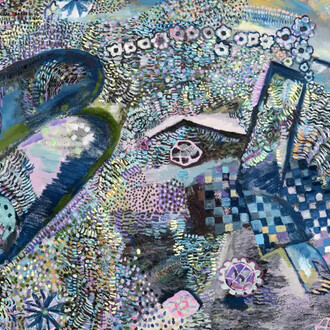
Fragments of text, diagrams and cartographic markings emerge and dissolve within richly layered passages of foliage and light. Central to the work’s visual and emotional impact is the artist’s technique of pouring the paint in a liquid state that pools, disperses and coalesces into landscapes of shifting forms and auras. Moving across the panels from left to right, Báez’s palette transitions from warm tropical tones into icy whites and blues, culminating in an atmosphere of frozen terrain. Whereas the original document rendered the natural world as a system to be measured, Báez’s work conjures a changeable field where intuition and embodied knowledge take precedence over applied classification.
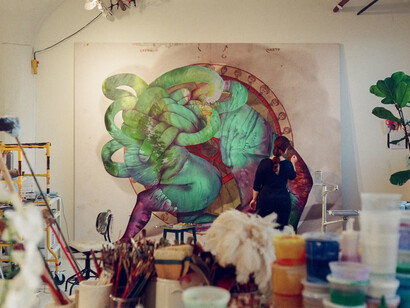
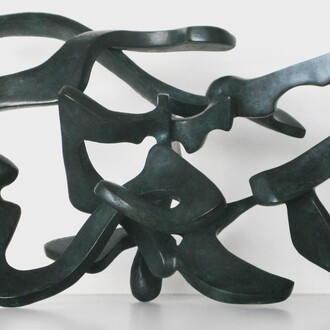
Nearby, two towering bronze sculptures of ciguapas—female tricksters of Dominican folklore that recur across Báez’s oeuvre—command the space. Equal parts woman, plant and animal, these powerful shape-shifters are rendered here as both fully embodied and in flux. Taking the hybridity of her mythical references as cue, Báez has adorned one of them with plumes of real feathers and another with sculpted foliage, amplifying their mutability. They kneel, double and coil, bound by thick, rope-like braids that can be read simultaneously as hair, viscera or vegetal growth. The effect is one of accumulation and strain—of tension between heaven and earth, between the weight of history and the possibility of being freed from it.
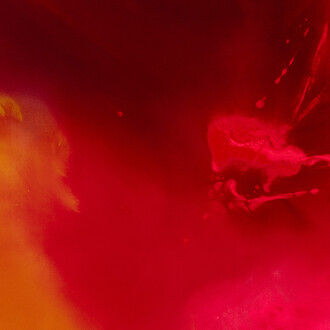
On the second floor, a new series of monumental works on paper shifts the exhibition from the palpably terrestrial toward a more ethereal frequency. Lambent fields of color, in which pigments radiate and crystallize across the surface, are steered by gravity, time and the physical limitations of the artist’s reach. The forms visible in these works resist immediate legibility, dispersing across registers that are at once cellular—recalling the intricate anatomy of flora—and as cosmically vast as the formations of interstellar space. Occupying a more intimate and placid space in the gallery’s building, they demand a slower reading and direct our attention to the limits of human perception, where recognition falters and form is registered more through sensation than through sight alone.